
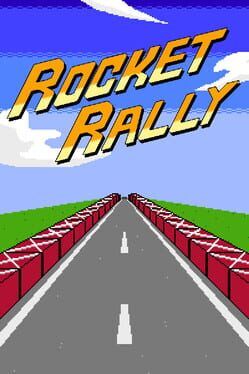
Rocket Jump’s Rocket Rally is a new mobile rally racing game for iOS and Android built around one-thumb, 30-second arcade stages, pre-registration, and a December 15 release target.
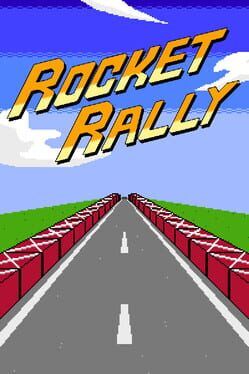
Image: IGDB
Store links: Rocket Rally on Steam
Rocket Rally starts with a hard limit: win in half a minute
Rocket Jump has announced Rocket Rally, a mobile rally racing game built around 30-second races, one-thumb controls, and portrait play on iOS and Android. Pocket Gamer reports that pre-registration is now open on both the App Store and Google Play ahead of an expected December 15 release, with the caveat that the date could change.
That time limit is the hook and the pressure point. Mobile racing games often compress console-style ideas into shorter sessions, but Rocket Rally is being pitched around the compression itself. According to Pocket Gamer’s report, races last thirty seconds, the input model is designed for one-handed play, and the studio has built a custom arcade physics system for the cars. For a new racing game on phones, that is a clear statement of intent: Rocket Rally is chasing instant readability rather than simulation depth.
The tension is whether that simplicity can still produce meaningful driving. A rally game, even an arcade one, lives or dies on how quickly the player understands grip, rotation, braking, and recovery. In a thirty-second stage, there is no warm-up lap and little room for a confusing first corner. If Rocket Rally’s handling clicks immediately, it could fit the phone format cleanly. If the physics feel vague or overly assisted, the short-race premise could expose that weakness fast.
Rocket Jump is returning to the one-input idea from a different angle
Pocket Gamer identifies Rocket Jump as the studio behind Major Mayhem, the one-finger cover shooter that arrived during the iPhone 4S era and earned a Pocket Gamer Silver Award. That history matters because Rocket Rally appears to translate the same design philosophy into a racing format: reduce the control burden, then make the moment-to-moment timing carry the game.
Major Mayhem, as described by Pocket Gamer, moved the player character between cover automatically while the player held a finger down to fire. Rocket Rally applies a comparable accessibility-first approach to rally racing. The confirmed details are that players race one-handed in portrait orientation and that the cars use a custom arcade physics model. What is not yet shown in the provided source material is the exact control scheme, such as whether the single thumb controls steering, throttle, braking, boost, or a simplified combination of inputs.
That distinction will be important for racing fans. A good mobile rally racer can simplify input without flattening decision-making. The best case is that Rocket Rally keeps the demands of line choice, timing, and corner exit while trimming away awkward virtual-button clutter. The risk is that the car begins to feel like it is following a lane rather than responding to the player. For now, the announcement supports the broad design goal, but not enough detail to judge the final driving model.
The mode list suggests fast sessions rather than long championships
Pocket Gamer reports four named race types for Rocket Rally: Time Attack, Head to Head, Rally X4, and Rally X6. The outlet also says the game includes a solo career set in locations around the world, daily online competition, and a garage structure where players buy cars, upgrade them, and build out a collection.
That combination points to a familiar mobile racing loop, but Rocket Rally’s short-stage format changes the pacing. Time Attack is the cleanest fit for a thirty-second rally stage because it reduces the challenge to one core metric: how efficiently can you carry speed from start to finish? Head to Head implies direct competition, though the source material does not specify whether this is live multiplayer, asynchronous ghost racing, or another structure. Rally X4 and Rally X6 are named in the announcement, but the provided source does not define how those formats work.
For players coming from longer racing games, the practical appeal is obvious. A thirty-second race can be finished during a spare moment, which is exactly the use case Pocket Gamer’s writer highlights in the announcement. The tradeoff is depth per run. Rocket Rally will need its upgrades, stage design, and online cadence to create reasons to replay beyond simply shaving a few tenths off a route. The career and daily competition systems are the pieces that could turn quick runs into a habit, but their reward structure has not been detailed yet.
Launch content is already framed around variety and retention
The early content pitch is more substantial than the tiny race length might suggest. Pocket Gamer reports that Rocket Rally will launch with more than 100 stages across four environments, with additional content promised every month. The announcement also mentions hundreds of cosmetic options for liveries.
For a mobile rally racing game, those numbers are less about raw size than route turnover. Thirty-second stages can be consumed quickly, so variety has to come from corner sequencing, surface behavior, environment readability, and competitive modifiers. The source material confirms the stage count and environment count, but it does not state whether surfaces affect handling, whether weather is present, or whether the environments change traction in any mechanical way.
The monthly content promise is worth watching closely. In free-to-play racing, steady stage drops can keep leaderboards alive and prevent the same optimal routes from calcifying too quickly. At the same time, frequent content does not automatically solve balance. If upgrades have a large effect on lap time, daily online competition may depend as much on progression tuning as driving skill. Pocket Gamer confirms buying and upgrading cars, but monetization details beyond ads have not been specified in the provided source.
iOS and Android are confirmed, but the business model still has open questions
The clearest platform detail is that Rocket Rally is headed to iOS and Android. Pocket Gamer says pre-registration is open on the App Store and Google Play, and that the game is expected to release on December 15. The outlet also reports that Rocket Rally will be free-to-play with ads.
Those facts answer the first buyer question: there is no upfront price mentioned in the source material. They do not answer the larger free-to-play questions. The announcement does not specify whether Rocket Rally includes in-app purchases, whether ads are optional or forced, whether cosmetics can be earned through play, or how upgrades are paced. For a racing audience, that matters because car upgrades can either support long-term progression or distort competition if they push players toward paid acceleration.
There are also no confirmed technical requirements in the provided material. Pocket Gamer does not list minimum iOS or Android versions, frame-rate targets, controller support, offline availability, or cloud-save functionality. Given the one-thumb portrait design, controller support may not be the priority, but that remains an inference rather than a confirmed feature. Players planning to pre-register should treat the current listing as an early availability signal, not a complete technical spec sheet.
The handling question is the one racing fans should track
Rocket Rally’s strongest idea is also its biggest test. Rally racing is built on controlled instability: braking early enough to rotate, managing grip at corner entry, and getting the car straight before committing to power. An arcade version can exaggerate those beats, but it still needs a clear relationship between input and vehicle response.
The confirmed custom arcade physics system is encouraging because it suggests Rocket Jump is not simply skinning a generic driving template. Still, custom physics can mean many things. It could mean exaggerated slides and snappy correction, or it could mean a heavily assisted model tuned for broad accessibility. The source material does not include hands-on impressions, performance data, or a developer breakdown of how the physics work.
The thirty-second format raises the stakes. In a longer race, a player can recover from one bad read. In Rocket Rally, one awkward drift, one unclear braking zone, or one unexpected collision could decide the whole run. That can be exciting if the game feels fair and repeatable. It can also become frustrating if inputs are imprecise or if car upgrades overwhelm technique. Racing fans should keep an eye on footage and early player impressions that show corner entry, mid-corner correction, and how much speed is lost when a line goes wrong.
A promising mobile racer, with a few details still missing before launch
Based on the current announcement, Rocket Rally belongs on the radar for players who want a new racing game built for phones first rather than a downsized console-style racer. Its confirmed ingredients are specific: iOS and Android pre-registration, 30-second races, one-handed portrait play, a custom arcade physics system, multiple race formats, a solo career, daily online competition, more than 100 launch stages, four environments, garage progression, car upgrades, livery cosmetics, and a free-to-play model with ads.
The unknowns are just as important. The exact control scheme has not been explained in the provided source material. The definitions of Rally X4 and Rally X6 are not detailed. The ad model, possible in-app purchases, upgrade balance, technical requirements, and online structure remain unconfirmed. Pocket Gamer reports December 15 as the expected release date, but also notes that it could change.
For now, Rocket Rally’s appeal is straightforward: it is aiming at players who want a race they can finish before a bus stop, a queue, or a coffee break ends. That is a good fit for mobile if the cars feel responsive and the stages reward repeat attempts. Pre-registration is a low-commitment way to follow it, but racing fans should reserve final judgment until Rocket Jump shows more of the handling, progression, and monetization in motion.