
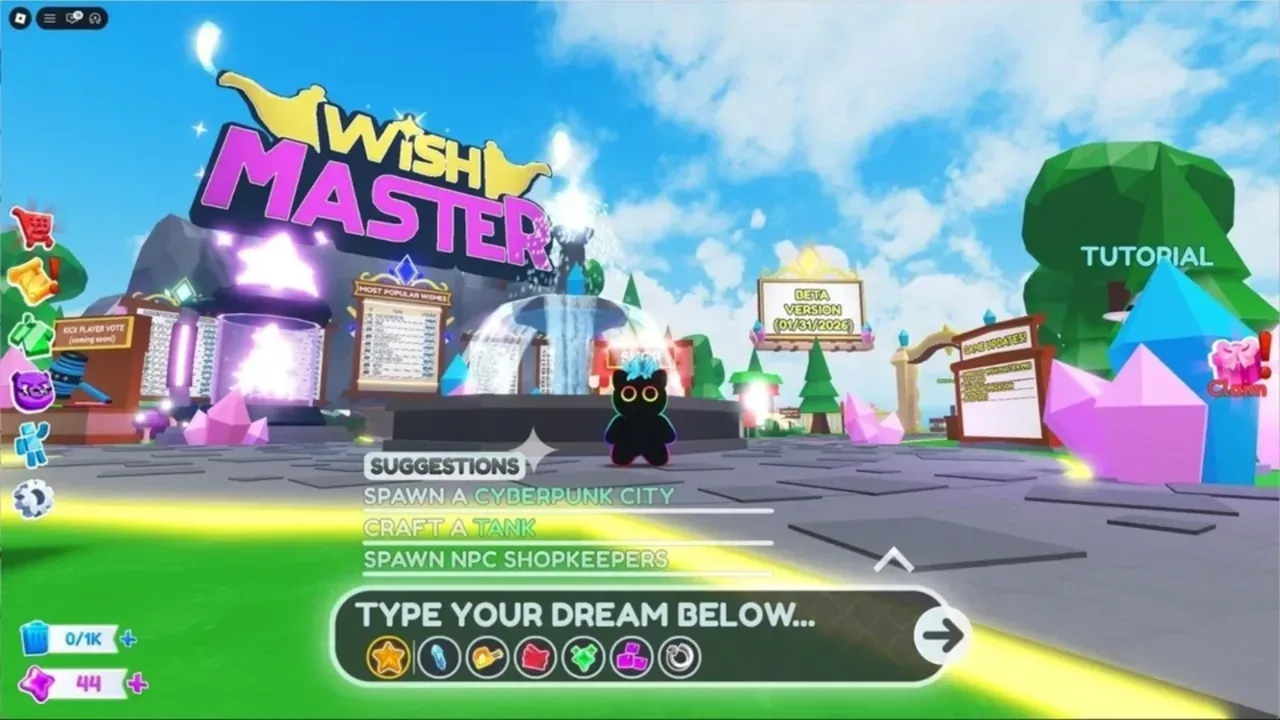

Roblox Build will let age-checked users generate basic games from mobile text prompts, with a New Zealand alpha on July 28 and big questions around discovery, quality, and creator strategy.
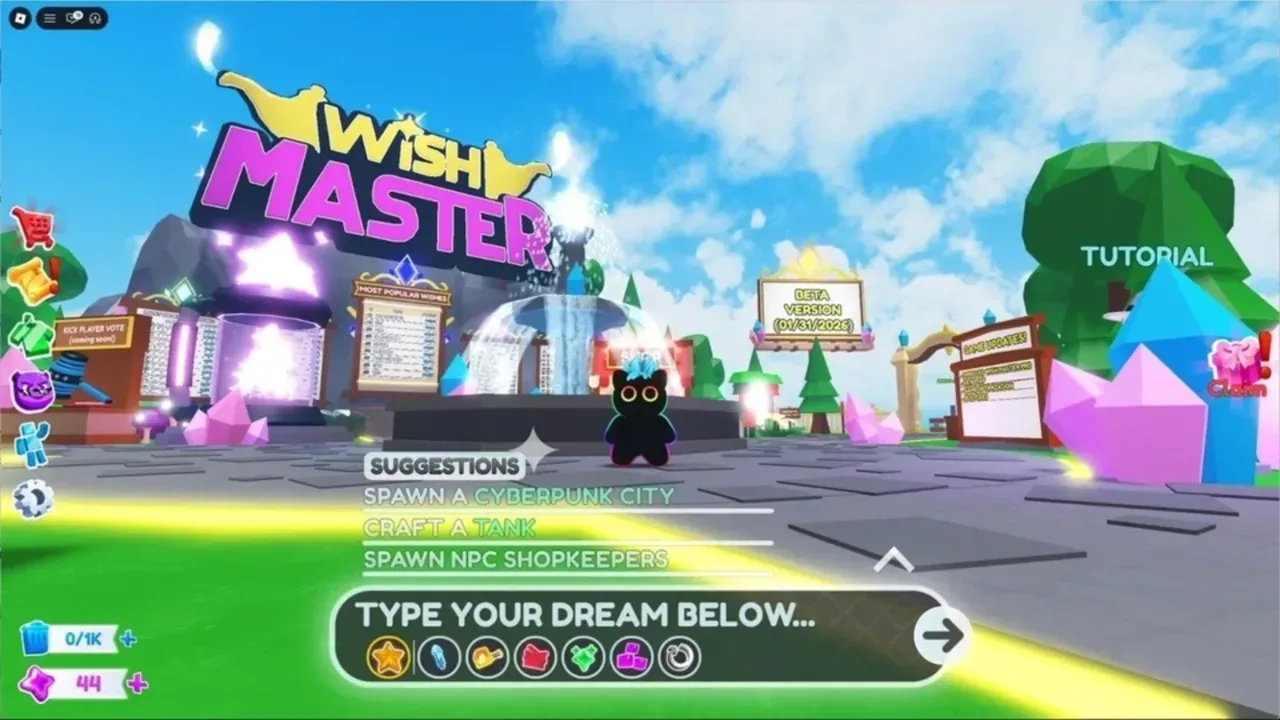
Image: gamedeveloper.com
Roblox is putting prompt-made game creation inside its mobile app
Roblox will begin testing Build, a mobile-first AI creation tool that turns text prompts into basic Roblox games, in New Zealand on July 28. The company announced the tool through its About Roblox newsroom, describing it as a way for anyone to create a basic game directly inside the Roblox mobile app rather than starting in the traditional desktop Studio workflow.
That is the concrete shift. The tension is what happens when a platform already defined by scale lowers the first step of creation again. Roblox says Build can generate a playable starting point from a prompt such as a cozy adventure game in a dense forest with environmental obstacles, then let the creator iterate, playtest, share with friends, or publish to Roblox. IGN reports that a base-level version of Build will be available at no cost, with paid options planned for power users.
Roblox is presenting the Roblox mobile AI tool as an accessibility play for first-time creators and small teams. Its CEO, David Baszucki, said in a public post quoted by IGN and GamesBeat that the company wants faster iteration, fewer technical constraints, and room for creators to push farther than they could have before. For players and developers, the immediate question is less philosophical and more operational: if Roblox text prompt games become easy to make, how does the platform stop discovery from becoming a pile-up of disposable experiments?
What Build is confirmed to generate, and where the creator still matters
According to Roblox, Build is powered by a broad set of AI models, including open-source models and proprietary Roblox models. The company says it can handle gameplay mechanics, environments, characters, visual style, sound, and other elements without leaving Roblox. Roblox also says its proprietary models are trained on a large set of 3D models and gaming-specific data, allowing them to create functional 3D objects and full 3D scenes that can integrate with existing Roblox creation tools.
The important word in Roblox's own description is "starting point." Build is not being described as a finished-game factory that replaces design judgment, balancing, testing, or live operation. The company says creators can iterate on the generated result, playtest it, share it, or publish it. In strategy terms, that means the early advantage will likely move away from basic scene assembly and toward prompt direction, taste, pacing, retention design, and knowing when the generated structure is worth keeping.
That distinction matters for established Roblox creators. If Build reliably creates a functional prototype, it may compress the time between idea and first playable test. It does not automatically solve whether a loop holds attention after five minutes, whether monetization feels fair, whether controls are readable on a phone, or whether the experience has a reason to exist beside thousands of similar concepts. The Roblox creator AI pitch reduces friction at the front of the pipeline. It does not remove the market pressure at the end of it.
The rollout starts narrow, with age gates and unanswered platform questions
IGN reports that select Build features, including the ability to publish games, will enter public alpha in New Zealand beginning July 28. Build will be available to age-checked users aged nine and older. Published games that pass what Roblox calls robust safety checks will be globally available to age-checked users aged 16 and older.
That limited launch gives Roblox a controlled test bed before a broader rollout. GamesBeat reports that Roblox will start in New Zealand and evaluate whether the tools are being used properly and whether safeguards are working. That framing is notable because Roblox is not only testing generation quality. It is testing moderation, publishing flow, discovery consequences, and creator behavior in a live ecosystem.
One practical detail remains unclear from the provided reporting: where Build-generated games will be playable. Rock Paper Shotgun noted that it asked Roblox whether games generated using Build will be playable on PC or only mobile, but the source material does not include an answer. The confirmed fact is that creation happens directly within the Roblox mobile app. The playability footprint across PC, mobile, and other Roblox-supported platforms has not been clarified in the provided sources.
Roblox says discovery will not reward low-effort AI output
Roblox's strongest defense against a flood of low-effort AI games is discovery. In comments quoted by Rock Paper Shotgun and echoed in GamesBeat's coverage, the company said its discovery systems are designed to highlight games with long-term retention, which it says does not include "AI slop." Roblox also said the quality of games on the homepage is not changing, adding that if no one plays a game, no one can find it.
That is a clear claim, but it is also a claim about outcomes rather than volume. Retention-based discovery can reduce the visibility of games players abandon quickly. It does not mean those games will never be created, submitted, shared, or encountered through other paths. The likely pressure point is the gap between publishing and proving retention. Roblox's safety checks may filter content for policy issues, while discovery systems may filter for engagement, but neither mechanism has been shown in the provided sources as a guarantee of originality, craft, or long-term quality.
For creators, the takeaway is tactical. A prompt-generated map or loop may get someone to publish faster, but the Roblox homepage still appears to be governed by player behavior signals. If Roblox keeps retention as the key gate, Build may raise the floor for prototyping while raising the competitive bar for keeping players. The easiest games to generate may also become the easiest games for players to ignore.
The Studio tools point to a broader shift than mobile prompting
Build is only one part of Roblox's July 28 AI push. IGN reports that Roblox will also release new agentic tools for professional Roblox creators that can playtest to catch bugs before players do, answer questions about game performance, and identify ways to improve engagement and retention. Rock Paper Shotgun separately cites planned tools including a playtesting agent that surfaces bugs before a player experiences the game and an experiment agent that identifies tests to run to drive engagement, retention, and monetization.
That second layer is where Roblox's strategy becomes sharper. Mobile text prompts help new creators enter. Studio agents help existing developers iterate and optimize. Taken together, Roblox is trying to automate both the birth of an experience and parts of the live-service tuning process that determine whether it survives.
There is an obvious upside if the tools work as described. Smaller teams could find bugs earlier, test ideas faster, and get performance answers without digging through every diagnostic step manually. There is also a design risk. If experiment agents push creators toward the same engagement and monetization patterns, the platform could become more efficient while feeling more homogenized. Roblox has confirmed the tool categories, but the provided sources do not detail how much control creators will have over recommendations, what data the agents will expose, or how monetization guidance will be constrained.
What creators should watch before building a plan around Build
Creators outside New Zealand should treat July 28 as an alpha signal, not a general launch. The provided sources confirm a New Zealand public alpha for select Build features and do not provide a wider release date. If you are planning a Roblox AI game creation workflow, the first thing to watch is when Roblox expands access and whether the feature set changes after the initial market test.
Pricing is another open lane. IGN reports that the base-level version of Build will be free, with additional paid options for power users. The provided source material does not include pricing, limits, usage caps, or details on which features sit behind paid access. That matters because a tool that is free for rough prototypes but paid for heavier iteration would affect small creator economics differently than a broadly open system.
Creators should also watch how generated work moves into Studio, how much can be edited after generation, and whether Build-created projects carry any special labeling, moderation treatment, or analytics. Roblox says generated objects and scenes can integrate with existing creation tools, but the sources do not spell out the complete handoff workflow. On a platform where retention and monetization can decide whether an experience lives, the editability of AI output may matter as much as the first prompt.
Finally, keep an eye on safety checks and age gates. IGN reports that published Build games must pass robust safety checks before becoming globally available to age-checked users 16 and older. The sources do not define those checks in detail. For creators making social or youth-facing experiences, moderation outcomes may become a major part of production planning, especially if generated content introduces unexpected assets, behaviors, or themes.
The strategic read: Roblox is changing the entry cost, not the win condition
Roblox has spent years building around user-generated content, and the company's own newsroom frames Build as the next step in accelerating creation across experience levels. GamesBeat reports that Roblox executives Nick Tornow and Vlad Loktev tied the announcement to the platform's original premise that users make the games, while Baszucki framed the move as part of a 20-year mission to remove limits on gaming creation.
The strategy is coherent. If Roblox can turn casual players into first-time creators from a phone, it increases the supply of experiments. If it can give experienced creators agents for testing and optimization, it increases the speed of iteration. The risk is that creation speed and player value do not scale at the same rate. A healthy Roblox ecosystem needs prototypes, but it also needs curation, identity, technical stability, fair monetization, and games worth returning to.
For now, the confirmed story is narrow but consequential: Roblox text prompt games are entering public alpha in New Zealand on July 28 through Build, with free base access, paid power-user options, age-checked availability, safety checks for published games, and separate AI tools coming to Studio. The unresolved story is whether Roblox's retention-driven discovery can absorb a new wave of AI-assisted publishing without making creators feel invisible and players feel buried. That answer will not come from the announcement. It will come from what the homepage looks like after the prompts start landing.