
How a solo-developed Finnish survival shooter turned a surprise Early Access hit into rare long-term financial security, and what that means for its future.
Road to Vostok’s Early Access Blastoff Has Bought It Years Of Freedom
Road to Vostok did not arrive on Steam Early Access with a huge publisher, a glossy marketing campaign, or a famous studio logo. It arrived as a niche, relentlessly grounded survival shooter built by one Finnish developer, Antti Leinonen, aiming squarely at players who obsess over extraction shooters, Eastern European post-apocalyptic worlds, and unforgiving gunplay.
That narrow focus has paid off faster than anyone expected. Within days of launch, Road to Vostok was charting among Steam’s global top sellers and pulling in “Very Positive” user reviews, and Leinonen publicly stated that the game’s Early Access sales had already secured the project’s production budget for “years and years to come.” For a solo indie in Early Access, that kind of runway is rare. For a hardcore survival sim that wears its rough edges openly, it is remarkable.
This early victory raises two big questions. Why did Road to Vostok connect so quickly in such a crowded field, and what does this sudden financial stability actually mean for the game’s long-term roadmap?
A Hardcore Pitch That Knows Its Audience
Road to Vostok does not waste time trying to be everything to everyone. It is a single player survival shooter set across a harsh border zone between Finland and Russia, full of derelict buildings, ruined villages, and tense forested crossings. The fantasy is straightforward: survive, loot, prepare, and push deeper toward the mysterious Vostok region.
In practice that means slow, deliberate movement, lethal gunfights, and a focus on planning rather than power fantasy. Every scavenging run is meant to feel meaningful. Weapons have weight and kick, supplies are scarce, and a bad engagement can end a long session in seconds. There is no instant respawn to shrug it off. You are expected to treat each encounter like it matters.
That design lines up cleanly with a growing audience that craves extraction-style tension without the chaos of PvP. The rise of games like Escape from Tarkov and the surge of interest around S.T.A.L.K.E.R. 2 show how hungry players are for Eastern European flavored, systems-heavy shooters. Road to Vostok slots neatly into that space but keeps it strictly single player, removing the barrier of needing friends or tolerating sweaty lobbies.
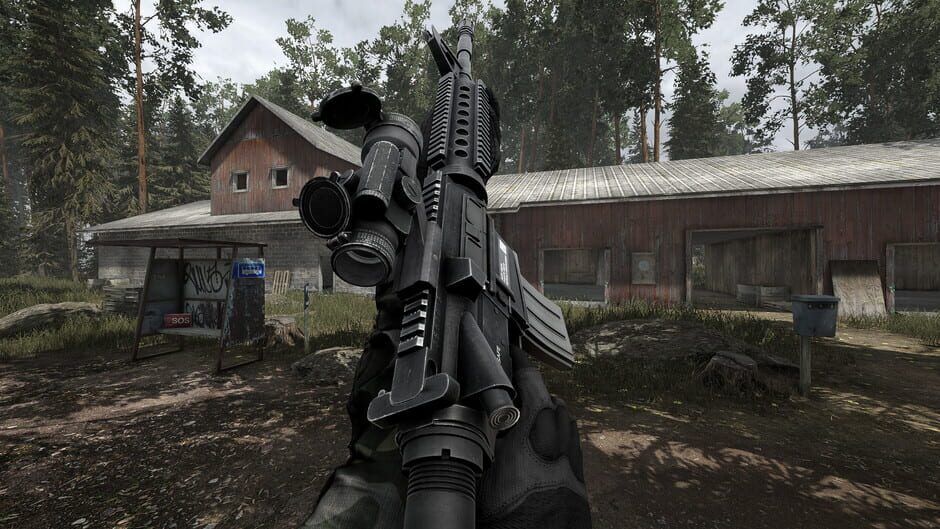
Screenshots and footage circulating online show dense interiors, cluttered safehouses, and weathered landscapes that feel grounded rather than flashy. The art direction is utilitarian: battered wood, rusting metal, worn textiles, and cold northern light sell the fantasy of a remote, dangerous border region. It helps that this setting comes from a Finnish creator who is working with an environment he understands, instead of a generic apocalypse template.
Solo Development As A Selling Point
In another era, players might have been wary of a one-person survival shooter promising long-term support. Today, that story is often a mark of authenticity rather than a red flag, especially when the work in progress is shown publicly and consistently.
Leinonen has spent years openly sharing Road to Vostok’s development, posting progress updates, tech breakdowns, and raw gameplay. That transparency set expectations correctly long before Early Access. Players knew they were walking into an evolving project, not a slickly marketed product that would quietly stall after launch.
Being solo also creates a tight loop between feedback and iteration. There are no layers of management or marketing filters between Steam user reviews and the person actually adjusting recoil or tweaking AI behaviors. That directness is part of the appeal for a community that likes to discuss minutiae such as armor penetration values, sight alignment, and loot economy balance. When those players feel listened to, they stick around.
In the Early Access build, you can already see the benefits of that focus. Systems that matter to this audience, like inventory management, weapon feel, and navigation between safe zones and high-risk areas, are given clear priority. Plenty of edges still need sanding, but the core loop of gearing up, venturing out, and trying to make it back alive feels intact.
A Launch That Outpaced Expectations
According to coverage from outlets like Rock Paper Shotgun, The Escapist, and TechRaptor, Road to Vostok’s first days on Steam were explosive compared to typical indie debuts. The game climbed into Steam’s global top sellers list, at one point hovering around the mid-teens, and secured Top Seller status in a range of countries. That is unusual visibility for a game with no mainstream marketing push.
Equally important was the reception from players actually buying it. Early on, Road to Vostok settled into a Very Positive review rating. In the crowded survival genre, where half-finished systems and broken promises are common, strong user sentiment carries real weight. It tells cautious buyers that what is there already works well enough to justify the price, even if the feature list is clearly incomplete.
Leinonen described the response as “absolutely insane” and followed that with the claim that Early Access sales had already covered the game’s full production budget for years to come. That is not the usual Early Access story. Many small teams launch into Early Access precisely because they need a trickle of revenue to stay afloat while they finish the game. Road to Vostok appears to have jumped straight past that precarious stage.
Why This Kind Of Runway Is So Rare
To understand why this result stands out, it helps to look at how most indie Early Access projects operate. The standard path is a gradual climb. A small core of enthusiasts buys in early, word of mouth spreads slowly, and revenue arrives in spikes around big patches and seasonal sales. Developers are often balancing contract work or second jobs against continued production.
That situation leads to a fragile loop. If updates slow down because the team runs out of time or money, players drift away. Fewer players means fewer sales and less feedback, which makes it even harder to justify future work. Many Early Access games never fully escape that gravity well.
Road to Vostok broke that pattern by generating a huge burst of interest immediately, large enough that the developer can talk in terms of “years and years” of secured production funding. There is no publisher advance that needs recouping, no external investor to pay back, and no larger team payroll to burn through. For a solo developer, hitting Steam’s upper sales ranks even briefly can translate into a disproportionate level of financial stability.
That stability matters beyond simple comfort. It gives the project resilience against the genre’s usual volatility. If interest dips while a major system rewrite is underway, it is less catastrophic. If a particular feature takes months longer than expected, there is still room to breathe. Very few Early Access indies get to work with that kind of margin.
What Long-Term Funding Means For The Roadmap
With money in the bank, the obvious question is how Road to Vostok’s roadmap will evolve. The developer has already spoken in terms of a multi-year Early Access period, something like two to four years. Financial security makes that timeline feel realistic instead of optimistic.
More importantly, it creates room to prioritize depth over quick wins. Road to Vostok’s core loop is inherently systemic: weapons, AI, weather, loot tables, and the geography of its border zone all interact. Rushing out a laundry list of features to satisfy store page bullet points could easily destabilize what already works. By contrast, a well-funded, patient roadmap can tackle foundational work first, then layer in content and polish.
We can reasonably expect more maps with distinct tactical challenges, more nuanced AI behaviors, expanded survival systems, and deeper progression structures that tie each border crossing into a larger campaign. The key difference now is that those systems do not have to be built with one eye constantly on short-term revenue spikes.
There is also the psychological effect. When a solo developer no longer has to worry about whether the next patch will pay rent, it changes how they can think about risk. Experimental features, engine improvements, or substantial reworks of unpopular mechanics become viable options instead of existential threats.
The Risk Of Comfort And The Weight Of Expectation
Financial security solves some problems but introduces others. Road to Vostok’s early buyers did not just purchase the current build, they bought into a promise of where the game will go over the next several years. With headlines emphasizing that “the entire production budget” is already covered, expectations for follow-through will only rise.
Players will want to see that the roadmap is not frozen in place after success. Regular updates, detailed patch notes, and continued transparency about priorities will be crucial. Any long gap in communication can quickly be interpreted as stagnation, especially in a genre with vocal and detail-oriented communities.
There is also creative pressure. A solo developer with a secure runway has freedom, but also fewer external constraints to push back against overly ambitious ideas. The temptation to rebuild systems repeatedly or chase every popular mechanic in the survival space could slow progress. Discipline matters as much as money here.
Still, Road to Vostok has one major advantage over many similarly ambitious projects: the scope is already framed around a focused single player experience. There is no pivot to large-scale PvP or live service obligations sitting in the background. That narrower scope gives “years and years” of funding a much higher chance of translating into a polished, finished game.
A Signal Moment For Niche Survival Shooters
In isolation, Road to Vostok is simply a success story for one driven creator. In context, it hints at a broader trend in the PC space. Players are increasingly willing to support Early Access projects that target a clear, specific fantasy and back it up with transparent development.
This is not a flashy, open world loot treadmill. It is a single player survival shooter set along a bleak border, with unforgiving combat and a quiet, methodical tone. The fact that such a tightly targeted project could fund itself for years in a matter of days says something about how fragmented and self-selecting the Steam audience has become.
For other indies, the lesson is not that every Early Access launch will or should hit this level of success. It is that clarity of vision, consistency of communication, and a build that already respects players’ time can still break through without traditional marketing muscle. For players, it is a reminder that sometimes buying into Early Access does exactly what it is supposed to do: it gives a promising game the stability it needs to actually reach its destination.
Road to Vostok now faces the long, quiet part of that journey. The early explosion of sales has bought it something most indies never get, which is time. How Leinonen spends that time will determine whether Road to Vostok ends up as a cult curiosity, a genre touchstone, or something in between. For now, it stands as one of the clearest examples in recent memory of Early Access doing right by both developer and community.