
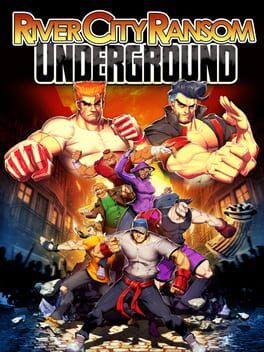

River City Ransom: Underground is about to leave Steam due to an expiring Arc System Works licensing deal. Here’s what’s happening, what you still get if you buy it now, how it fits into Kunio-kun / River City history, and whether it’s worth grabbing at a steep discount.
River City Ransom: Underground is in its final run on Steam. Developer Conatus Creative has confirmed that the game is being delisted as a result of a licensing agreement expiring, with the process already underway. If you care about beat-’em-up history or just want a solid co-op brawler on PC, this is your last realistic chance to buy it digitally.
This piece breaks down what is happening with the Arc System Works license, exactly what you get if you buy it before it goes, how it fits into the Kunio-kun and River City lineage, and whether it is still worth picking up at its current fire-sale price.
Why River City Ransom: Underground is being delisted
River City Ransom: Underground is an officially licensed follow-up to Technōs Japan’s 1989 NES classic River City Ransom. After Technōs folded, the Kunio-kun / River City rights ended up with Million and then with Arc System Works, which is now the franchise owner.
Conatus Creative negotiated a license with Arc System Works to make a new entry in the series. That deal appears to have been time-limited. According to Conatus’ Steam announcement and reporting from Siliconera, PCGamesN, TechRaptor, and preservation site Delisted Games, the Steam removal is happening because that license has expired. The delisting notice on Steam explicitly says the game is being removed due to an expiring licensing agreement.
There is no indication of legal drama, takedowns, or server shutdowns. This is a straightforward case of a rights agreement ending. When that happens, stores like Steam, GOG, and Humble can no longer sell the title. Delisted Games also notes that GOG and Humble storefront removals are likely, even if they are not yet public.
Practically speaking, this puts River City Ransom: Underground in the same category as other licensed beat-’em-ups that disappeared when deals lapsed, like the original Scott Pilgrim vs. The World: The Game or multiple TMNT titles before their recent comebacks.
What you still get if you buy it before it disappears
The important bit for buyers is that this is a delisting from sale, not a revocation of ownership.
Conatus has confirmed that anyone who owns River City Ransom: Underground before it is removed will retain access in their library. On Steam, that means you can still download and play it after it disappears from the store, just like other delisted games you already own. There is no sign that patches will be removed or builds altered.
Right now the game is heavily discounted, typically around 85% off, dropping the price to just a few dollars. The Steam page is already a bare-bones shell with most art assets removed, but the build available is the full, updated version of the game.
Here is what you are actually locking in if you purchase it before the license runs out:
River City Ransom: Underground is a 2D side-scrolling beat-’em-up with a strong RPG layer. You explore an interconnected city, fight gangs, gain cash, and spend it on moves, food, and gear. It is very deliberately built as a sequel to the NES original, keeping the expressive sprite style and goofy tone while expanding almost every system.
There are multiple playable characters, each with their own move sets and growth paths, a long campaign that supports local and online co-op, and a separate arena fighting mode if you just want quick brawls. Under the hood there are hundreds of individual moves and variations to unlock, from grapples and juggle tools to quirky environmental attacks.
On PC it supports single player, local co-op on one machine, and online multiplayer, with options for split-screen style play. Performance on even modest hardware is generally stable due to the 2D pixel art presentation.
The takeaway is simple: if you buy it now, you are buying a finished, fully featured version of the game that will keep working on your account for the foreseeable future, subject only to eventual OS compatibility and Steam itself continuing to operate.
How Underground fits into Kunio-kun and River City history
To understand why this delisting stings, it helps to place Underground inside the wider Kunio-kun / River City family.
Kunio-kun started as a series of Famicom and arcade brawlers and sports games in Japan, starring a hot-blooded delinquent hero, Kunio. In the West, many of these arrived rebranded under the River City label, with River City Ransom on NES becoming the cult favorite. That game mixed side-scrolling street fights with open city exploration and stat growth through food and books, years before action RPGs adopted similar ideas.
River City Ransom: Underground set out to be an explicit sequel to that NES entry. It is set years later, with new protagonists who look up to Alex and Ryan as legendary figures. The game pulls in locations, gangs, and visual cues directly from the original, but then folds in decades of genre evolution, from combo-heavy juggling to Metroidvania style map design.
It is also distinct from recent Japanese-led revivals. Arc System Works has overseen its own modern Kunio-kun projects, like River City Girls from WayForward and River City Melee titles, which lean into different aesthetics and mechanics. Underground occupies a unique niche as a Western-developed, officially licensed continuation of the classic River City Ransom formula, more interested in deep fighting systems and NES-era tone than in reinventing the brand.
With the license expiring, that official connection is exactly what disappears. Conatus cannot continue to sell an Arc-owned IP sequel, and because the game is so tightly tied to River City branding and characters, it is unlikely to be reissued under a different name without heavy rework that would essentially turn it into a new project.
Is River City Ransom: Underground worth it at the steep discount?
As a buyer’s guide, the main question is whether this last-chance purchase is worth making. At full price, Underground was a more qualified recommendation, especially early in its life when it launched with bugs and rough edges. Over time, patches improved stability and balance, and the game settled into a “mostly positive” reception on Steam with a stable cult audience.
At a deep discount of just a few dollars, its value proposition looks much stronger.
If you are a fan of classic brawlers, the NES original, or genre revivals like River City Girls, Streets of Rage 4, or Scott Pilgrim, Underground is easy to recommend. The combat is crunchy, the moveset depth is impressive, and the campaign is generous. Its pixel art leans into a chunky, slightly grimy look that feels more NES sequel than modern reboot, and the soundtrack fits that tone.
There are caveats. The onboarding can be opaque if you are not used to old-school, grind-heavy action RPGs. Some difficulty spikes and balance quirks remain. Online co-op quality depends on peer connections rather than cutting-edge netcode. You also have to be comfortable with the fact that this is effectively a frozen piece of software. Without an active license, new platforms, patches, or quality-of-life overhauls are unlikely.
Balancing those factors against the ultra-low asking price, River City Ransom: Underground is worth grabbing if you have any affection for the series or the genre at all. As a piece of Kunio-kun history and a robust, if imperfect, brawler, it punches well above what it currently costs.
If you are simply beat-’em-up curious and swimming in backlog, you will still get your money’s worth, but it does not displace the absolute top-tier modern brawlers.
Preservation stakes: why this delisting matters
For game preservation, the delisting is another warning sign about the fragility of licensed continuations of classic IP. Underground is not just a random indie. It is a fully sanctioned sequel in a long-running series, with direct story and world connections to River City Ransom. Once it leaves stores, there will no longer be a legal route to buy that chapter.
Because it is a digital-only PC release with no widespread physical edition, there is no retail stock to soak up demand after the license ends. Future players will depend on prior owners keeping backups and on the continued existence of services like Steam. That mirrors what happened to Scott Pilgrim for years when it vanished, and to numerous comic and TV tie-in brawlers.
For preservation-minded players, buying Underground before the cutoff is partly about voting with your wallet for this slice of Kunio-kun history and making sure it does not vanish entirely from reach. Even if you only play through once, owning it helps keep the game in circulation.
Where it sits in today’s beat-’em-up landscape
River City Ransom: Underground came out in 2017, just before the current mini-renaissance for beat-’em-ups really exploded. Since then, PC and console players have seen a wave of strong contenders.
On PC, platforms like Steam and GOG are home to a rich spread of brawlers, from big-name revivals such as Streets of Rage 4 and Teenage Mutant Ninja Turtles: Shredder’s Revenge, to stylish indies like Young Souls and Fight’N Rage. Other River City games, including River City Girls and various Kunio-kun compilations, are also available across PC and consoles.
Compared to those, Underground feels more like a deep-cut companion piece than a headliner. It is more systems-heavy and grind-oriented than something like Shredder’s Revenge, and it leans harder into open-world wandering than level-select nostalgia. For some players that makes it uniquely appealing, for others it can feel a little dated.
On other platforms, the gap that Underground fills on PC is sometimes covered by console-focused releases. Switch, PlayStation, and Xbox each have a strong lineup of brawlers old and new. But Underground itself is primarily a PC-centric title, with Linux and macOS versions rounding out its reach. Once its license expires, those ecosystems lose one of the few modern, PC-first River City projects.
In that context, the delisting does not leave the genre bare, but it does remove a distinctive thread that tied Western PC indie development directly into an iconic Japanese beat-’em-up lineage.
Final recommendation
If you have any fondness for River City Ransom, retro beat-’em-ups, or gaming history, River City Ransom: Underground is worth picking up before it vanishes from sale. At a steep discount it is a low-risk purchase that nets you a substantial co-op-friendly brawler and a rare officially licensed sequel bridging the gap between the 8-bit original and modern Kunio-kun revivals.
If you are only mildly curious and already satisfied with modern brawlers like Streets of Rage 4 or Shredder’s Revenge, you are not missing a genre-defining classic by skipping it, but you are missing one of the few tangible links between those games and the specific River City Ransom tradition on PC.
Once the Arc System Works license fully lapses and store listings go dark, this window closes. For preservationists and fans alike, now is the time to decide whether this particular piece of River City history deserves a spot in your library.