
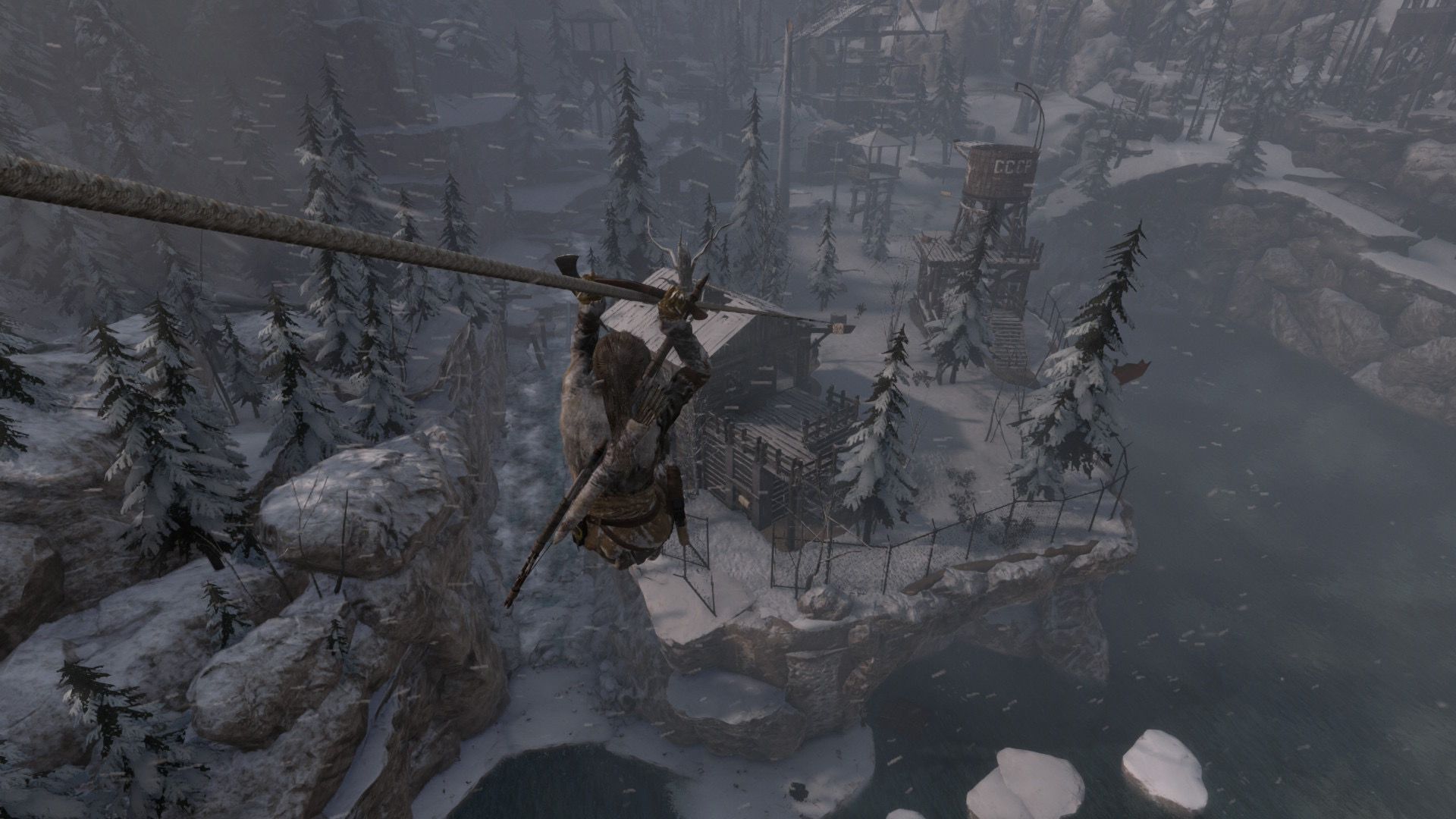
Aspyr's Tomb Raider Switch 2 interview clarifies the port's priorities, the current gyro-control gap, and the practical questions around revisiting Rise on Nintendo's new hardware.
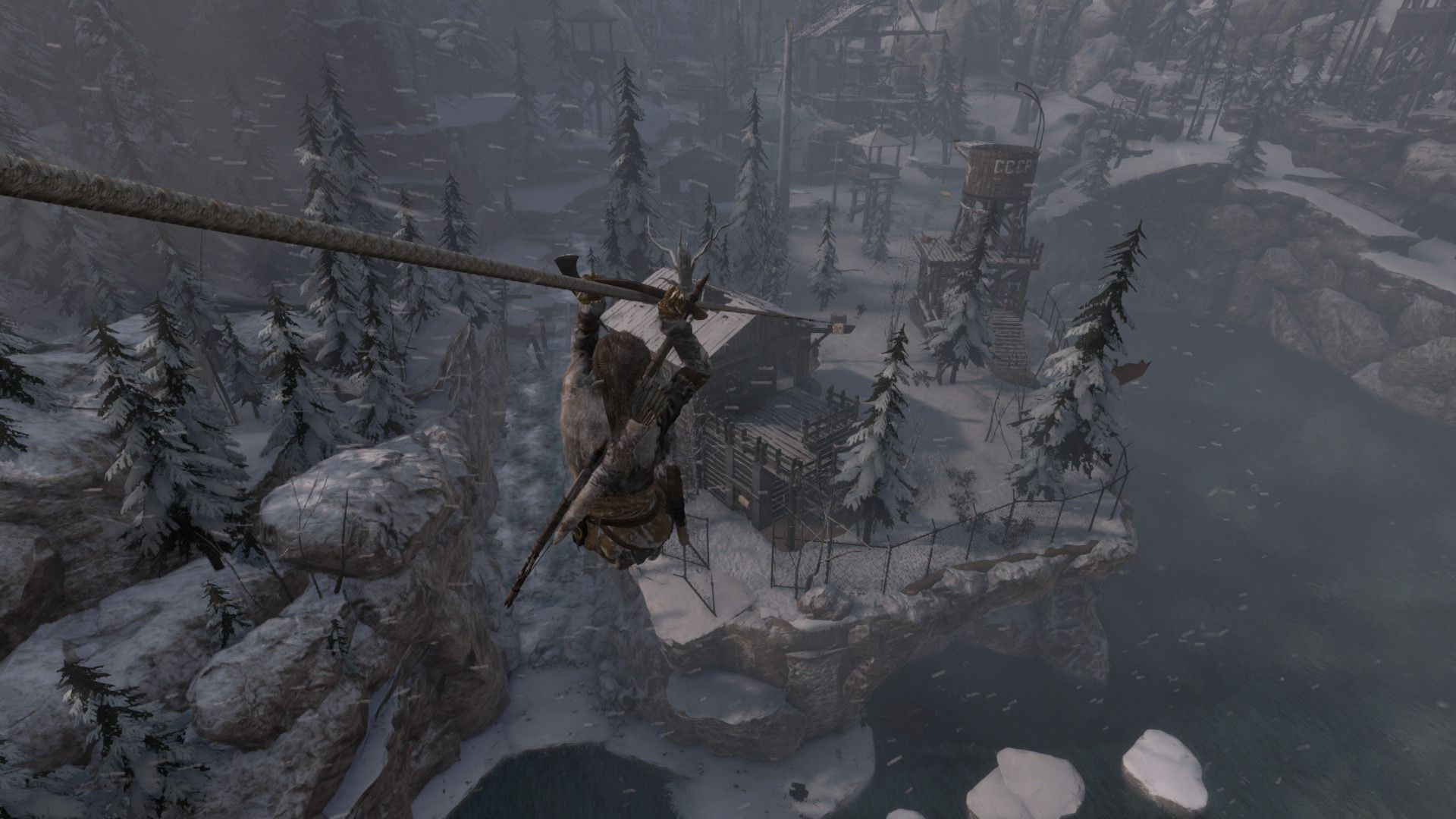
Image: cubed3.com
Rise arrives on Switch 2, but the port raises a sharper question
Rise of the Tomb Raider: 20 Year Celebration was announced and released for Nintendo Switch 2 during the June Nintendo Direct, according to Nintendo Everything, making this the first time Nintendo players can officially play the second entry in Crystal Dynamics’ Survivor trilogy. The concrete news is simple: Aspyr has brought over the complete edition, including the main game and DLC, to Nintendo’s new system. The tension is in what did not arrive with it: there is no original Switch version, and the Switch 2 release does not currently offer gyro aiming.
That matters for a game built around rhythm. Rise constantly shifts Lara between careful climbing, scavenging, bow shots from cover, close-range firefights, and tomb puzzles that ask players to slow down after the avalanche of a set piece. On Switch 2, the question is less whether Rise is a good action-adventure. Nintendo Life calls it arguably the best entry in the Survivor Trilogy, and Nintendo Insider says it remains generally regarded as the trilogy’s high point. The useful question for returning players is whether this Rise of the Tomb Raider Switch 2 port fits the way they want to play Lara’s most combat-forward middle chapter in 2026.
Nintendo Everything’s Tomb Raider Switch 2 interview with product manager Anna Grant and senior game producer Kay Gilmore frames the port around three areas players have been asking about: the porting process, the lack of a Switch 1 version, and the possibility of gyro controls for aiming in the future. The supplied interview excerpt does not include every answer in full, so the safest reading is to separate what is confirmed from what is implied by the release, reviews, and public statements around the port.
Aspyr’s stated priority is preserving the original, not reinventing it
In Nintendo Everything’s interview, Aspyr describes porting as heavier work than players might expect. Grant and Gilmore say the first and most important tenet in the development process is to “do justice by the original title,” adding that players want “the magic they remember” delivered on a modern console that can take advantage of newer gaming technology.
That statement sets expectations. This is not being presented as a remake or a full mechanical overhaul. The Switch 2 release carries the 20 Year Celebration name, which Nintendo Insider notes signals the familiar complete-edition package: the base campaign and DLC content rather than a new version with a fresh subtitle. Nintendo Everything’s announcement also says the package includes prior exclusives, and Aspyr’s provided description highlights story content, puzzle tombs, combat, stealth options, survival upgrades, crafting, and customization.
For players, that means the core pacing remains the 2015-era Rise formula: hub areas, resource gathering, skill upgrades, optional tombs, and cinematic pressure points where Lara is thrown from quiet traversal into a collapsing mountain, a firefight, or a desperate escape. If the 2013 reboot was about Lara becoming capable under stress, Rise is the entry that turns that capacity into a repeatable combat loop. The port’s value depends on how faithfully that loop holds up on Switch 2, especially in handheld play where aiming feel and frame pacing can decide whether a stealth encounter feels sharp or sticky.
Gyro support is present, but not where many players expected it
The most awkward confirmed detail is the current implementation of Tomb Raider Switch 2 gyro controls. Nintendo Insider reports that Rise of the Tomb Raider: 20 Year Celebration on Switch 2 includes HD Rumble, some gyro support, and Joy-Con 2 Mouse support, but says the gyro feature is used for examining treasures rather than aiming. That is a strange fit for Rise because the bow, firearms, and thrown distractions carry so much of the game’s combat texture.
Nintendo Everything’s interview specifically raises the possibility of supporting gyro controls for aiming in the future. That phrasing is important. A future possibility is not a patch announcement, a date, or a guarantee. Based on the provided source material, gyro aiming is best treated as unconfirmed. Players buying now should assume the game they are getting uses gyro in a limited inspection context, with Joy-Con 2 Mouse support available as an added input option according to Nintendo Insider.
The difference is practical. Gyro aiming on Switch has become a comfort feature for many players in shooters and bow-heavy action games, especially in handheld mode where tiny stick corrections can feel cramped. Rise’s encounters often ask for a quick headshot from cover, a silent arrow before patrols spread out, or a fast swap to explosives when armored Trinity soldiers press the line. Without confirmed gyro aiming, players sensitive to analog-stick aiming should wait for patch details or look for hands-on impressions focused on input feel rather than only resolution and frame rate.
The Switch 1 absence points to a technical and strategic cutoff
Nintendo Everything says the interview covers the reason Rise did not release on the original Switch, but the supplied excerpt does not preserve a direct quote explaining the decision. What is confirmed is the release pattern: Tomb Raider: Definitive Edition came to Switch 1 and Switch 2, while Rise of the Tomb Raider: 20 Year Celebration was announced for Switch 2. Nintendo Everything describes Rise as another Tomb Raider game added to the Switch 2 lineup, and the announcement post identifies it for Nintendo Switch 2 rather than both systems.
The technical context makes that cutoff easier to understand, even if it should be labeled as interpretation rather than a quoted developer rationale. Nintendo Insider reports the Switch 2 version runs at a fairly reliable 30 frames per second at 1080p, with graphical detail similar to the base PlayStation 4 version. Nintendo Life also says the sequel’s more advanced graphics contribute to a slight performance hit, while still calling the port overall solid. If Switch 2 is delivering this version at 1080p and 30fps rather than 60fps, an original Switch port would likely have required deeper compromises than the 2013 reboot.
That does not prove a Switch 1 version was impossible. It does, however, explain the business and production logic visible in the sources. Aspyr is continuing a Tomb Raider catalog push on Nintendo hardware, but Rise appears to be positioned around Switch 2’s stronger baseline and newer input features. For Switch 1 owners, the practical guidance is plain: there is no confirmed Rise of the Tomb Raider Switch port for the original system in the provided material, and players should not plan around one unless Aspyr announces it.
Performance favors a stable complete edition over a 60fps showcase
The performance picture is consistent across the supplied reviews, with one important caveat: this article is not a GameLoop review, and we are relying on other outlets’ testing. Nintendo Insider reports 1080p resolution, graphical detail similar to the base PS4 version, and a fairly reliable 30fps frame rate. CGMagazine lists the Switch 2 release at $26.99, with a June 9, 2026 release date, and identifies Crystal Dynamics and Aspyr as developers with Aspyr as publisher. Nintendo Life describes the port as solid despite a performance hit tied to Rise’s more advanced visuals compared with the earlier reboot.
That paints a specific kind of port. It is not being sold in the supplied sources as a 60fps technical showcase. It is a complete-content version of a visually denser sequel, running on portable Nintendo hardware at a target that reviews describe as workable and generally reliable. The combat rhythm in Rise can tolerate 30fps when frame pacing is steady, because many encounters are built around preparation, cover, and crafting rather than pure twitch shooting. Still, the absence of 60fps will matter to players who replayed the game on newer consoles or PC, where higher frame rates can make Lara’s aiming, scrambling, and animation transitions feel more immediate.
The Switch 2-specific additions slightly complicate that tradeoff. HD Rumble and Joy-Con 2 Mouse support suggest Aspyr did more than simply move the code over unchanged, while the limited gyro use shows the port has not yet aligned every system-level feature with the game’s combat needs. The result, based on the sources, is a functional and content-complete release with technical priorities weighted toward visual parity and portability rather than maximum responsiveness.
Who should revisit Lara on Nintendo Switch 2 now, and who should wait
For Nintendo-only players, the case for Rise of the Tomb Raider Nintendo Switch 2 is strongest. This is the first official opportunity on Nintendo hardware to play the Survivor trilogy’s middle chapter, and the included DLC makes it a broad package rather than a bare campaign drop. Aspyr’s announcement language emphasizes the full adventure: Trinity, the Divine Source, Siberian survival, puzzle tombs, stealth, combat, upgrades, and customization. If you played Tomb Raider: Definitive Edition on Switch or Switch 2 and want the next step in Lara’s transformation, this release directly serves that path.
Returning players have a narrower decision. If portability is the draw, the Switch 2 version offers the complete edition with reported 1080p and a fairly reliable 30fps frame rate. If you are chasing the smoothest version, the supplied material gives no reason to expect 60fps on Switch 2. If gyro aiming is a deciding feature, wait. Nintendo Everything’s interview identifies future gyro aiming as a subject of discussion, but Nintendo Insider’s review states the current gyro support is for treasure examination rather than aiming.
The broader signal from the Tomb Raider Switch 2 interview is that Aspyr is treating Nintendo hardware as part of Lara Croft’s catalog strategy. The studio told Nintendo Everything it loves releasing games on Switch and Switch 2 and expects more Nintendo projects in the near future, though it did not share sales figures for Tomb Raider: Definitive Edition. That is encouragement, not a schedule. Shadow of the Tomb Raider remains unannounced for Switch 2 in the provided sources, and players should treat any expectation of a full Survivor trilogy on the platform as speculation until Aspyr says otherwise.
For now, Rise on Switch 2 is best understood as a measured port of a strong action-adventure sequel: complete, portable, apparently stable at 30fps, and missing the gyro aiming option many Nintendo players would naturally look for. Lara’s climb is here. The question is whether you want to make it with the tools available today, or wait to see whether Aspyr sharpens the aim in a later update.