
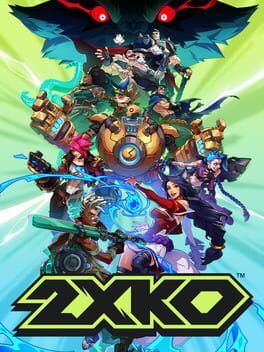
Riot is cutting roughly half of 2XKO’s team just weeks after launch. Here’s how a smaller staff is likely to reshape balance patches, character cadence, and the game’s esports ambitions compared to other modern fighters.
Riot is shrinking 2XKO’s development team less than a month after launch, with around 80 roles affected according to multiple reports. Executive producer Tom Cannon framed it as a response to “overall momentum” not reaching the level needed to support a large team long term, while stressing that 2XKO still has a passionate core and that the 2026 Competitive Series plans remain “unchanged.”
For the industry, this is a revealing test case. 2XKO is a marquee live-service fighter trying to stand alongside Street Fighter 6 and Tekken 8, but it is now expected to do that with something closer to a maintenance-sized team. That tension is where the most important implications sit: balance speed, new character cadence, and how credible its esports pitch really is in a crowded fighting game calendar.
Balance Patches: From Rapid Fire To Targeted Updates
In its first weeks, 2XKO moved quickly on balance, addressing infinites, degenerate 2v2 setups, and pain points in tag mechanics. That sort of rapid iteration depends on analysts, designers, engineers, QA, and live-ops staff being able to run a full discovery-to-patch cycle every few weeks.
With the team cut roughly in half, you can expect a shift from broad, frequent tuning to slower, more surgical updates. The public messaging already leans that way: Cannon talked about a “smaller, focused team” digging into key improvements rather than sweeping ongoing reworks.
In practical terms for players, that likely means:
Balance windows get longer. The FGC is used to this. Street Fighter 6’s strongest characters or systems often sit for an entire season, while Tekken 8 has alternated between large seasonal balance passes and small emergency fixes. 2XKO probably moves closer to that cadence. Abusive team shells will still get hit, but not every rediscovered tech will trigger a hotfix.
Meta health leans more on system design than constant tuning. With fewer hands, Riot will want to stabilize the ruleset instead of forever chasing specific team comps. Big system-level levers, like tag cooldowns or assist rules, offer more “balance per dev hour” than constantly nudging individual frame data. If 2XKO’s core rules are solid enough, a slower patch cycle can actually help the scene mature.
More reliance on scheduled “balance beats.” Expect Riot to gravitate toward anchoring major balance passes to seasonal milestones or character launches. That is how Bandai Namco and Capcom have made live-service development more predictable around Tekken World Tour and Capcom Pro Tour schedules. A smaller team needs that predictability.
The risk is that 2XKO’s identity is aggressively team-based and highly expressive. The more freedom you give duos to break the rules, the more value you get from a big live balance staff. Shrinking that staff this early means Riot will need to be stricter about what the engine and tag system can do, or accept that disruptive metas will just live longer between nerfs.
Character Cadence: From Ambitious Roadmap To Sustainable Drip
Before the downsizing, Riot’s outward posture around 2XKO implied an ambitious roadmap. The game arrived with a solid roster and clear hints about future champions, and Riot’s broader portfolio shows how aggressively it likes to drive new content seasons when a live game is thriving.
Cutting nearly half the team only weeks after launch almost certainly forces a rethink of that roadmap.
A smaller team can keep a character factory going, but only by trimming somewhere else: fewer experimentals, fewer major system updates, or less visual/audio polish per release. Asset-heavy champions, elaborate stage overhauls, and fully bespoke story-driven content become harder to justify when engagement is below target.
Compared to peers, that nudges 2XKO toward a more conservative model:
Street Fighter 6: A steady, clearly marketed character pass each year, with most new fighters tied into major balance seasons and esports beats.
Tekken 8: A slower roster expansion that makes each fighter an event, while leaning harder on seasonal balance and cosmetic monetization.
Granblue Fantasy Versus Rising and Guilty Gear Strive: A long tail of DLC characters, but with sizable gaps between drops and a focus on keeping the core community happy instead of chasing explosive growth.
2XKO looks likely to land closer to Strive and GBVS Rising than to the hyper-aggressive cadence Riot fans might expect from League. New champions will still arrive, but the emphasis is likely to shift toward:
Making each champion double as a marketing and esports beat, so they justify their cost.
Heavier reuse of existing tech, animations, and archetypes to keep production budgets down.
More careful targeting of who joins the roster, prioritizing popular League identities that can move cosmetics and pull lapsed players back in for a season.
For players, the upside is that a slower cadence tends to produce more stable metas and more time to actually learn the cast. The downside is obvious: if you expected a “Riot speed” conveyor belt of champions, these cuts strongly suggest that is off the table.
Esports Ambitions: Promised Stability Versus Practical Constraints
Riot insists its 2026 Competitive Series plans for 2XKO are unchanged, and industry observers should take that seriously. Riot has a long history of using structured circuits to prop up games through slow starts. Valorant’s early years leaned heavily on Riot-funded events and partner support before the game’s viewership hit escape velocity.
But supporting an esports ecosystem is more than prize pools and a calendar. It is also tools, features, broadcast support, and constant client stability work, all of which are tied to developers who just got harder to spare.
The most probable scenario looks something like this:
The announced circuit goes ahead, but with conservative scope. Think a focused Riot-run series plus appearances at anchor FGC events like EVO and major community tournaments, rather than a sprawling global league. Cannon has already framed the downsizing as a “reshaping” toward sustainability, and a leaner circuit fits that language.
In-client esports features will lag behind Riot’s flagship titles. Spectator enhancements, rich tournament lobbies, and integrated esports hubs are expensive. With a smaller team, those quality-of-life features are likely to slip down the priority list behind basic balance and content.
Grassroots FGC integration becomes more important, not less. 2XKO’s 2v2 format is flavorful for tournaments, but it also doubles logistical complexity. With fewer internal resources, Riot benefits enormously from organizers who can operate independently using relatively barebones tools. If those tools do not arrive quickly, TOs may default to games with simpler setups.
In context, the strongest comparison is probably Rising and Strive rather than Riot’s own League and Valorant. Those Arc System Works titles sustain respectable circuits and presence at majors without massive in-house esports armies, leaning on a hybrid of publisher support and community leadership. If 2XKO is going to live long term after these cuts, that is the more realistic blueprint.
Comparing 2XKO’s Position To Other Modern Fighters
The biggest difference between 2XKO and its peers is timing. Street Fighter 6 and Tekken 8 got to enjoy their honeymoon phase with fully staffed live teams and clearly locked-in seasonal plans before any correction. 2XKO, by contrast, is being resized in the opening month of its lifecycle.
In the fighting game economy, that matters because early months often decide which titles become permanent fixtures on tournament lineups. A game that is visibly in question three weeks in forces TOs, sponsors, and players to ask hard questions about commitment.
Street Fighter 6 succeeded in part because Capcom proved quickly that it was in for the long haul: transparent character passes, regular balance, and heavy support for the Capcom Pro Tour. Tekken 8 has done similar work by aligning patches and DLC with Tekken World Tour beats.
With 2XKO, the message is mixed. On one hand, Riot is saying that competitive plans are unchanged. On the other, scaling the team back so sharply signals that 2XKO is moving from “major strategic bet” to “tightly managed product” very early in its life.
For pro players and teams, that likely translates to:
Hesitation on big long-term investments until Riot proves the circuit’s stability over a full season.
More dual-specialization, where players treat 2XKO as a second or third game alongside safer mainstays like SF6 and Tekken 8.
Heavier emphasis on Riot-run events, where prize pools and visibility are more guaranteed than at smaller grassroots events that may be unsure about committing.
What A “Smaller, Focused Team” Realistically Can Deliver
Riot’s public line is that a leaner group will work on “key improvements players are already asking for.” Based on the trends across other fighting games and Riot’s own live-service history, that likely means:
Stability passes on netcode and matchmaking, where issues hurt retention faster than anything else.
Selective, high-impact quality-of-life work like training mode tools, better replay support, and clearer onboarding for new players.
Occasional, but not constant, major balance updates that double as season resets.
A steady but modest trickle of cosmetics that monetize the existing core without demanding the output volume of League’s skin shop.
The dream of 2XKO as a hyper-aggressively updated, Riot-scale live service fighter is probably gone with this downsizing. What is left is a more modest but still viable path: a game that accepts a smaller, dedicated audience and shapes its ambitions around that reality while trying to hold a competitive footprint.
The Long Tail Question
The real industry question is not whether 2XKO survives 2026, but what version of the game exists in 2028. Downsizing this quickly suggests Riot has already shifted posture from “potential tentpole” to “prove you belong.” If the lean team can stabilize balance, keep a reasonable character cadence, and deliver a coherent competitive year, that might be enough.
If it cannot, tournament organizers and pros will inevitably consolidate around the safer bets that have already proven they can survive the boom-and-bust cycles of fighting game trends.
Either way, 2XKO is now the clearest example of a big publisher recalibrating a live-service fighter in real time based on early engagement. How that recalibration plays out will inform not just Riot’s future in the genre, but how aggressively anyone else tries to build the “next big” competitive fighter in an already crowded space.