
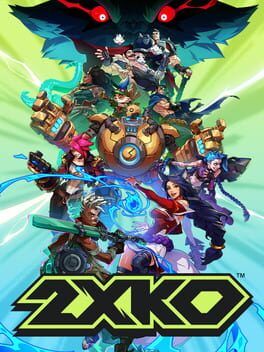

Riot has cut roughly half of the 2XKO team less than a month after console launch. Here’s what that signals for live-service support, balance, and the 2026 competitive circuit, and how it stacks up against other modern fighters’ post-launch pivots.
Riot shrinking the 2XKO team weeks after its console launch is the kind of headline that usually screams “sunset incoming.” But if you strip out the shock and look at it as a live-service case study, it paints a more nuanced picture of how Riot now expects its fighting game to live, grow, and compete in a very crowded genre.
Riot has been clear about the top-line reason: 2XKO’s momentum out of early access and into console launch wasn’t strong enough to justify the original staff size long term. About 80 roles are being eliminated, which is just under half of the global dev team, according to Riot’s statements to multiple outlets. At the same time, the studio insists the game is not being canceled, and its 2026 Competitive Series plans are “unchanged.”
From a pure game-development perspective, that combination tells you two key things. First, Riot believes 2XKO can be operated by something closer to a tight live-ops crew than a big, expansion-style content factory. Second, the company is willing to keep betting on the game as a competitive platform, but only if it can do so with a leaner, more sustainable burn rate.
A Live-Service That Over-Hired For Its Launch Window
2XKO spent about a decade in development, going from the Project L prototype years, through multiple test phases, into PC early access and finally 1.0 across PS5, Xbox Series X|S, and PC. That entire ramp required heavy upfront staffing: engine programmers, netcode specialists, champion teams, onboarding designers, art, audio, plus all the infrastructure to bring a free-to-play fighter to three platforms.
All of that makes sense pre-launch. The problem is that a live-service only keeps that level of headcount if retention and revenue justify it. Riot’s own framing of “overall momentum hasn’t reached the level needed to support a team of this size long term” is classic live-ops language. Engagement curves out of early access and into console likely stabilized around a passionate but mid-sized core, not the blockbuster growth Riot modeled when it bulked up the team.
In practice, this suggests 2XKO is now moving from full production into maintenance-plus mode much earlier than planned. That doesn’t mean “maintenance” in the sense of a dying game with one engineer and a part-time community manager. It means a smaller pod focused on:
Content that can reliably move the needle, like new champions and major system passes.
Core retention features, such as ranked health, matchmaking, and event cadence.
Critical tech upkeep, particularly rollback netcode and crossplay stability.
The biggest casualty of the downsizing is scope, not existence.
What Changes For Patches And Balance Cadence
The fighting game community cares less about headcount and more about whether the game is going to feel alive across seasons. With almost half the team gone, there are three immediate impacts you can reasonably expect on patching and balance.
First, expect fewer big feature drops. A large team can ship balance patches while also pushing substantial new systems, modes, or UI overhauls in parallel. A smaller crew tends to batch these changes into larger, slower releases. Systems design, UI, and engineering all compete for the same finite resources, which stretches timelines.
Second, balance work will become more targeted. A robust combat design group can constantly iterate on a wide spread of champions, rework underplayed archetypes, and experiment with new mechanics that might not immediately ship. Once reduced, balance passes tend to focus on outliers identified by data and tournament feedback rather than broad experimentation. You are more likely to see:
Numbers tuning on top-tier problem characters.
Occasional adjustments to underperformers so they don’t fall out of viability.
Limited, carefully scoped systemic changes per season instead of constant re-plumbing.
Third, the bug and quality-of-life backlog will probably move more slowly. Loadouts, training mode improvements, accessibility requests, UI tweaks for lobbies and replays, and onboarding features for new players are usually shared responsibilities. With fewer engineers and designers, they get triaged more aggressively, which can make the game feel “stuck” even if competitive balance remains acceptable.
The crucial point is that a well-led small team can still keep a fighter competitively healthy. Games like Skullgirls and Them’s Fightin’ Herds have lived for years with tiny crews. The difference is that Riot originally positioned 2XKO closer to big-budget, always-updating service games like League of Legends and Valorant. This reduction signals that 2XKO’s reality is trending closer to the boutique model, at least for now.
Live-Service Health: Signals To Watch In The Next Year
If you look at live-service fighters as a whole, the health of a game is usually written in its seasonal rhythm. Riot has been careful to say that 2XKO will keep getting “key improvements” and that its 2026 competitive plans are intact. The real story will sit in what Riot chooses not to do.
Roster growth will be the easiest tell. 2XKO launched with a strong base of League champions braided into a tag format that rewards teamwork and assist synergy. Before launch, Riot talked about aggressive champion additions and seasonal drops. With a smaller team, the cadence of new fighters is almost guaranteed to slow. Expect Riot to prioritize champions that can do the most to shift the meta and drive cosmetics sales instead of simply hitting a numeric release target.
System overhauls are another pressure point. Throw tech, tag mechanics, assist rules, and defensive options all define how deep the game can go at high level. Large teams can afford repeated big swings at those systems. A smaller team has to be more conservative, iterating in smaller steps so it does not destabilize the ladder or break the competitive ruleset right before majors.
Finally, out-of-match features like story content, collections, customized training tools, or elaborate event quests are much more exposed to cuts. Those are prime places to claw back dev time when a live service is reshaped around core retention and esports.
That said, Riot has a structural advantage compared with many fighting game publishers: internal tech, platform relationships, and live-ops experience from League and Valorant. Even a reduced 2XKO crew can lean on shared infrastructure for matchmaking, anti-cheat, account systems, and data analysis. That reduces the amount of bespoke engineering needed to keep the game upright.
The 2026 Competitive Circuit: Intact, But On A Tighter Rope
Riot has explicitly stated that its plans for the 2026 Competitive Series are unchanged. The company still intends to partner with community tournament organizers and existing FGC events instead of building a standalone global league in year one.
From a circuit-design standpoint, that choice meshes well with a leaner team. Outsourcing event operations to established majors and regional organizers means the internal staff can focus on three pillars that truly matter for competitive viability:
Stability and clarity of the ruleset, including character legality and patch timing.
Rollback netcode, input delay, and matchmaking quality for online qualifiers.
Broadcast and spectator tools that make it easy for partners to showcase the game.
The risk is not that Riot suddenly cancels the 2026 circuit. That would be a reputational disaster with the FGC on top of a fraught launch. The more realistic risk is a conservative season structure. Fewer official stops, smaller prize pools than the company once envisioned, and a heavier reliance on grassroots majors pulling double duty as “official” events.
For pros and TOs, the downsizing creates uncertainty around long-term investment, but not an immediate competitive vacuum. If Riot can keep patches predictable around key events, avoid massive last-minute mechanical changes, and maintain the servers, 2XKO can function as a solid tournament game on a smaller dev budget. The ceiling, however, may be lower than it looked during the multi-year hype cycle when Project L was framed as Riot’s big entrance into the FGC.
How 2XKO’s Pivot Compares To Other Modern Fighters
Recent fighting games have shown a range of post-launch pivots once real engagement data arrives.
Street Fighter 6 shipped strong and has mostly retained its planned cadence, but even Capcom has visibly clustered big features, world tour updates, and DLC characters into fewer, larger patches as they balance dev cost against a multi-year roadmap.
Guilty Gear Strive is a more apt comparison. It debuted explosively, then saw a recalibration in its second and third seasons, with slower character releases and more methodical system updates. Arc System Works did not gut the team in public, but its output pattern clearly shifted from high-octane novelty to focused, meta-shaping tweaks.
On the harsher side, games like MultiVersus and some anime fighters have seen aggressive scale-backs in content and visible communication once they slipped below their early peaks. In many cases those pivots came with quieter staffing reductions and, eventually, thin balance updates whose main job was just to keep the game technically current.
2XKO’s situation is unusual mainly in its timing and transparency. Cutting nearly half the dev staff less than a month after console launch is an extremely early correction for a game that lived in tests and early access for so long. But the structural move itself is not unique. Plenty of modern fighters start with bigger ambitions than their player numbers can sustain and then settle into a more modest life cycle.
The difference is that 2XKO arrived under the Riot banner, with expectations shaped by League and Valorant’s massive, multi-team live-ops machines. Compared with those titles, 2XKO is now slotted closer to a specialized product that will chase deep engagement rather than mass-market reach.
Reading The Road Ahead For 2XKO
From a development and live-service health perspective, Riot’s layoffs around 2XKO signal a clear pivot but not a death sentence.
Expect a leaner roadmap where every patch has to justify itself against limited dev hours. Bigger swings will be rarer, character releases more spaced out, and quality-of-life work more selective. The upside is a smaller, more tightly focused team that can listen closely to the data and the competitive scene instead of chasing every possible audience segment.
The 2026 Competitive Series looks safe, but the long-term shape of 2XKO’s esport will depend heavily on whether that “passionate core audience” grows, stabilizes, or shrinks across the next year. If the player base holds and spending aligns with Riot’s new expectations, 2XKO can settle into the tier occupied by solid, sustainably run fighters that matter at majors without dominating the genre.
If not, the downsizing we are seeing now may be the first step in an even slower cadence after 2026. For now, though, the message from Riot in purely game-development terms is: fewer hands on deck, narrower ambitions, and a bet that a smaller, sharper 2XKO team can keep the game competitively relevant even without the blockbuster growth the company once hoped for.