
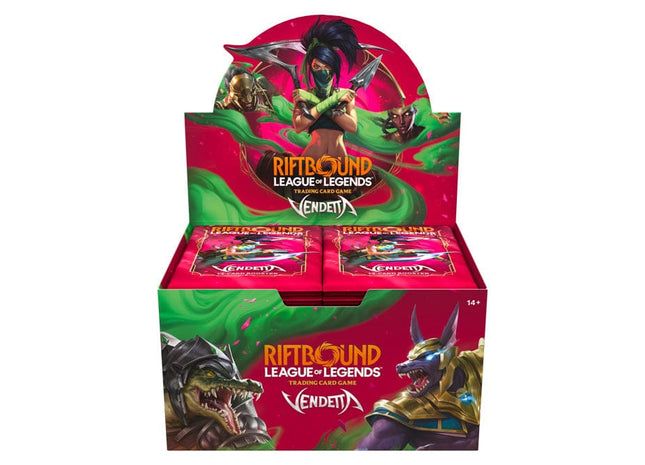

Riftbound Vendetta chase cards are already commanding high resale prices, but conflicting trackers and thin sales data make this a risky moment for new League of Legends TCG buyers.
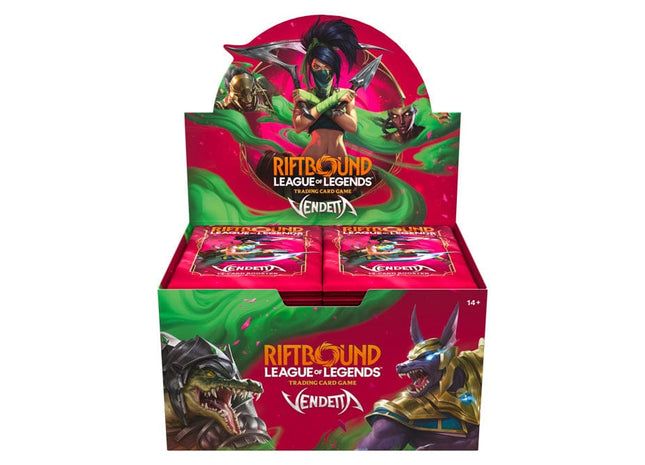
Image: gamersguildaz.com
Vendetta’s chase market is already expensive, and the data does not agree
Riftbound Vendetta chase cards have quickly become the pressure point for Riot’s League of Legends TCG, with public price trackers and market roundups already putting select alternate treatments well above $100 and, in some cases, much higher. The tension for buyers is immediate: Vendetta is drawing real collector attention, but the early secondary market is still being shaped by limited sales, shifting product availability, and different sites measuring different pieces of the market.
Polygon, using TCGplayer data ahead of launch, reported several Vendetta cards already selling in the $120 to $130 range, including Crystal Rose Kai’Sa - Survivor at around $120, Jayce - Man of Progress in an overnumbered version at $124, and Vi - Destructive in an overnumbered version at around $130. Yahoo Shopping, also citing current TCGplayer market prices, put the top of its Vendetta list much higher, with Ahri, Inquisitive in Crystal Rose alternate art at $330.59, Nasus - Curator of the Sands overnumbered at $299.99, Akali - Rogue Assassin overnumbered at $220, Ambessa, Respected and Feared overnumbered at $199.99, and Kayle, Justified overnumbered at $149.99.
Other public trackers complicate the picture. TCGIndex lists the full Vendetta set at around $4,307 on the secondary market and identifies Vendetta - Pre-Rift Event Kit at around $799.98 as the most valuable Vendetta item on its page. MagicalMeta, which says it tracks 238 Vendetta singles by TCGPlayer market price and sales volume, lists a highest card of $600 and labels Shen - Eye of Twilight (Signature) as the chase card, while its visible top-price table for Vendetta shows Irelia - Fervent overnumbered at $200, Ambessa at $199.99, Draven at $189.98, and Rengar at $180.
That is not a clean consensus chart. It is an early-market warning sign. Depending on whether a source is ranking singles, event kits, visible recent sales, TCGPlayer market prices, or a filtered snapshot, the answer to “Riftbound most expensive cards” changes. New buyers should treat every early price as a signal, not a settled value.
The expensive cards share a collector logic: champions, treatments, and rivalry art
The common thread across the expensive Vendetta listings is not difficult to spot. The cards attracting the highest attention are recognizable League of Legends champions, special treatments, or both. Yahoo Shopping describes Vendetta as introducing several collector-focused alternate treatments, including Overnumbered Legends, Wild Rift Crystal Rose cards, and cards built around Runeterra rivalries. Polygon also describes overnumbered cards as rare alternate-art treatments that do not follow the normal numbering conventions of a set.
That matters because these cards are being priced as scarcity objects before the player base has fully digested the set’s competitive role. Ahri’s Crystal Rose alternate art is a clear example. Yahoo Shopping identifies it as the most expensive card in its Vendetta ranking at $330.59 and notes that it uses the Crystal Rose skin splash art from League of Legends: Wild Rift. Polygon’s Kai’Sa example works in the same lane, with its Crystal Rose alternate art selling for around $120 according to the TCGplayer data Polygon cited.
The overnumbered cards have a slightly different appeal. They are tied to set identity and, in several cases, paired rivalry imagery. Yahoo Shopping reports that Kayle, Justified’s overnumbered card forms half of a borderless scene showing her clash with Morgana, while Ambessa, Respected and Feared forms half of a borderless scene showing her clash with Mel. Polygon reported that Riot frames Vendetta around rivalry, and these overnumbered treatments appear to turn that theme into the collector chase.
For a League of Legends card game, that is a powerful recipe. Champion familiarity lowers the barrier for collectors who may not yet know the TCG’s deck economy. Alternate art gives those collectors a reason to care about a specific printing rather than a base copy. Rivalry pairings add a completion pressure that can keep demand attached to matching halves rather than isolated cards.
Price is being driven before the metagame has finished speaking
A strategy-minded buyer should separate two markets that often overlap but do not move for the same reasons: the collector market and the play market. The source material strongly supports the first. It is full of alternate art treatments, overnumbered versions, showcase printings, signature cards, and popular champions. It gives less evidence that the highest-priced cards are expensive because they are already format-defining staples.
Polygon’s early list does include gameplay text and reprint context. Kai’Sa - Survivor keeps the four might and accelerate keyword from the Origins version, and when she conquers, she can draw a card. Jayce - Man of Progress can sacrifice a friendly piece of gear to play a gear card costing less than 7 from hand. Vi - Destructive can recycle from the trash to raise her Might from 3. Those details are relevant to players, especially in a set where Polygon reports new and returning mechanical incentives around the trash, gear, and paid buffs.
Still, the top-price discussion in the available sources is centered on treatments and identity. Yahoo Shopping’s top five is dominated by overnumbered legends and Crystal Rose art. MagicalMeta’s visible rankings likewise show many overnumbered showcase foils among its high-priced cards, including Irelia, Ambessa, Draven, Rengar, Morgana, Riven, Kayle, Leona, Viktor, and Jayce. On that evidence, Vendetta’s early price leaders look closer to collector chases than proven competitive must-buys.
That distinction affects timing. If a card is expensive because every competitive deck needs four copies, prices can remain stubborn until supply catches up or the metagame shifts. If a card is expensive because it is the prettiest version of a champion, the price can still hold, but it depends on rarity, collector appetite, character popularity, and how many sealed boxes enter circulation. Vendetta currently has evidence for collector heat. It does not yet have, from these sources, a settled competitive price structure.
Vendetta’s mechanics could create real demand, but not every chase card benefits equally
Vendetta is not only an art-treatment set. Polygon, citing Riot’s overview of the set, reports that Vendetta brings fresh mechanics built around rivalry and resource friction. Flow allows cards to be played from the trash. Burn sends cards to the trash. Unit Gear is a new card type that blends units and gear. Empower appears frequently among the expensive-card discussion and functions as a paid buff.
Those mechanics could matter for prices over time because they shape which cards players need after the first collector rush cools. A trash-focused mechanic like Flow can make previously marginal discard or self-mill effects more valuable if the format rewards recurrence. Burn can change how decks count resources and threats if sending cards to the trash becomes a cost, payoff, or both. Unit Gear naturally raises the value of gear synergy, which gives context to Polygon’s Jayce example, since Jayce interacts directly with gear.
But mechanics do not automatically validate the most expensive printings. A base version and a showcase or overnumbered foil can perform the same game function while living in very different price bands. If a player wants access to a deck, the practical question is whether the expensive printing is necessary. Based on the sources provided, the expensive Vendetta cards are largely expensive versions, not confirmed exclusive gameplay effects locked behind chase treatments.
That is the key buyer split. Collectors are paying for rarity, art, champion attachment, and set identity. Players should first identify the cheapest legal printing that does the job. The sources show plenty of reasons collectors are watching Ahri, Akali, Nasus, Ambessa, Kayle, Kai’Sa, Vi, Jayce, and other spotlight champions. They do not show a reason for a new player to treat every premium version as a gameplay requirement.
Conflicting rankings make thin liquidity the real risk for new buyers
The most useful fact in the available data may be the disagreement itself. Yahoo Shopping’s TCGPlayer-based list has Ahri’s Crystal Rose alternate art at the top at $330.59. TCGIndex’s Vendetta FAQ identifies Vendetta - Pre-Rift Event Kit around $799.98 as the most valuable Vendetta item on its page. MagicalMeta says the highest card it tracks is $600, naming Shen - Eye of Twilight (Signature), while its visible top 25 table by price starts with Irelia - Fervent overnumbered at $200. Polygon’s cited early TCGplayer data places several high-profile cards around $120 to $130.
Those are not necessarily contradictions in the sense of one source being wrong. They may be measuring different categories, update times, filters, or sale conditions. An event kit is not the same buyer decision as a single champion card. A signature chase card may appear differently depending on whether a ranking is filtered to certain printings, time windows, or completed sales. Market price also differs from a single listed asking price, and low sales volume can make both fragile.
MagicalMeta’s visible table shows how thin some of this liquidity can be. Several high-ranking Vendetta cards have one to three sales in the displayed 30-day period, with Kayle at eight sold in 30 days. That does not make the prices fake, but it does mean a single sale or a small number of listings can move the perceived market more than it would in a mature, high-volume environment.
For new buyers, this is the danger zone in any young TCG economy. Search results for Riftbound Vendetta card prices can make a number feel authoritative because it is repeated across marketplaces and aggregators. The better read is to ask what the number represents, how many copies actually sold near that price, whether the card is a single or sealed/event product, and whether cheaper versions exist for play.
The smart move is patience unless you are buying a specific collectible
The practical advice is straightforward: do not let the phrase “Riftbound Vendetta chase cards” do the thinking for you. If you are buying as a collector, decide whether you specifically want the treatment. Crystal Rose Ahri and Kai’Sa, overnumbered rivalry cards, and signature or showcase versions are priced because collectors can point to exactly what makes them special. If that is the target, compare recent sold prices across multiple sources and expect volatility as more Vendetta product enters circulation.
If you are buying to play the League of Legends TCG, resist paying premium-art prices unless you also value the collectible. The current source record supports high collector demand, but it does not prove that every expensive Vendetta card is a competitive necessity. Start with the functional card, then upgrade later if the deck survives testing and the price becomes comfortable.
If you are buying as an investment, the sources themselves urge caution. TCGIndex explicitly says it does not give financial advice and notes that set-level value moves with reprints, rotation, and chase cards. Polygon also warns that early prices will fluctuate after launch, even while expecting prominent chase cards to remain steep. Those caveats should be treated as part of the story, not fine print.
Vendetta’s market is expensive because it combines Riot’s champion roster, premium art pipelines, limited-looking treatments, and a set theme that encourages paired collecting. That is a strong foundation for collector attention. It is also exactly the kind of setup where early buyers can overpay for the wrong reason. The best play is to know which market you are entering before you click buy.