
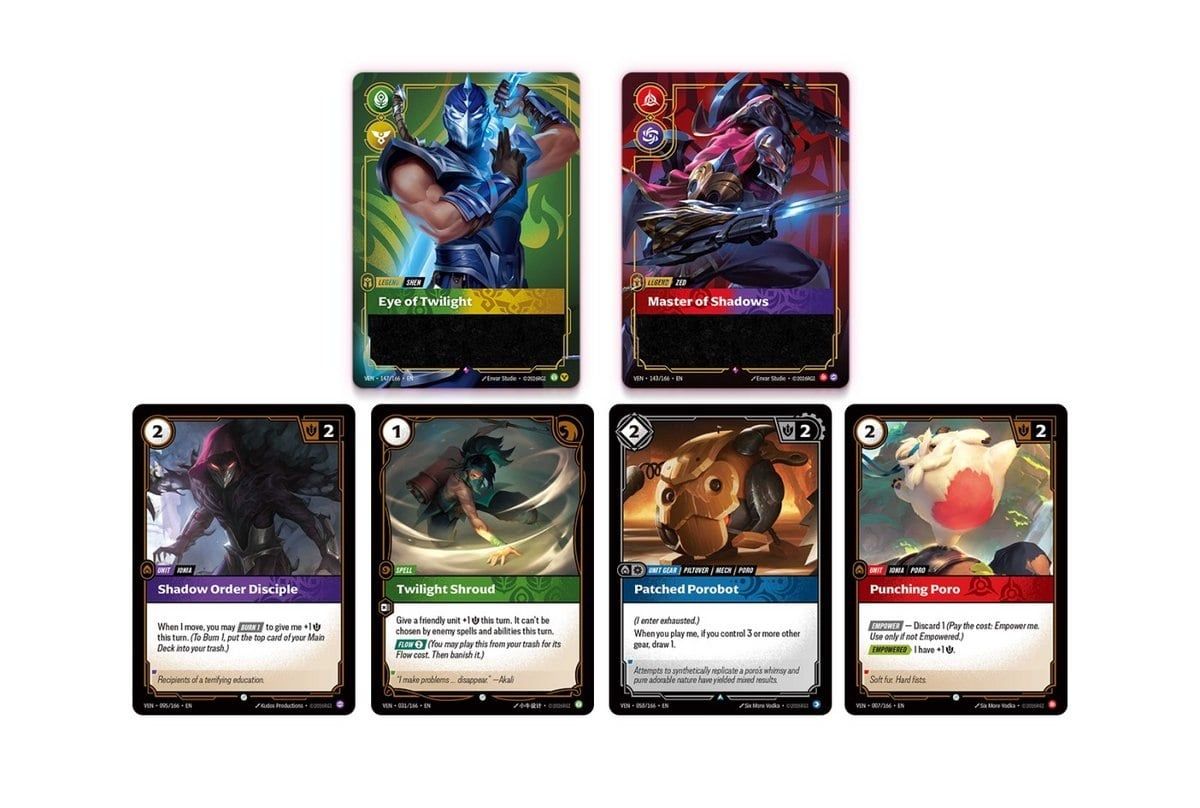

Riftbound: Vendetta spoiler season is underway. Here is what Riot and partner coverage have revealed about Flow, Burn, Empower, Unit-Gear, Decrees, rival champions, Showdown Decks, chase cards, and release timing.
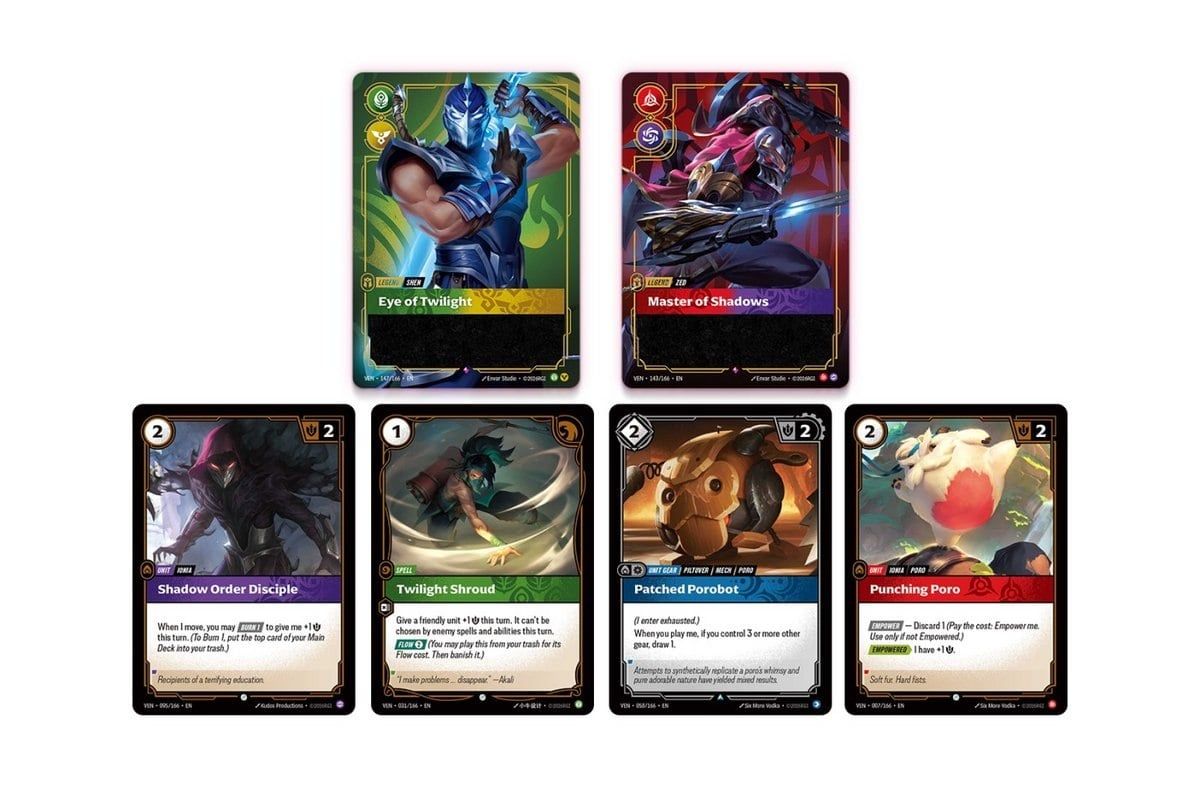
Image: techraptor.net
Vendetta puts rivalry at the center of Riftbound’s next meta test
Riftbound: Vendetta, the fourth set for Riot Games and UVS Games’ League of Legends trading card game, is scheduled to release on July 31, 2026 in English and Chinese, with Pre-Rift events beginning July 24 and a French release dated for October 23, according to TechRaptor and Bleeding Cool’s coverage of the reveal. That gives players less than a month between the start of the current Riftbound Vendetta spoilers window and the set’s formal launch, which is a tight runway for evaluating new mechanics, new champion cards, and a new entry product before local events begin.
The strongest confirmed shift is thematic and mechanical at the same time. TechRaptor reports that Riot has described Vendetta as a set built around rivalry, with pairings such as Shen and Zed, Mel and Ambessa, and other League of Legends conflicts represented through the set. Bleeding Cool similarly attributes the reveal to Riot Games and UVS Games, describing enemy-color Legends being paired for battlefield confrontations. The framing matters because Vendetta is not being presented as a loose collection of champions. Its mechanics, product strategy, and collector chase cards are all being organized around opposing identities.
There is one small source wrinkle worth flagging for readers tracking the calendar. Bleeding Cool’s article body and summary both state a July 31 release, but one section header says Vendetta prepares for launch at the end of September. That September phrasing conflicts with the same article’s reported date and with TechRaptor’s July 31 date. Based on the provided sources, July 31 is the supported launch date, while the September wording reads like an internal inconsistency rather than a separate confirmed schedule.
Flow and Burn make the trash zone a real strategic resource
The two mechanics most likely to reshape early deckbuilding are Flow and Burn, because both change how players value cards leaving the hand, deck, and board. TechRaptor reports that Flow lets players play cards from their trash instead of from their hand, drawing on League champions who use Energy and the idea that they recover and reuse abilities quickly. The Escapist, citing the official blog post that accompanied reveal season, gives the same functional description: Flow allows cards to be played from the trash rather than the hand.
That has an immediate strategic consequence, although the exact power level depends on the unrevealed card pool. If a deck can reliably turn discarded, spent, or milled cards into future plays, then the trash stops being a pure cost. It becomes a second access zone. That usually rewards careful sequencing, because a Flow card is strongest when the player can control when it enters the trash and when it comes back online. It also raises balance questions around repeatability. The sources confirm the mechanic’s broad operation, but they do not provide full rules text for every Flow card, so any judgment about tier-one archetypes has to wait for the complete spoiler.
Burn is the inverse pressure point. TechRaptor says Burn sends cards from the deck into the trash to fuel synergies or directly damage the opponent. The Escapist phrases it as sending cards from a Main Deck to the trash, either to enable your own synergies or attack an opponent’s deck directly. Bleeding Cool also reports both modes. That makes Burn a flexible but risky mechanic on paper. Self-Burn can accelerate trash-based engines, including Flow synergies if the card pool supports that connection. Opponent-facing Burn introduces a different clock, one that may force slower decks to account for deck pressure in addition to board pressure. The confirmed text does not establish how fast that clock is, but the strategic axis is clear: Vendetta is asking players to treat the Main Deck and trash as active combat zones, not passive piles.
Empower rewards board commitment, but timing will decide its ceiling
Empower is Vendetta’s third confirmed new mechanic, and it pushes in the opposite direction from Flow and Burn. Instead of extracting value from cards in the trash, Empower asks players to put a card on the board first and then invest further into it. TechRaptor reports that a player can get a card onto the board, pay its Empower cost, and have that card gain more power or another effect. The Escapist describes Empower as giving cards the potential to gain new abilities once they are in play, allowing a card to be amplified on a later turn.
For competitive players, that reads like a tempo puzzle. Empower gives a card a delayed upgrade path, which can create strong turns when the opponent fails to answer the initial body. The tradeoff is exposure. If a card must survive or remain relevant long enough for its Empower cost to matter, removal, bounce, stun effects, or efficient combat trades could punish the investment. The sources do not provide a comprehensive list of Empower costs or examples beyond the mechanic description, so the safe conclusion is structural rather than predictive: Empower should make in-play threats more demanding to evaluate, especially when open resources imply a future upgrade.
Bleeding Cool also reports new tokens in Vendetta: Tentacle, Shadow Clone, and Empowered. The presence of an Empowered token, as reported there, suggests Riot and UVS want the new mechanic to be visible and trackable at the table. That is a practical design detail. Mechanics that modify cards after they enter play can create board-state memory problems if the game does not give players clean markers. The token mention does not tell us which cards create or use those tokens, but it does show that Vendetta’s new mechanics are being supported by physical play aids, not only rules text.
Unit-Gear and Decrees point to cross-set synergy and color hate
Vendetta is also adding two new card concepts that may matter as much as the named mechanics. TechRaptor reports that Unit-Gear cards function as both units and gear, allowing them to trigger or be triggered by effects that care about playing units or gear. That is the kind of dual typing that can quietly become one of a set’s most important deckbuilding tools, because it expands the number of cards that count for existing synergies. TechRaptor specifically notes that there should be synergy for these cards within Vendetta and from prior expansions.
The important caveat is that dual-function cards are only as strong as the surrounding payoffs. If prior Riftbound decks already care about units entering play, gear being played, or equipment-style scaling, Unit-Gear could make those shells more consistent without requiring a full rebuild. If the payoffs are narrow, the card type may be more of a Vendetta-contained package. The source material confirms the type’s functionality, but not enough individual Riftbound Vendetta cards to rate its competitive ceiling.
Decrees are more direct. TechRaptor describes them as a cycle of spells built around Domain rivalries, with each Domain’s Decree hitting cards of its opposite color. The Escapist adds a concrete example from the official blog context, saying Decree of Insight directly counters Orange, including cards like Punch First. That is one of the clearest balance signals in the reveal. Decrees appear designed as targeted answers, which means they may influence sideboard-style planning if Riftbound’s event structures allow players to prepare for expected matchups, or main-deck construction if a particular Domain becomes common enough to justify direct hate.
The risk is metagame polarization. Color-hate cycles can be healthy when they stop one strategy from becoming too safe, but they can feel punishing if the answers are efficient enough to invalidate entire Domains. The sources support the existence and purpose of Decrees, not their final competitive impact. For now, players should treat them as a warning that Vendetta’s rivalry theme has mechanical teeth.
Rival champions are being sold as identity pairs, not isolated reveals
The revealed champion structure is built around confrontation. TechRaptor highlights Shen and Zed, Mel and Ambessa, and other rivalries from League of Legends lore, adding that some of the rival artwork connects into a clash when placed together. The Outerhaven also names Shen and Zed, plus Mel and Ambessa, as leading Vendetta pairings. Bleeding Cool reports that the set pairs enemy-color Legends for major confrontations.
For players searching Riftbound champion cards ahead of release, that means the headline reveals should be read in pairs. Shen and Zed are also the first Showdown Deck pairing, according to TechRaptor and Bleeding Cool. The Escapist reports that Riftbound’s social media team helped kick off the reveal season with a comedy sketch introducing Kennen and Akali to the game. The Outerhaven’s Vendetta article also links to a Renekton preview, though the provided source excerpt does not include that card’s rules text. Taken together, the confirmed picture is a set with multiple champion entry points, but only some are fully contextualized by the provided reporting.
There is also a set-size signal from Riftbound.gg’s Vendetta page. That listing says Vendetta reduces the number of Legends from 12, as seen in Origins and Spiritforged, down to 9, and gives the set a total card count of 166. Because that detail comes from Riftbound.gg rather than the Riot reveal text included here, it should be treated as a public set-guide listing rather than a direct publisher quote. If accurate, a smaller Legend roster would make each rivalry slot carry more weight. Fewer Legends can mean a tighter draft of identities, clearer chase targets, and potentially more pressure on each champion package to support a real archetype.
Showdown Decks are the clearest on-ramp before Pre-Rift events
Vendetta introduces Showdown Decks, a new two-player product that packages two ready-to-play decks in one box. TechRaptor reports that the first version lets players pick up Shen or Zed decks and start playing immediately. Bleeding Cool and The Outerhaven describe the same product as a two-player ready-to-play release built around Shen versus Zed.
That product choice fits the set’s rivalry theme, but it also solves a practical problem for a trading card game approaching a fourth set. New players often need a clean entry point that does not require knowing which singles to buy, while existing players want a low-friction way to test new mechanics before committing to booster boxes or full competitive builds. A paired-deck product gives Vendetta a demo-table identity: one box, two sides, one conflict.
The sources provided do not confirm the Showdown Deck price, full decklists, reprint contents, or whether the decks include cards exclusive to the product. Skillshotz Gaming’s set guide describes the Shen vs. Zed Showdown box as including two complete preconstructed decks plus a couple of booster packs, but the official-source excerpts included here do not independently verify that configuration. Until Riot or UVS publishes the full product breakdown, the confirmed purchasing guidance is narrower: Showdown Decks are the announced ready-to-play option, and Shen versus Zed is the first pairing.
Spoiler season is short, collector targets are already defined
The Escapist reports that Riftbound Vendetta spoiler season runs from July 6 to July 18, with reveals coming through the official blog post, site crossovers, and community channels. Its running spoiler page lists July 7 reveals from ChaiTeaTCG on YouTube and Team Micelion on X, and says the July 6 opening wave came through the official blog post, site crossovers, and other reveal beats. That schedule gives players roughly two weeks of Riftbound Vendetta spoilers before the final stretch into Pre-Rift events on July 24.
Collectors already have several confirmed chase categories to track. TechRaptor reports that Vendetta will include nine Legends with Overturned variants, 22 Rival Outnumbers, and Crystal Rose Alt Art cards that bring the Wild Rift skin line into Riftbound. The Outerhaven describes signed Overnumbered Legends and 22 Rival Overnumbers, while Bleeding Cool’s reveal coverage emphasizes the rivalry-focused card presentation. The terminology varies slightly across outlets, with TechRaptor using “Overturned variants” and “Rival Outnumbers,” and The Outerhaven using “Overnumbered Legends” and “Rival Overnumbers.” The shared confirmed point is that Vendetta has a collector layer tied to Legends, rival pairings, and alternate art.
For players deciding whether to buy early, the practical answer depends on purpose. If you want a sealed introduction to League of Legends TCG Vendetta, the Shen versus Zed Showdown Decks are the cleanest confirmed path. If you are chasing competitive singles, the safer move is to follow the July 6 to July 18 spoiler rollout and wait for enough card text to judge Flow, Burn, Empower, Unit-Gear, and Decrees in actual shells. If you are collecting, the announced rival art treatments and Crystal Rose Alt Art cards give Vendetta a clearer chase structure than a generic expansion, but the sources here do not provide pull rates or pricing. The set’s strategic promise is real, but the smart read is patience until the full card file shows whether rivalry becomes a format engine or mainly a strong identity for Riot and UVS’s fourth set.