
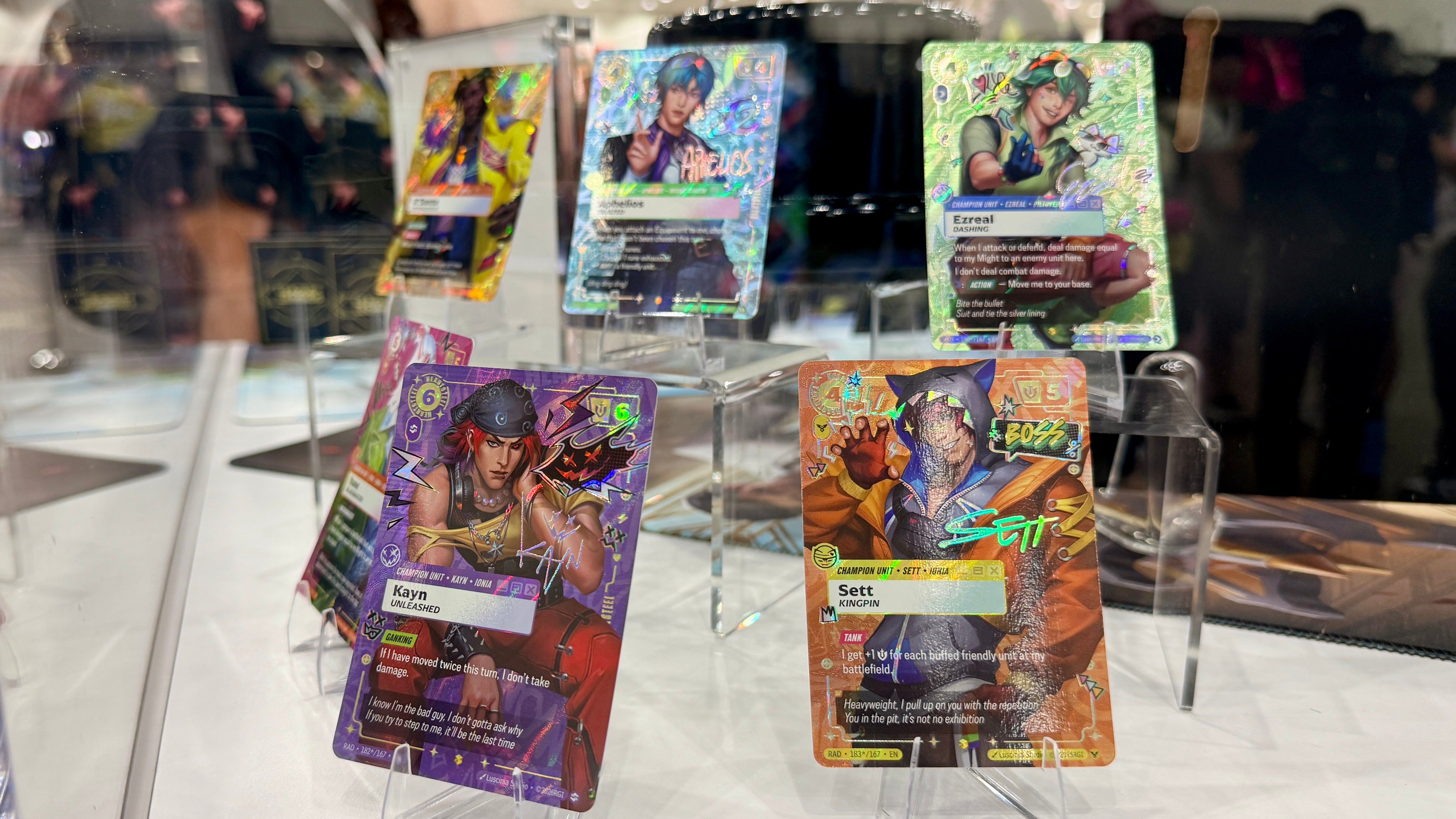

Riftbound Radiance introduces Deploy, Show Off, and Disarm as the League of Legends card game heads into its fifth set, with previews suggesting a more demanding tactical direction.
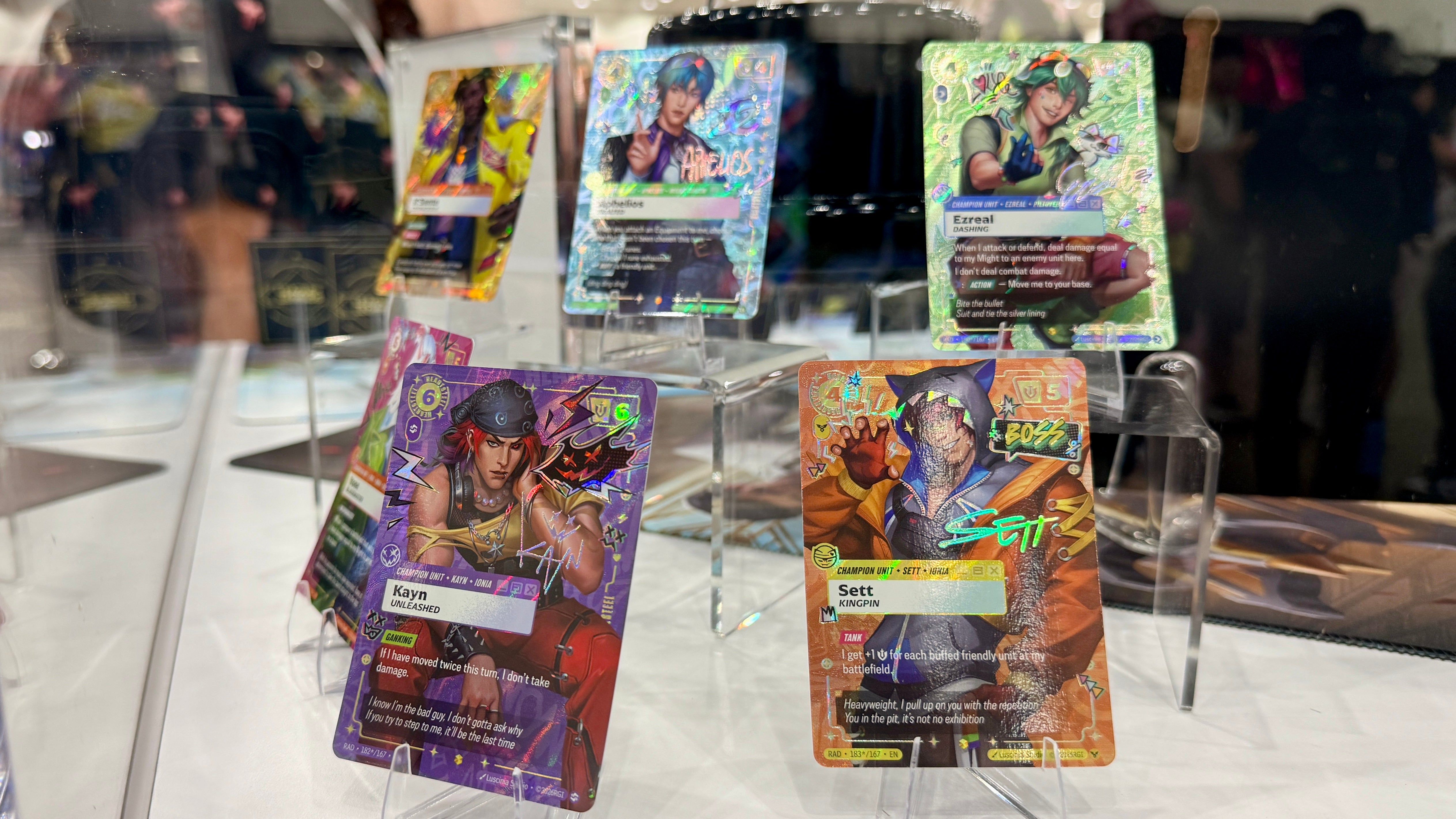
Image: sea.ign.com
Radiance puts Riftbound’s complexity in the spotlight
Riftbound: Radiance releases worldwide on October 23, 2026, according to the official Riftbound overview, and the immediate story is not simply that the League of Legends card game is getting another set. Radiance is the game’s fifth set, DotGG’s Riftbound listing says it contains 180 cards, and IGN’s hands-on preview describes it as the final set of the year. The tension is that this set is being positioned around mechanics that ask players to manage battlefield positioning, hidden information, and stacked combat modifiers at the same time.
That is a meaningful signal for a card game attached to a massive MOBA brand. A League of Legends card game could have leaned on champion recognition, chase treatments, and preconstructed products alone. The Riftbound Radiance preview material points in a different direction. IGN’s early Pre-Rift hands-on focuses on new keywords that change how defending works, how much hand information players expose, and how units trade at contested battlefields. The official overview frames Radiance as a set about performing at peak level under pressure, but the mechanics shown so far are doing the actual work of selling that idea.
Radiance’s preview window ran from September 25 through October 9, with Pre-Rifts scheduled for October 16 to 22 and release on October 23, according to the official site. English, French, and Chinese releases are listed for launch. That gives competitive-minded players a short runway between full previews, early events, and the first week of open deckbuilding, which matters because the set’s core mechanics look less like cosmetic flavor and more like systems that can reshape threat assessment.
Deploy attacks one of Riftbound’s core assumptions
The most disruptive Radiance mechanic, based on the available preview reporting, is Deploy. The official Riftbound overview defines Deploy as a Gear keyword: you play the Gear only to a Battlefield, it grants benefits while there, and when an opponent holds that Battlefield, the Gear is killed. DotGG’s Radiance page gives the same basic rule frame, adding that Deploy Gear goes directly to a Battlefield.
IGN’s interview with executive producer Chengran Chai is where the strategic consequence becomes clearer. Chai told IGN that Deploy is probably the mechanic that will disrupt the meta because players historically did not think of going straight to a battlefield in that way. He cited Jarvan IV’s E-Q and Ziggs tossing bombs onto battlefields as examples that will change how people think about defending.
That matters tactically because Deploy turns the battlefield itself into a resource contest rather than a location where units merely meet after development. If a Gear provides value while sitting at a Battlefield but dies when the opponent holds that Battlefield, the defending player is pushed into a timing puzzle: answer the position now, allow the effect to remain, or commit resources to a lane-shaped fight that may have been baited. For players coming from League of Legends, that reads cleanly as map pressure. For TCG players, it is closer to an enchantment, equipment, or location problem with an explicit board-control fail state.
Radiance also introduces Bomb as a new token type, according to both the official overview and DotGG. The official description says Bombs are small gifts to leave an opponent and that the more Bombs you play, the bigger the boom. The 7MMO repost of IGN’s preview text describes Bomb as a Token Gear with Deploy that explodes when it dies, dealing two damage and triggering other Bombs at the battlefield. Because that fuller Bomb description appears in the reposted preview text rather than the official overview excerpt, it should be treated as preview reporting rather than a complete official rules entry. Even with that caution, the design direction is obvious: Radiance wants players to care about where effects are placed, when they are removed, and how battlefield ownership converts into tempo.
Show Off turns information into a cost players can manipulate
Show Off is the cleanest sign that Riftbound Radiance is courting players who enjoy layered decision trees. The official Riftbound overview defines Show Off as revealing a qualifying card from your hand or board to unlock a new effect on the card being played. DotGG uses the same structure, calling it Reveal, or “Show Off,” and emphasizing the qualifying-card requirement.
IGN’s preview gives the mechanic its strongest competitive context. Chai described Show Off to IGN as a tradeoff because TCGs are games of information. He used the example of a spell-heavy deck caring whether the opponent has Defy in hand, then said Show Off opens another dimension to the “3D, 4D chess” of card-game play. IGN also reported that four Show Off cards had been seen at the time of the preview, split between two units and two spells. One cited example, the five-cost yellow Order spell Rousing Display, plays four 1-Might Recruit Tokens to your base instead of one if you Show Off a card with Energy cost seven or more.
That kind of mechanic can be stronger or weaker than it first appears depending on the surrounding card pool. Revealing a late-game threat may give the opponent a clean planning window. Revealing it at the right moment may also distort their turn, especially if the shown card is less important than the counterplay it threatens. In practical terms, Show Off rewards players who can calculate two values at once: the immediate bonus printed on the card and the future cost of telling the opponent what is available.
For League fans entering through champion attachment, Show Off may be the first mechanic in Radiance that feels less like MOBA translation and more like traditional card-game expertise. It asks the pilot to bluff, signal, disguise priorities, and sometimes give the opponent real information because the board payoff is worth it. That is the opposite of a frictionless collectible tie-in. It is a deliberate invitation to make harder choices.
Disarm makes combat math less static
Disarm is the simplest new Radiance keyword on paper, but simple does not mean shallow. The official overview says Disarm reduces the Might of an enemy Unit as you attack and works similarly to Assault, with each instance making the Might reduction stronger. DotGG similarly says Disarm reduces an enemy Unit’s Might as you attack and that each instance stacks.
IGN’s hands-on preview connects Disarm to specific cards shown during preview season. The new green Calm Ahri, Confident has Disarm and gains +1 Might when you reduce the Might of an enemy unit, according to IGN. The preview also describes a blue Mind Kai’Sa, Rebel with Disarm that gives spells Reaction speed while in a showdown.
The strategic implication is that Radiance is adding pressure to combat sequencing. Might reduction during attacks can alter trades, open attacks that previously looked unfavorable, and make stacking instances of a keyword matter across multiple decisions. Ahri’s reported design turns the reduction into self-buffing momentum. Kai’Sa’s previewed combination of Disarm and Reaction-speed spell play suggests showdown turns where combat math and timing windows are both unstable.
That kind of instability is healthy only if the format can absorb it. If Disarm appears at the right rate, it gives proactive decks tools to challenge bulky defensive positions. If it stacks too efficiently, it could make battlefield holding feel fragile. None of the sources provide enough post-release data to judge balance, and the set had not released at the time of the preview material. The safer conclusion is that Radiance is increasing the number of combat variables players must respect before committing to a battlefield.
Champion identity is being filtered through card-game fun, not copied literally
The deeper design push in Riftbound Radiance fits with how Riftbound’s team says it translates League of Legends champions into cards. In a PCGamesN interview, Riftbound Game and Design Director Dave Guskin said the team looks at a champion’s kit and tries to identify what is resonant, whether that is Zed’s shadow stepping or Miss Fortune’s bullets. He said the goal is to find correspondence between that identity and the way a champion’s whole deck plays in Riftbound.
Guskin also told PCGamesN that the translation is not always exact. Ezreal’s mobility, for example, can become quick movement between battlefields rather than a one-to-one copy of how movement works in the MOBA. The team tests mechanics, sees whether they are fun, and may shift from mechanical identity to thematic identity when a faithful version does not play well.
That distinction is central to Radiance’s appeal. PCGamesN’s strongest example is Darius. Guskin said the team tried versions of Darius’s execute that felt frustrating from the other side of the table, so the execute ended up in his signature spell rather than as a repeatable ability on a Champion unit. He explained that League has many tunable levers, including cooldowns and stat tweaks, that do not apply in the same way to Riftbound. A repeatable execute on a unit could be used over and over.
The Rengar example shows the other side of the design philosophy. Guskin told PCGamesN that Rengar feels like he is hunting the opponent through an ambush mechanic, creating the fear that he can jump out and punish you when the opponent has runes available. That is relevant to Radiance because the new set’s mechanics follow the same philosophy. Deploy does not need to reproduce a MOBA ability literally to capture battlefield pressure. Show Off does not need to map to a single champion spell to create performance and mind-game texture. Disarm can evoke dueling and weakening an enemy without pretending Riftbound has cooldowns, skillshots, or reflex checks.
Products and rarity show the business side of the deeper set
Radiance is also being sold in ways that speak to different levels of commitment. The official overview lists booster products and explains the booster pack distribution: seven commons, three uncommons, one foil slot that can be common through epic, one rare or epic, one slot that can be rare, epic, Alt Art, Special Alt, Overnumber, or Ultimate Rare, one Token, Rune, or Alt Art Rune, and one informational insert. The official page also states that each pack can contain at most one Ultimate Rare, that there is no guaranteed Ultimate Rare in any pack, box, or case, and that the average appearance rate for an Ultimate Rare across the Radiance print run is approximately 0.025% of booster packs.
DotGG’s Radiance page says the set includes a new Ultimate Rare card and repeats the approximate 0.025% booster-pack rate. The official overview adds context by saying Radiance brings Riftbound’s second Ultimate Rare and that the team learned from the Ultimate Rare introduced in Unleashed, which was exciting to find but “wasn’t quite as rare” as intended. That is a direct collectibility signal: some Radiance buying will be driven by scarcity, not gameplay utility.
For players interested in learning rather than chasing rare treatments, the more practical entry point may be the Showdown Decks. DotGG lists Seraphine vs. Evelynn Showdown Decks as a starter-friendly product with two 56-card preconstructed champion decks, two booster packs, two playmats, and a rulebook, with an MSRP of $34.99. The same DotGG page lists a Vault Bundle with a storage box, six Radiance boosters, foil tokens, and a full set of 36 Runes, plus Pre-Rift kits containing five Radiance boosters and a seeded Pre-Rift pack for each of the nine new Legends in the set.
Those product choices create a split audience. Competitive players will want singles, testing time, and early Pre-Rift reps to understand Deploy positions and Show Off information costs. New players may be better served by preconstructed decks if the goal is to learn turn structure before diving into a 180-card set. Collectors should read the Ultimate Rare language carefully: the official site is explicit that appearance rates are averages across the print run and not guarantees for packs, displays, boxes, or cases.
The open question is whether depth becomes accessibility friction
The Riftbound preview cycle gives a clear picture of intent but not a solved format. Official dates confirm when Radiance arrives. IGN’s hands-on reporting identifies the mechanics most likely to shift play patterns. PCGamesN’s interview with Guskin explains why Riftbound is willing to bend champion kits in service of better card-game play. DotGG and the official overview fill in the set size, product structure, and rarity model.
What none of the sources can yet provide is the post-release answer: whether Radiance’s added complexity produces a healthier metagame or a steeper onboarding wall. Deploy asks players to evaluate battlefields as temporary engines. Show Off turns private hand contents into a spendable resource. Disarm makes attacks carry stacked debuff math. Equipment Units, enabled through Orianna’s Legend effect according to the official overview, add another rules wrinkle by letting equipment become Units and automatically unequipping when that happens.
For experienced card-game players, that is the promising part of the Riftbound Radiance preview. The set appears built around decisions that remain interesting after the first read. For League of Legends fans coming for Seraphine, Evelynn, Ekko, Jarvan IV, Ziggs, Orianna, Mordekaiser, Akali, or other featured champions reported across preview coverage, the learning curve may be sharper than expected. That tradeoff is the story of Radiance: the League of Legends card game is leaning into systems that can support long-term mastery, while trusting that champion flavor and starter products can still bring newer players to the table.
If you are already invested in Riftbound, the practical move is to watch early Pre-Rift results for Deploy cards that force new defensive patterns and Show Off cards whose bonus effects outweigh the information leak. If you are new, the Seraphine vs. Evelynn Showdown Decks look like the cleanest listed entry point from the available product information. If you are buying sealed product mainly for the Ultimate Rare, the official odds language should temper expectations. Radiance may be colorful and music-themed, but its real pitch is strategic density.