
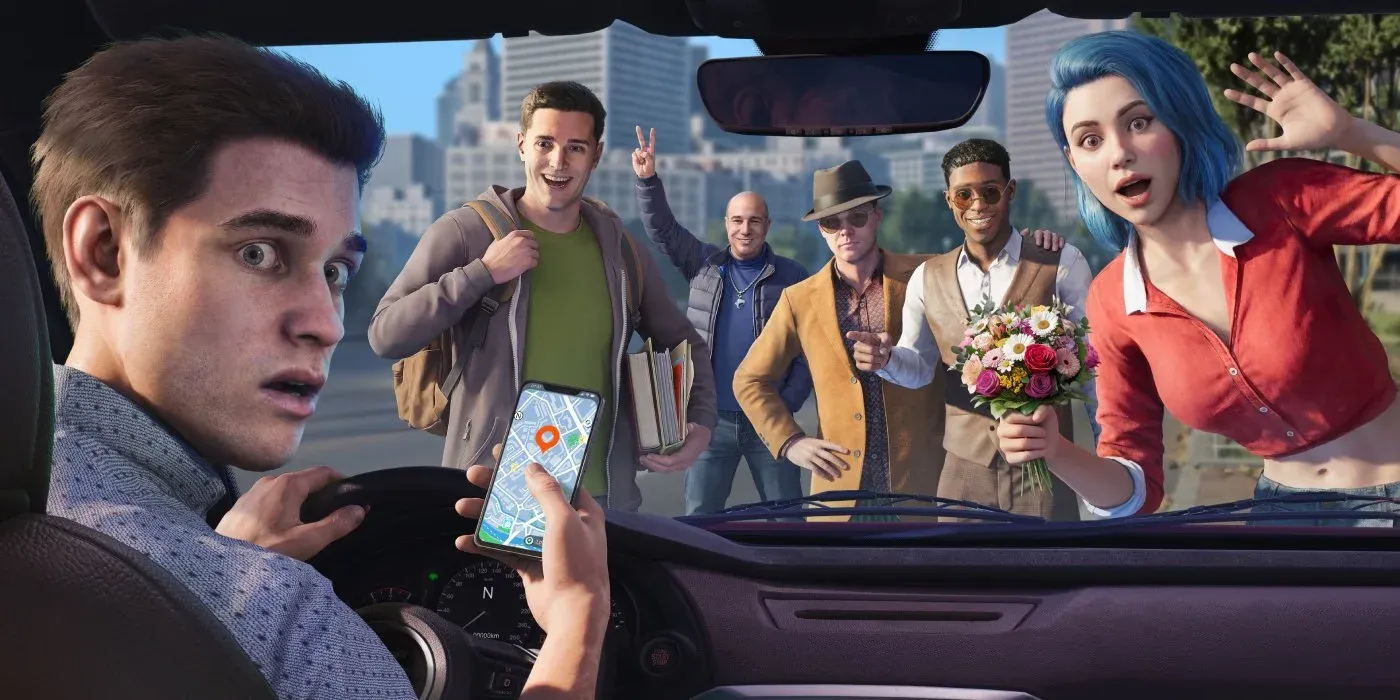

Saber’s Tim Willits says the company will not fire developers and replace them with AI, as Rideshare Stimulator’s Steam disclosure details generative AI use in voices, localization, music, and Free Ride content.
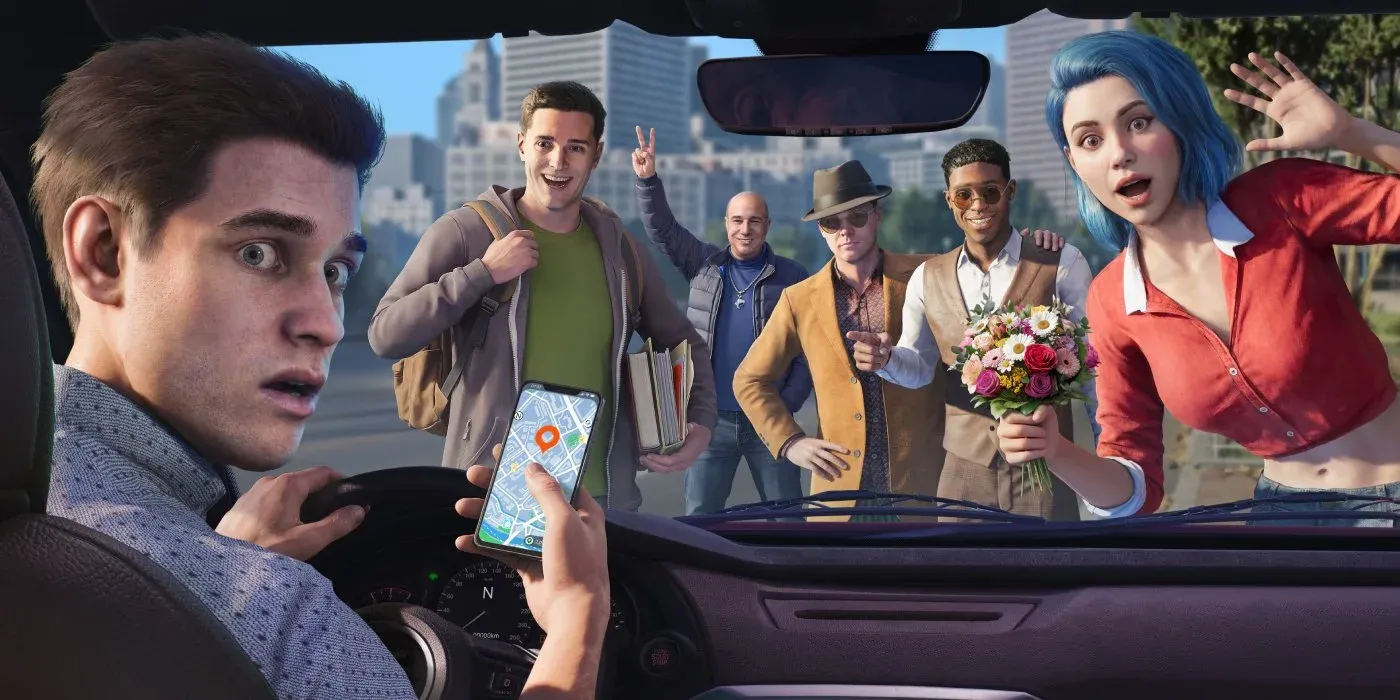
Image: outof.games
Saber’s clearest AI pledge arrives after a messy public fight
Saber Interactive chief creative officer Tim Willits has given the company’s firmest public answer yet to the Saber AI controversy around Rideshare Stimulator, telling GameSpot, “We will never fire someone and replace them with AI.” That pledge lands after a former Saber writer, Stella Sacco, said on Bluesky that she had been lead writer on the game and was replaced by ChatGPT midway through development, a claim Saber has denied through multiple statements reported by PC Gamer, GameSpot, Polygon, Kotaku, and This Week in Video Games.
The tension is that Saber is not denying generative AI use in Rideshare Stimulator. The company is trying to separate two ideas that players, developers, and labor advocates often treat as linked: AI as a production or live-content tool, and AI as a replacement for human creative workers. Willits told GameSpot that the game’s main campaign dialogue was written by humans, while an optional “free ride” mode uses AI because Saber wants that mode to reference current real-world events quickly, with weekly or biweekly updates planned.
That distinction is now the center of the Rideshare game AI dispute. The confirmed facts are that Rideshare Stimulator uses generative AI in several areas, that Saber says the main story was human-written, and that the company says no writer was replaced by AI. The unresolved part is Sacco’s account of how her work on the project ended and how the decision to use ChatGPT affected the writing role she says she held. Saber’s statements address replacement as a company policy and staffing claim. Sacco’s criticism is about a specific development experience.
What Rideshare Stimulator now discloses on Steam
After days of criticism, Rideshare Stimulator’s Steam page was updated with a detailed AI-generated content disclosure, according to Polygon and Eurogamer. The listing says the main campaign story, characters, and dialogue are written by human writers. It also says AI tools are used for voice generation and some localization.
The Steam disclosure draws a sharper boundary around the optional Free Ride mode. According to the text quoted by Polygon, Free Ride includes AI-generated passenger missions and localized dialogue, is separate from the main campaign, and can be skipped by players who prefer to experience only human-written narrative content. The same disclosure says the game includes a mix of radio stations with human-made music and AI-generated music, with stations containing AI-generated music labeled in-game.
That is a meaningful disclosure because it gives buyers a practical choice, at least on paper. If a player wants to avoid AI-generated narrative content, Saber says the campaign is the safer lane. If a player enters Free Ride, they should expect generated missions and localized dialogue. If they use the radio, they should watch for in-game labels. The open question is how obvious those labels and mode boundaries will feel in normal play, since none of the cited sources include hands-on verification of the final implementation.
The timing of the disclosure is also part of the story. Polygon reported that Rideshare Stimulator was announced in July without Saber mentioning generative AI use at the time, and that the Steam page had been updated by Aug. 14 after the controversy. Earlier, Polygon reported that the page did not yet have Steam’s required AI disclosure. Eurogamer later wrote that Saber CEO Matthew Karch had apologized and made sure Rideshare received proper AI disclosure labels on Steam.
The replacement claim remains disputed, but the record is clearer
Sacco’s original public claim, as quoted by multiple outlets, was direct: she said she was lead writer on Rideshare Stimulator, that Saber replaced her with ChatGPT midway through development, and that passenger voices were AI. Kotaku reported that she had made a similar claim in December about being replaced by ChatGPT on an unnamed Saber project, before identifying Rideshare after the game’s reveal.
Saber’s denial has also been direct. A spokesperson told PC Gamer, in a statement later quoted by GameSpot and other outlets, that “Neither Saber nor Unigine have replaced any writers with AI for Rideshare or any other game.” The same statement said Saber’s staff of writers has tripled since 2023 and that Rideshare’s story was written entirely by real people. GameSpot also quoted Saber saying that, as the industry has contracted, Saber continues to hire and that none of its 3000-plus employees “have to worry about being replaced by AI.”
Karch’s earlier response complicated that message. This Week in Video Games reported that Karch denied Sacco’s allegation while suggesting her departure was performance-related. Polygon and Out of Games quoted a harsher portion of his response, in which he said he would “in retrospect have been happy to replace her with AI.” That line became part of the backlash because it sounded like the opposite of the policy Saber is now emphasizing through Willits.
There is no clean public resolution in the provided record. Saber’s official position is that no writers were replaced with AI and that human writers authored the story. Sacco’s position is that the job she was doing moved to ChatGPT. Those statements can be legally, operationally, or emotionally different depending on contracts, handoffs, and production scope, but the sources do not provide the internal records needed to adjudicate that. The safest reading is that the staffing claim is disputed while the game’s AI use is confirmed.
Why the backlash hit game labor nerves so quickly
The backlash did not grow only because Rideshare Stimulator uses AI. It grew because the disclosed AI categories overlap with real game jobs: writing passenger missions, generating dialogue, producing voices, handling localization, and filling radio content with music. Saber frames those uses as tools for scope, speed, and replayability. Critics see the same list and recognize work historically done by writers, actors, translators, composers, editors, and narrative designers.
That is the strategic fault line for generative AI game development. In a conventional production model, “infinite” passengers would usually be constrained by budget, schedule, recording capacity, localization pipelines, and quality assurance. Saber’s answer, according to PC Gamer and GameSpot, is that Free Ride uses AI “by necessity” because the number of passengers is infinite. From a systems-design perspective, that is a familiar trade: dynamic content expands the possibility space, but it also pushes authorship away from fixed, reviewable assets and toward generated output.
For players, that can mean novelty and fast updates. Willits told GameSpot the goal is to reference current events quickly, with weekly or biweekly AI-generated content in Free Ride. For workers, it raises the predictable question of whether a studio will still hire people to write, edit, voice, localize, and maintain that content once a generation pipeline exists. Saber’s answer is yes, at least as a matter of stated policy. The company says its writing staff has grown since 2023 and Willits says Saber will not fire someone and replace them with AI.
The reason the promise is being scrutinized is that game development is already under pressure. Saber itself referenced industry contraction in its PC Gamer statement. In that environment, players and developers are likely to judge AI adoption less by abstract innovation claims and more by staffing outcomes, crediting, disclosure, and whether human creative work remains visible in the finished game.
Saber is positioning Rideshare as a contained experiment
Willits told Eurogamer that Saber is experimenting with AI through Rideshare, which he described as a small game, and said the company does not use it outright across all projects. He also said Saber does not have an official policy and that the industry and consumers are still figuring out how the technology fits. GameSpot reported Willits clarifying that some other Saber games, including the new Hellraiser, Turok, Stuntman, and Space Marine projects, do not use AI.
That is Saber’s attempted containment strategy: treat Rideshare Stimulator as an experiment with clear disclosure and optional AI-heavy content, while reassuring players that the approach is not being rolled across the publisher’s broader slate. Eurogamer notes that Saber is a large developer and publisher with 15 studios around the world, and its upcoming roster includes high-profile licensed and franchise projects such as John Wick, Stuntman, Turok, Hellraiser, Jurassic Park Survival, and the Star Wars: Knights of the Old Republic remake. That scale is why a taxi-game controversy has become a company-wide trust issue.
Willits’ broader argument is that someone in games may eventually find a genuinely persuasive AI use case. Eurogamer’s headline quotes him saying “somebody will make the Half-Life 2 of AI,” and GameSpot quotes him saying he believes some studio will come up with a brilliant idea that changes how people see the technology. That is an expectation, not a fact about Rideshare’s quality. It also sets a high bar. Half-Life 2 is remembered for design integration, not for technology existing in isolation. If Saber wants Rideshare to make the case for AI, the generated content will need to be coherent, funny, safe, well-localized, properly labeled, and worth choosing over authored material.
The risk is that weak generated dialogue or awkward voices could reinforce the criticism instead. Kotaku noted that passenger dialogue and mouth movements in the trailer appeared noticeably out of sync. Out of Games reported that the PlayStation 5 reveal trailer had a heavily negative like-to-dislike ratio at the time it checked, estimating about 20 percent likes to 80 percent dislikes. Those are reception signals, not final verdicts, but they show that Saber is entering the experiment from a trust deficit.
The buyer guidance: wait for disclosure, mode details, and final pricing
For anyone considering Rideshare Stimulator, the current guidance is simple: treat the campaign and Free Ride as different products inside the same game until reviewers or players can verify how the split works. Saber’s Steam disclosure says the main campaign is human-written, while Free Ride uses AI-generated passenger missions and localized dialogue. If AI-generated narrative content is a dealbreaker, the Steam page indicates the campaign can be played without that optional mode.
Release timing and final price remain unclear in the provided source material. Karch described Rideshare as a lower-priced title in comments quoted by Out of Games, but no final price is included in the sources. The game has a Steam page, and Out of Games refers to a PlayStation 5 reveal trailer, but the sources do not provide a complete confirmed platform plan, technical requirements, or performance details. Anyone making a purchase decision should wait for the store listing, launch build, and independent impressions to align.
The labor question will not be answered by one Steam disclosure either. Saber’s current AI statement is a promise about replacement, backed by the company’s claim that its writer staff has tripled since 2023. The controversy persists because Rideshare’s confirmed AI uses sit directly beside creative labor categories. The next test is whether Saber can show that humans remain responsible for authorship, direction, editing, QA, and accountability while AI handles the dynamic layer it says Free Ride requires.
That is the long game for the Saber Interactive AI statement. The company has drawn a line between tools and replacement. Players, developers, and former staff are now watching where that line sits once Rideshare Stimulator ships, updates begin, and the generated passengers start talking.