
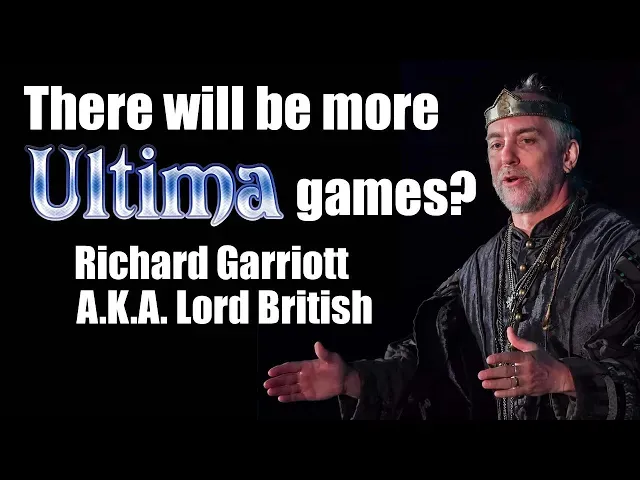
Richard Garriott says he will regain Ultima copyrights from EA in 2027. Here is what that could allow, what it does not confirm, and why remake hopes need caution.
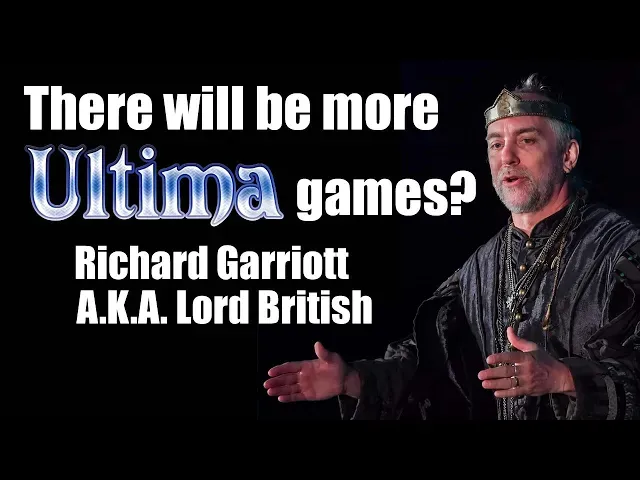
Image: vgtimes.com
Garriott says Ultima comes back to him in 2027, but control is not simple
Richard Garriott, the creator of Ultima and the public face of Lord British, says he has notified Electronic Arts that he intends to take back the copyrights to the Ultima series in 2027. That is the strongest concrete development here: after decades under EA, one of PC RPGs’ foundational names may soon return to its original creator’s copyright control. The tension is that copyright control is not the same thing as a greenlit remake, a complete IP handoff, or a ready-to-ship revival.
The claim comes from Garriott’s interview with Jesse Petrilla, cited by Video Games Chronicle, TechRaptor, Shacknews, and GamesRadar+. Garriott said the move relies on Section 203 of the United States Copyright Act, which allows authors to terminate certain past copyright transfers after 35 years. In Garriott’s account, he told EA in April that he would take the Ultima copyrights back, and EA responded, “yeah, we know that’s the law. We will act accordingly.” That quoted response is Garriott’s description of EA’s reply, not a separate public EA statement in the provided material.
TechRaptor adds an important limit: Garriott would regain the copyright, but not the trademark. That matters for any future box, storefront page, logo, subtitle, re-release bundle, or sequel pitch carrying the Ultima name. The practical shape of Richard Garriott Ultima rights in 2027 may therefore depend on continued talks with EA, and Garriott himself says those talks are already active.
A rights reversal lands on a series that has been dormant for years
Ultima’s weight is difficult to separate from the history of PC role-playing games. VGC describes the series as one of the most influential early RPG lines, especially for world-building and exploration. That influence is the reason the rights story has traveled beyond nostalgia circles: Ultima helped teach computer RPGs how to structure worlds that felt persistent, morally legible, and worth inhabiting.
Garriott sold Origin Systems and the Ultima rights to EA in 1992 for $30 million, according to VGC and TechRaptor. EA released several Ultima games during the 1990s, including Ultima Online, while Garriott remained involved for years. The later history is less celebratory. VGC says EA canceled Origin’s projects in 2000 and Garriott left. GamesRadar+ places the cancellation of Origin’s in-development projects in 1999, partly in connection with the poor reception to Ultima IX: Ascension, and says Origin was shut down by EA in 2004 after further work around Ultima Online and a canceled online Ultima project. The supplied sources differ on the exact cancellation timing, but they agree on the broad arc: the mainline series ended at Ultima IX in 1999, Origin’s future inside EA collapsed, and Garriott moved on.
Since then, the Ultima series EA controlled has not enjoyed a clean modern revival. VGC and Shacknews both identify 1999’s Ultima IX as the last mainline entry. VGC says EA tried twice to revive the series as a free-to-play title, most recently with 2013’s Ultima Forever. TechRaptor similarly notes that EA has largely left Ultima inactive, with Ultima Forever as the most recent title. For players searching for an Ultima RPG comeback, the news is meaningful because the franchise has had a long absence from the kind of authored, systemic single-player RPG space it helped define.
What Garriott says he could do, and what has not been announced
Garriott’s own comments set the clearest boundary around expectations. As quoted by VGC, he said he gets the rights back officially in 2027 and has “most of a year” to figure out what that means. He also said that, at the very least, the change could allow him to re-release earlier Ultima games, and that it could also allow him to make sequels. TechRaptor reports the same basic possibilities: re-releases of earlier games and potential sequels once the rights revert.
Those are possibilities, not announced products. None of the supplied sources reports a confirmed remake, remaster, sequel, release date, platform list, price, developer, publisher, engine, funding plan, or storefront listing. There is no confirmed Ultima remake project to wait for, no stated console strategy, and no announced upgrade path for owners of older releases. If a reader’s practical question is whether to hold off buying classic Ultima games because a remake is imminent, the sourced answer is no: Garriott has described future options, but no specific commercial release has been revealed.
The phrase “Ultima rights 2027” also needs precision. Based on the provided reporting, the date refers to Garriott’s expected copyright reversion window, not a guaranteed launch year for new games. Rights can unlock negotiations and production plans, but they do not replace them. A role-playing game with party systems, dialogue, world simulation, quest logic, and modern usability would require a team, budget, production schedule, platform certification, and marketing plan. None of that is confirmed in the current material.
The trademark question could shape every public-facing Ultima plan
TechRaptor’s note that Garriott would not regain the trademark is the detail fans should keep closest when evaluating remake speculation. Copyright can cover creative works such as the original games and their content, while trademarks govern branding in commerce. The supplied sources do not provide a legal breakdown beyond that distinction, but the reporting is enough to show why active discussions with EA matter.
If Garriott wants to re-release earlier games under the Ultima name, present them as an official series collection, market a sequel as Ultima X or another direct successor, or use recognizable franchise branding on a storefront, the trademark issue may need a business arrangement with EA. Garriott told VGC he is in active discussions with EA to explore possible projects they can work on together. That suggests the cleanest path for fans may be cooperation rather than a hard split.
This is also where player expectations can run ahead of the facts. A rights reversion can sound like a vault door opening. In practice, a classic RPG catalog has many layers: copyright ownership, trademarks, old code, music and art assets, platform compatibility, contract history, publishing rights, preservation work, and storefront relationships. The sources confirm Garriott’s stated intent to regain copyright control and his talks with EA. They do not confirm that the Ultima series EA era will instantly become available in polished modern editions.
Why re-releases sound more plausible than lavish remakes right now
Garriott’s most concrete example is re-releasing the earlier Ultimas, and that is easier to imagine than a full remake trilogy or a large-budget new RPG. Re-releases can still be complicated, especially with old PC games built for long-vanished hardware assumptions, but they are a smaller promise than rebuilding Britannia for a modern audience. The current reporting supports that modest expectation better than it supports any specific remake dream.
From an RPG systems perspective, Ultima is a particularly demanding candidate for revival. The series’ reputation rests on exploration, world interaction, moral structure, and player agency. Updating those elements is harder than repainting sprites or swapping in a new interface. Modern players expect readable quest tracking, stable saves, accessible controls, widescreen presentation, and friction that feels intentional rather than archival. Longtime fans, meanwhile, often want the strange density and consequence of the older games preserved. A remake that smooths too much risks losing the texture that made Ultima matter; one that changes too little risks becoming a museum piece with a higher resolution.
That is interpretation, but it follows from the kind of series Ultima is and from the absence of announced production details. Until Garriott or EA names a project, a developer, and a scope, the safer expectation is preservation first, experimentation later. A sequel is possible because Garriott says it is possible. A remake is unannounced. A premium modern RPG comeback is an ambition, not a sourced plan.
Garriott’s current creative direction may be part of the debate
TechRaptor reports that Garriott discussed part of his vision during a Dragon Con panel, including a heavy lean on AI tools and what he described as “ethically trained LLMs,” along with other ChatGPT-created concepts. The outlet cautions that it remains to be seen whether he fully follows that path. That detail is likely to divide an Ultima fanbase that cares deeply about authorship, systems, and coherent world logic.
For a series built on authored virtues, NPC routines, world rules, and the feeling that the setting has a moral architecture, AI-assisted development would raise practical questions. Would it support production on a smaller budget, helping an old RPG series return without blockbuster staffing? Could it dilute the carefully designed quest and dialogue structures that fans associate with Ultima? The supplied sources do not answer those questions. They only establish that Garriott has publicly floated AI-heavy ideas and that his final approach is unknown.
This is another reason to temper expectations. A new Ultima under Garriott would not automatically resemble the games players remember, nor would it necessarily follow EA’s past attempts at free-to-play revival. Garriott’s post-EA career includes Destination Games, the NCsoft-published MMO Tabula Rasa in 2007, and, as VGC notes, Tabula Rasa’s closure in 2009 after disappointing sales. He also became a private astronaut and spent 12 days aboard the International Space Station in 2008. The point is not biography for its own sake; it is that Garriott’s career after Origin has been experimental, risky, and uneven, which makes any future Ultima plan worth judging by its announced design rather than by the name alone.
For fans, 2027 is a rights milestone rather than a release window
The best reading of the current news is cautiously optimistic. The Ultima series EA kept mostly dormant could return to direct involvement from Richard Garriott, the creator most associated with Lord British and Britannia. Garriott says the copyright reversion becomes official in 2027, says he has notified EA, and says he is discussing potential cooperation with the publisher. He has identified re-releases and sequels as things the change could permit.
The practical guidance is to treat 2027 as the earliest point at which the rights situation may clarify, not as a promise of new games. Watch for several concrete signals: an EA and Garriott joint announcement, trademark arrangements, named development partners, specific classic titles listed for re-release, storefront pages, platform confirmations, or production details for any sequel. Without those, remake talk remains expectation and speculation.
For now, the story is significant because it reopens a door many RPG fans assumed had rusted shut. It does not yet tell us what will walk through it. The difference between “Richard Garriott Ultima rights” and a playable Ultima RPG comeback is the difference between ownership, publishing, design, and delivery. Fans can be excited that the first of those may change in 2027. They should wait for evidence before assuming the rest has already begun.