
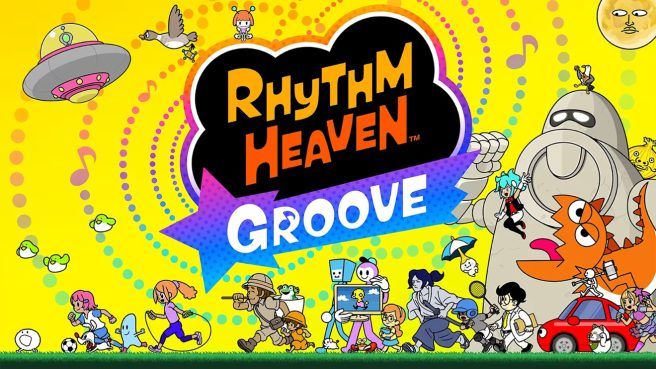

Rhythm Heaven Groove, sold as Rhythm Paradise Groove in Europe, entered the UK software sales chart at No. 5 for the week ending July 4, 2026, giving Nintendo’s long-dormant rhythm series an early sign of launch momentum beyond strong review chatter.
Image: nintendoeverything.com
Rhythm Heaven Groove lands a top-five UK debut
Rhythm Heaven Groove has opened at No. 5 on the UK software sales chart for the week ending July 4, 2026, according to Nintendo Everything’s report on the latest chart. In the UK and Europe, the game appears on the chart under its regional title, Rhythm Paradise Groove, with Nintendo listed as publisher and “N/A” in the previous-week column, marking it as a new entry.
That is the concrete development behind the early chatter: Nintendo’s rhythm series, long treated as a beloved oddity rather than a guaranteed chart force, has converted at least some of that affection into a top-five UK debut. The chart does not provide unit sales, revenue, or a digital versus physical breakdown, so this is a placement signal rather than a full commercial picture. Still, debuting inside the top five gives the new Switch entry a cleaner early proof point than review scores alone.
The timing sharpens the read. Wikipedia’s public listing for Rhythm Heaven Groove states that the game released worldwide on July 2, 2026, which would put this UK chart appearance within its launch window for the week ending July 4. If that date is accurate, the No. 5 placement reflects a short initial sales period rather than a full week on shelves. That makes the result look healthy, but it also leaves the bigger question open: can Rhythm Heaven Groove hold after the most nostalgia-ready fans have already shown up?
A niche Nintendo series is charting beside heavier hitters
Nintendo Everything described the week as light on new releases, which is important context for any Rhythm Heaven Groove UK sales read. A quieter release slate can make room for a smaller Nintendo title to breathe, but the top of the chart was still crowded with brands that usually play well in the UK.
EA Sports FC 26 took No. 1, moving up from No. 2, while IO Interactive’s 007 First Light climbed to No. 2 from No. 5. Nintendo’s Tomodachi Life: Living the Dream sat at No. 3, and Star Fox, another Nintendo title, slipped from its No. 1 debut the previous week to No. 4. Rhythm Paradise Groove followed at No. 5. That places Nintendo’s rhythm game directly behind a mix of annualized sports power, licensed action, social simulation, and a major Nintendo revival.
The placement is especially telling because the Rhythm Heaven format sells a different promise. Its pitch is small, precise, and craft-led: short rhythm challenges, strange character comedy, and performance grading built around listening rather than spectacle. IGN’s review describes the game as a sequel built around “tempo-shifting trials” and minigames that ask players to read visual and audio cues without a traditional note highway. That kind of design can inspire cult devotion, but it does not always translate into broad launch-week chart visibility. In the UK, at least for this first reported week, it has.
Review scores helped set the runway, but sales answer a separate question
The Rhythm Heaven Groove review score conversation has been broadly positive, but the chart debut is useful because it measures a different kind of response. Critics and enthusiast communities can keep a dormant Nintendo series visible; sales charts show whether that visibility is prompting launch purchases.
Nintendo Life gave Rhythm Heaven Groove an 8/10 in its review, with reviewer Gavin Lane calling it “a surprise and a delight” while also warning that the Beatspell mode did not land for him and that lag on a modern TV can be irritating. IGN awarded the game a 9/10, praising it as a “superb sequel” and calling its minigame collection satisfying and surprisingly difficult to master, while likewise saying the RPG-inspired Beatspell mode was not the hit the reviewer had hoped for. Shacknews also framed the game positively, calling it a strong return full of catchy minigames for solo play and friends, while recommending handheld play over docked mode.
ResetEra’s review thread lists Metacritic at 82 and OpenCritic at 83, though that should be treated as a forum aggregation rather than a primary review database citation. The larger pattern is clear enough from the sourced reviews: critics like the core rhythm design, but the praise comes with specific caveats. A No. 5 UK software sales chart debut suggests those caveats did not stop early adopters from buying in, at least during launch week.
Nostalgia is doing work, but Groove also has a practical hook
Rhythm Heaven Groove benefits from absence. Wikipedia’s listing identifies it as the fifth installment in Nintendo’s Rhythm Heaven series and says it is the first new game in the series in over a decade, following the 2015 Nintendo 3DS entry. Nintendo Life’s review text leans into that gap, saying the reviewer had worried the Switch generation might pass without a Rhythm Heaven game.
That kind of wait creates a launch audience with pent-up demand, but nostalgia alone can be brittle. The stronger sign for Groove is that the sourced reviews describe a game with an accessible mechanical core and enough challenge to keep skilled players engaged. IGN writes that the controls are deceptively simple, built around taps and holds, while the challenge comes from recognizing musical patterns and timing rather than following a clear note highway. Shacknews similarly emphasizes simple interaction points across a large variety of rhythmic scenarios.
The content count also helps explain why this can sell as a full Nintendo release rather than a curiosity. Wikipedia lists 80 single-player rhythm minigames and 30 multiplayer rhythm minigames. Shacknews reports around 80 single-player games, with stages built from four games and a Remix, plus medals that unlock bonus content, side games, and Beatspell chapters. That structure is tailor-made for old fans who want the series’ familiar bite-sized discipline, while giving new Switch players an obvious party and replay-value angle.
The Switch angle comes with one important performance caveat
The available source material identifies Rhythm Heaven Groove as a Nintendo Switch game, with Nintendo Life framing it as a late-cycle release that proves the original Switch still has life in it. That positioning matters because the chart week also includes Nintendo Switch 2 discussion elsewhere on Nintendo Everything, and Star Fox is listed in the same chart after debuting at No. 1 the week before. Groove’s early sales story is therefore tied to Nintendo’s older install base rather than a confirmed Switch 2-specific push in the provided sources.
For buyers, the biggest practical caveat is input and display latency. Nintendo Life’s review warns that lag issues on a modern TV are irritating and says handheld or tabletop mode is the best way to play. Shacknews separately says Rhythm Heaven Groove is one of the few Switch games it would wholeheartedly recommend playing handheld rather than docked. Those are review-based observations, not official technical specifications, but they are highly relevant for a rhythm game where late inputs can ruin the feel.
That caveat may also shape the sales tail. A rhythm game can thrive through word of mouth if players can show it to friends and family, but it can also stumble if the most visible living-room setup feels less reliable than handheld play. Nintendo Life’s reader poll article includes early comments from players praising multiplayer and calling it a possible party game, but those comments are anecdotal and drawn from a small enthusiast sample. The launch chart tells us people are buying; it does not yet tell us whether the social play promise will carry it into later weeks.
The next UK chart will be the clearer test
The first Rhythm Heaven Groove chart result is encouraging, but it is only the opening bar. Nintendo Everything’s chart confirms a No. 5 debut for Rhythm Paradise Groove in the UK for the week ending July 4, 2026. It also shows that Star Fox, which entered at No. 1 the previous week, dipped to No. 4 rather than falling out of the top five. That comparison is useful because it separates launch heat from early retention: Star Fox still has visibility after week one, while Groove has only posted its first result.
For readers tracking Rhythm Heaven Groove UK sales, the next chart will matter more than the debut alone. A gentle drop would suggest the series is reaching beyond the most committed fans. A steep fall would still be normal for a niche franchise with a concentrated launch audience, especially in a quiet release week, but it would temper any claim that nostalgia has turned into broad momentum.
What is confirmed now is narrow but meaningful: Rhythm Heaven Groove, under its European Rhythm Paradise Groove title, opened in the UK top five on the reported software sales chart, while its critical reception has been favorable across several sourced reviews. What remains unconfirmed in the provided material is the sales volume, digital inclusion, price, any upgrade path, and whether Nintendo plans further platform-specific support. For now, Nintendo’s strangest little rhythm machine has done the hardest early thing a niche series can do: it made the chart conversation about buyers, not only reviewers.