
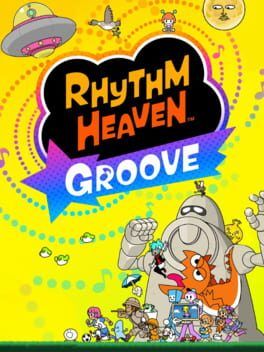

A fresh Famitsu score and a renewed Rhythm Heaven Fever box art debate show how Rhythm Heaven Groove is drawing power from series memory, even as Switch 2 details remain unconfirmed in the available listings.
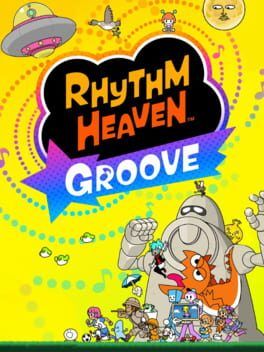
Image: IGDB
Famitsu gives Groove a strong early signal as fans look backward
Rhythm Heaven Groove has a fresh critical data point: Nintendo Everything reports that Famitsu’s July 5, 2026 review scores gave the Nintendo rhythm game an 8/9/8/9, which totals 34 out of 40 under Famitsu’s four-editor format. That is the strongest concrete development around Groove in the supplied material, and it arrives alongside a very different kind of attention: Nintendo Life has revived Rhythm Heaven Fever for a regional box art poll, asking readers to pick between North America, Europe, and Japan.
Those two things sit in productive tension. Famitsu’s score is about the new release. The Rhythm Heaven Fever box art debate is about memory, taste, and the way this series lodges itself in players’ heads through small, strange, highly specific details. Rhythm Heaven Groove is benefiting from both. It has a current review signal from Japan, while the fan conversation around Fever is reminding people what made the series distinct long before any modern platform conversation could define it.
That matters especially because the available source material does not clearly establish a Rhythm Heaven Switch 2 version. Nintendo Everything filed its Famitsu item under Switch, Wikipedia’s public entry describes Rhythm Heaven Groove as a Nintendo Switch game, and Nintendo Life’s linked game page labels it as a Nintendo Switch title. If players are searching for Rhythm Heaven Switch 2 details, the responsible answer from these sources is simple: a Switch 2 release, upgrade path, performance target, or dedicated version is not confirmed here.
The Fever box art poll is really a poll about what Rhythm Heaven feels like
Nintendo Life’s Box Art Brawl frames Rhythm Heaven Fever as the third entry in the series, released in Japan in 2011, then in the West in 2012, where it received generally positive reviews. The site notes that it was followed by Rhythm Heaven Megamix in 2015 and then Rhythm Heaven Groove in 2026. That timeline is doing a lot of work for Groove. A gap of more than a decade between Megamix and Groove gives every old visual cue extra charge.
The poll itself, which Nintendo Life lists at 1,514 votes in the supplied text, pits three regional covers against one another. Nintendo Life describes the North American cover as busy but effective, with characters, color, and composition pulling together. The European version, released under the name Beat the Beat: Rhythm Paradise, is described as less colorful but still energetic, with speakers near the title singled out as a nice touch. The Japanese version is framed as more abstract, using rainbow color and dotted lines around the title to suggest rhythm.
That is a box art conversation on the surface, but for Rhythm Heaven it cuts deeper than packaging preference. This series has always sold timing through personality. A cover that shows many characters is also promising a cabinet of tiny routines. A cover that leans abstract is selling the beat itself. A regional title change, as one Nintendo Life commenter complained about in Europe and Australia, is another reminder that Rhythm Heaven’s identity has never been completely uniform across markets. Groove arrives into a fanbase trained to read those differences closely.
Nostalgia is strongest when it remembers the difficulty, not only the charm
The useful thing about the current nostalgia wave is that it is not purely soft-focus. A Reddit post on r/rhythmheaven, labeled by its author as a review from a hardcore fan, remembers the Nintendo DS entry as absurd, comedic, sometimes visually ungainly, and much tougher than its breezy tone suggested. The user describes needing to internalize the rhythm rather than simply react to what appears on screen, and compares chasing Perfects to learning demanding patterns in a difficult action game.
That is only one fan account, so it should not be treated as a community consensus. Still, it captures a core reason Rhythm Heaven nostalgia is unusually durable. People do not only remember the cute onion, the deadpan singer, or the joke animation. They remember being humbled by a simple beat. They remember the moment a minigame flips from impossible to obvious because the timing finally clicks.
For Rhythm Heaven Groove, that is a useful inheritance and a risk. If the new game is too forgiving, longtime players may feel that the snap has softened. If it leans too hard into expert timing, newer players drawn in by the warm art and musical comedy may bounce off before the spell takes. Famitsu’s 34/40 suggests, at minimum, that its four reviewers found plenty to like, but the score alone does not tell us how Groove handles that old balance between approachable silliness and exacting rhythm discipline.
The public listings point to scale, but they need careful attribution
Several public, community-edited listings describe Rhythm Heaven Groove in ways that suggest a large entry, though these should be read differently from a publisher fact sheet. Wikipedia’s entry lists the game as a 2026 release developed by Nintendo and TNX and published by Nintendo for Nintendo Switch, with a worldwide release date of July 2, 2026. The same entry says it is known as Rhythm Paradise Groove in PAL regions and Rhythm Tengoku: Miracle Stars in Asia, continuing the regional naming pattern that Nintendo Life readers were already discussing around Fever.
Wikipedia also states that Groove includes 80 single-player rhythm minigames and 30 multiplayer rhythm minigames, plus an RPG-like Beatspell mode built around rhythm inputs and button combinations. The Rhythm Heaven Wiki and Rhythm Heaven Wiki at rhwiki.net also list Groove under names including Rhythm Tengoku: Miracle Stars and Rhythm Paradise Groove, reinforcing that fans are tracking the regional identity of this release closely.
Those details are promising for anyone hoping Groove has the density expected from a long-awaited return, but they are still public listing claims in the supplied material. The stronger sourced item is the Famitsu score reported by Nintendo Everything. The practical distinction is important: review scores show that Famitsu evaluated the game, while wiki entries describe content and credits in a format that can change.
The Switch 2 question is the biggest gap in the current conversation
The assignment around Groove naturally pulls in Switch 2 because Nintendo’s current hardware conversation shapes how many players think about timing, buying, and waiting. But the supplied sources do not confirm a Rhythm Heaven Switch 2 edition. Nintendo Everything’s Famitsu post is categorized under Switch. Wikipedia names Nintendo Switch as the platform. Nintendo Life’s page reference also points to Nintendo Switch.
That leaves readers with a clean buying question and an incomplete answer. If you are interested in Rhythm Heaven Groove because you want a new Nintendo rhythm game, the available material supports watching the Switch release. If you are waiting specifically for Switch 2 enhancements, a native Switch 2 SKU, or an upgrade path, those details are not established by these sources.
This gap is especially relevant for rhythm games, where timing perception matters. Frame pacing, input latency, audio output delay, and controller response can shape how fair a rhythm challenge feels. None of the provided sources give performance targets, latency notes, display mode details, controller requirements, or accessibility timing options for Groove. Until Nintendo or a storefront listing provides those specifics, players should separate excitement for the series’ return from assumptions about how it will behave on new hardware.
Groove’s advantage is that Rhythm Heaven nostalgia is mechanical
Some revivals lean mainly on character recognition. Rhythm Heaven has a different advantage: its nostalgia is mechanical. The Fever box art poll shows fans arguing over color, character density, speakers, regional logos, and whether the cover communicates how the minigames work. Those are visual arguments, but they all orbit the same question: does this image express the rhythm before the player presses a button?
That is the sweet spot Groove can occupy. The series’ best moments are tiny lessons in trust. The screen may be funny, noisy, or deliberately odd, but the player eventually learns to stop staring for answers and listen. Nintendo Life’s descriptions of the Fever covers, particularly the contrast between character-heavy North America and abstract Japan, underline how Rhythm Heaven has always moved between two identities: comedy sketchbook and pure timing exercise.
Famitsu’s 8/9/8/9 does not guarantee that Groove resolves that tension perfectly. It does, however, give the game a favorable early score at the same moment fans are revisiting one of the series’ most recognizable console-era entries. For a franchise returning after a long quiet stretch, that pairing is powerful. Groove is entering the room with a score to point at and a memory trail already lit.
For now, the smart read is excitement with a few open tabs
Based on the supplied sources, Rhythm Heaven Groove is real enough in the public conversation to have Famitsu scores reported by Nintendo Everything, a 2026 placement in Nintendo Life’s series timeline, and active fan-maintained listings gathering names, modes, and structure. The nostalgia around Rhythm Heaven Fever box art is not a distraction from Groove. It is part of the runway.
Still, the most useful reader stance is measured curiosity. Treat the Famitsu Rhythm Heaven Groove score as an encouraging signal, not a full buyer’s guide. Treat wiki-listed content counts and modes as public listing information unless backed by Nintendo materials. Treat the Rhythm Heaven Switch 2 angle as an unanswered platform question in the sources provided here.
What is confirmed in this material is the shape of the moment: a beloved Nintendo rhythm game series is back in circulation, Famitsu has given Groove a positive four-editor score, and fans are once again debating the exact visual language of Rhythm Heaven Fever. That is how this series tends to work. The smallest details become the hook, then the beat does the rest.