
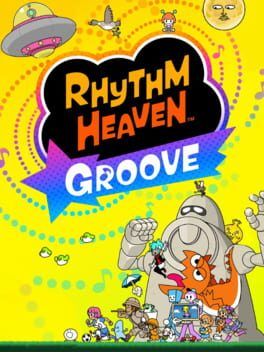

Rhythm Heaven Groove earned 34/40 in Famitsu's July 5, 2026 review scores, adding to a strong early reception for Nintendo's long-dormant rhythm series amid some platform-label confusion around Switch and Switch 2 coverage.
Image: IGDB
Famitsu gives Rhythm Heaven Groove a 34/40 launch-week signal
Rhythm Heaven Groove has picked up an 8/9/8/9 from Famitsu, according to Nintendo Everything’s July 5, 2026 roundup of the magazine’s review scores. Famitsu uses four editors for each review, with the combined score landing out of 40, which puts Nintendo’s rhythm sequel at 34/40 for the week.
That is the strongest concrete development around the game right now because it arrives as the wider critical picture is forming. In the same Famitsu list, Crazy Chain: Elpis no Kusari received 8/8/8/9, Magical Girl Witch Trials received 8/9/8/7, and Mouse: P.I. For Hire received 7/8/8/8. Groove sits at the top of that particular batch, though the spread also shows this is a positive consensus score rather than a runaway perfect-score event.
The tension is platform identity. The assignment focus, and several pieces of coverage, place Rhythm Heaven Groove in the Switch 2 conversation. GameSpot’s review URL labels it as a Switch 2 review, and CGMagazine headlines its piece as a Nintendo Switch 2 review. At the same time, Nintendo Everything categorizes its Famitsu item under Switch and says the game is launching on Nintendo Switch, while CGMagazine’s own metadata says it was played on Nintendo Switch. TAGN’s Fantasy Critic League post calls it a Nintendo Switch exclusive. The safest reading from the available sources is that Rhythm Heaven Groove is a Nintendo-exclusive rhythm release being covered inside the Switch and Switch 2 transition window, but the provided material does not cleanly establish a single platform label across outlets.
A good Japanese score lands differently for Rhythm Heaven
Famitsu’s score matters here because Rhythm Heaven is a Japanese-born rhythm series with a long gap behind it. Nintendo Everything describes Groove as the first new entry in the series in over a decade and notes that Japanese musician Tsunku is back for the latest beats. IGN similarly frames it as a return after a decade-long sleep and calls it the series’ Switch debut.
For a series built on timing, humor, short-form musical craft, and extremely specific audio-visual feedback, early Japanese review reception carries a different kind of weight than a routine launch-week number. Famitsu is not the whole critical market, and one 34/40 should not be treated as a universal verdict. But it is a prominent domestic score for a Nintendo rhythm game in 2026 that has to reassure two audiences at once: players who kept the series alive in memory through handheld and Wii entries, and newer Switch 2-era players judging whether this smaller, stranger Nintendo release belongs alongside bigger hardware-window names.
That is where the 34/40 feels useful. It suggests Famitsu’s panel found the sequel comfortably successful without implying that every experiment lands flawlessly. For a dormant series, that is an encouraging place to begin. The risk with a comeback like this is not only whether the songs are catchy. It is whether the old one-button magic can still surprise players who have spent years with rhythm games that show every note, lane, and timing window on screen.
The wider review picture backs up a strong, not flawless, reception
The Famitsu score is not isolated. A TAGN Fantasy Critic League post, tracking OpenCritic movement for week twenty-seven, says fifteen reviews appeared at once when the embargo seemed to lift and Rhythm Heaven Groove initially received an 84.3 score. The same post says more reviews later came in and the score settled slightly, while remaining a bit over 83 by the end of the week. TAGN is writing from a fantasy critic league perspective rather than acting as a primary review outlet, but its post is still useful as a snapshot of early aggregate momentum.
Nintendo Everything’s review roundup listed several early scores on July 1, including IGN at 9/10, GameSpot at 8/10, Game Informer at 8.25/10, and Shacknews at 8/10. CGMagazine’s review gives the game a 10, lists Nintendo as both developer and publisher, and lists an MSRP of $39.99 with a release date of July 2, 2026.
Taken together, the Rhythm Heaven Groove review score picture points toward a well-liked sequel with enough friction to keep expectations sensible. IGN praises the core game heavily but says the RPG-inspired Beatspell mode was not quite the hit the reviewer hoped for. That detail is important because Nintendo Everything’s overview describes Beatspell as an unlockable mode where players use rhythm to cast spells and defeat monsters. The early consensus appears to be strongest around the traditional rhythm-game collection and less uniformly certain around the mode that stretches the format.
The craft being praised is precision, surprise, and audio-first design
Across the available reviews, the same design identity keeps surfacing: Rhythm Heaven Groove is simple to operate, but demanding to master. IGN says the game uses different button presses, from quick taps to longer holds, and does not rely on a clear note highway telling the player exactly when to act. Instead, players read visual and audio cues across short rhythm challenges. GameSpot likewise says almost all commands are mapped to the A button, with some more complicated arrangements adding a D-pad input for a different command.
That matters because Rhythm Heaven’s appeal has always lived in the gap between toy-like controls and exacting timing. GameSpot describes examples including a stunt car commercial, a cat doll jumping and rolling, a bodybuilder bouncing fruit, a robot sorting pudding, and rainstorm windshield-wiper timing. Nintendo Everything’s overview also lists activities such as catching flying vegetables, bouncing fruit off biceps, swinging sledgehammers, slicing arrows, and plucking hair from onions.
The important detail is not the weirdness by itself. Reviewers are responding to how the weirdness hides rhythm training inside visual jokes and musical repetition. IGN says each game begins with an in-depth tutorial before layering skills together in the real level, and notes that later arrangements differ from the warm-up enough to require practice. That structure is classic small-game craft: teach one readable verb, bend it musically, then ask the player to listen harder than they look.
Difficulty and accessibility are part of the same conversation
The most interesting praise around Rhythm Heaven Groove is that several reviews describe it as both demanding and unusually playable through sound. IGN says the minigames become harder as songs grow more complex and that the absence of a note highway pushes players into focused listening. GameSpot says the sound design gives sharp feedback, to the point that the reviewer could close their eyes and still follow the rhythm because every action had a sound cue.
CGMagazine makes the accessibility point even more directly. Its review says Groove often places distractions or visual blockers on screen to trip up the player, making audio cues central to success, and argues that this focus can make the game especially approachable for low-vision or no-vision players. That is a notable piece of praise for a rhythm title because accessibility discussions often focus on menus, remapping, and visual indicators. Here, the core musical design itself appears to be doing some of the work.
The tradeoff is that audio-first does not mean easy. IGN calls the minigames surprisingly difficult to master, and GameSpot describes background distractions and subtle performance feedback, such as other characters reacting when timing is slightly off. For players watching the Rhythm Heaven Groove Switch 2 conversation and wondering whether this is a lightweight launch-window palate cleanser, the early reviews suggest something sharper: friendly inputs, cheerful animation, and a real demand for timing discipline.
How to read Groove inside the Switch 2 lineup
For Switch 2 watchers, Rhythm Heaven Groove is useful as a lineup test because it represents the kind of Nintendo release that can get crowded out by hardware spectacle. The sources provided here do not include technical performance details, resolution targets, frame-rate claims, upgrade-path information, or confirmation of separate Switch and Switch 2 SKUs. They do include a $39.99 MSRP from CGMagazine, a July 2, 2026 release date from the same outlet, Nintendo as developer and publisher in CGMagazine’s listing, and broad coverage across both Switch and Switch 2 labels.
That leaves practical guidance in a slightly cautious place. If your main question is whether the game is reviewing well, the answer from Famitsu, OpenCritic tracking via TAGN, and multiple early Western outlets is yes. If your main question is whether to buy it specifically as a Switch 2 showcase, the provided sources do not support claims about exclusive Switch 2 features or performance advantages. Players should check the official Nintendo storefront on their own region’s eShop before purchasing, especially if they are trying to distinguish Switch compatibility from Switch 2 branding.
As a Nintendo rhythm game 2026 release, though, Groove is already doing something valuable for the lineup conversation. It gives Nintendo’s new hardware era a smaller, mechanics-led game with review momentum, a long-dormant fanbase, local multiplayer hooks, and a clear identity built around music rather than scale. The Famitsu 34/40 does not settle every question, but it strengthens the case that Rhythm Heaven’s comeback has landed with the beat intact.