
Two very different slices of 90s TV gaming are getting the preservation treatment. We compare the Disney Afternoon Collection’s Switch debut to the newly announced Ren & Stimpy: Happy, Happy, Joy, Joy Collection, breaking down emulation quality, bonus content, and which flavor of nostalgia each compilation really serves.
If you grew up in the 90s, your cartoon loyalties probably sat somewhere between Disney’s polished afternoon block and Nickelodeon’s louder, weirder output. This weekend’s retro news lines those two worlds up neatly: The Disney Afternoon Collection is finally landing on Switch and Switch 2 with extra games, while Limited Run has announced the seven‑game Ren & Stimpy: Happy, Happy, Joy, Joy Collection for modern platforms.
Both compilations are selling nostalgia, but they do it in very different ways. One is a carefully tuned shrine to Capcom’s precision platformers. The other is a messy time capsule of 90s Nick weirdness. Deciding which one is for you comes down to what kind of retro experience you actually want.
Lineups: Tight Classics vs Chaotic Deep Cuts
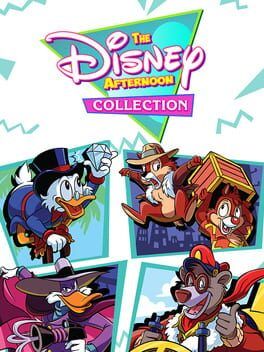
On Switch, The Disney Afternoon Collection now pulls together eight titles built on Capcom’s 8 and 16‑bit muscle. The original six NES games return: DuckTales, DuckTales 2, Chip ‘n Dale Rescue Rangers, Chip ‘n Dale Rescue Rangers 2, Darkwing Duck and TaleSpin. The new Switch/Switch 2 editions add two SNES Capcom efforts, Goof Troop and Bonkers, rounding the package out beyond “just” NES platforming.
The focus here is quality over quantity. These games are tightly designed, visually readable and mechanically consistent. DuckTales’ pogo cane, Chip ‘n Dale’s box‑throwing co op and Darkwing Duck’s Mega Man‑style level progression all speak to a studio that knew its hardware and audience. Even TaleSpin, the oddball shooter, still shares Capcom’s firm grasp of hitboxes and pacing.
By contrast, the Ren & Stimpy: Happy, Happy, Joy, Joy Collection leans into breadth and chaos. Across seven games originally spread over SNES, Genesis/Mega Drive, and handhelds, you are getting the full scattershot history of 90s licensed tie ins. Expect platformers with deliberate jank, mini game collections, and tone that swings from slapstick to outright gross‑out. It is less a curated “best of” and more a museum drawer full of every strange idea that got shipped with Ren and Stimpy’s faces on it.
If the Disney pack feels like an anthology of reliably good Saturday‑morning platformers, the Ren & Stimpy set feels like a bootleg VHS of every odd game cartridge your friend’s older cousin owned.
Emulation & Feel: Capcom’s Polished Time Capsule vs Nickelodeon Time Warp
Disney Afternoon was originally assembled by Digital Eclipse, a studio that has essentially built its reputation on respectful retro work. On previous platforms, the emulation was clean, with minimal input latency, accurate scrolling, and faithful sound. With the Switch and Switch 2 release, all signs point to that same backbone returning intact, now handling both NES and SNES material.
These games were built to be responsive, and good emulation keeps that intact. DuckTales’ pogo physics feel right. Rescue Rangers’ co op chaos never collapses into dropped inputs. Goof Troop in particular benefits from a sharp, lag free presentation, since a lot of its appeal lives in fast puzzle solving and coordination with a second player.
Ren & Stimpy’s compilation, based on what Limited Run and coverage have outlined, is closer in spirit to other straightforward 16‑bit collections. The goal is to get several historically obscure titles preserved and running on PS5, Switch and PC, not to rebuild them from the ground up. That means the package trades on authenticity. If a jump felt a little off back in 1993, it probably still feels that way here.
In practice, this is part of the appeal. Ren & Stimpy games were always a bit clumsy, and modern emulation that keeps original timing and quirks can actually enhance that “found artifact” vibe. But if you are looking for that crisp, speedrun friendly feel associated with Capcom’s output, you are more likely to find it in Disney Afternoon.
Bonus Features & Extras: Museum Piece vs Bootleg Marathon
The biggest structural difference between these collections sits outside the core games. Disney Afternoon on Switch inherits and slightly expands a robust set of extras.
Rewind is present across the board, which transforms some of the nastier NES jumps from deal‑breakers into brief stumbles. Combined with save features, it makes the collection much less intimidating for players who did not grow up with 8‑bit cruelty.
You also get Time Attack and Boss Rush modes, which modernize these games as score‑chasing challenges. They give longtime fans a reason to revisit levels they know by heart and provide a way to engage with the games in short sessions. On top of that, a soundtrack player and behind‑the‑scenes gallery act as a small museum for fans of the shows and Capcom’s art teams. For people who like peeking behind the curtain at box art, concept frames and marketing ephemera, these extras matter as much as the games themselves.
The Ren & Stimpy collection, by comparison, is positioned more as a “get everything in one place” bundle. Announcements highlight the number of games and the fact that some of them have never been easily accessible for decades. You can reasonably expect modern comforts like save states and display options, in line with other Limited Run style retro packages, but the pitch is not about deep documentary context. It is about having a pile of vintage Ren and Stimpy chaos on your SSD.
That difference affects how you will interact with each compilation. Disney Afternoon invites close study, replay and appreciation of level design. Ren & Stimpy leans into casual dipping: boot a game, laugh at some grotesque sprite work, remember a weird boss, then hop to the next cartridge.
Preservation Goals: Polishing Classics vs Saving The Weird Stuff
Viewed purely as preservation projects, these compilations are both valuable, but they protect very different corners of history.
Disney Afternoon’s Switch release locks down what are arguably some of the most important licensed platformers of the late NES era. DuckTales and Rescue Rangers are famous enough that they have been written about in design retrospectives, cited as examples of how to adapt TV properties without treating kids as an afterthought. Bringing both the NES and SNES projects together in one place ensures that future players can see how Capcom’s approach evolved as hardware changed.
Ren & Stimpy’s Happy, Happy, Joy, Joy Collection, meanwhile, acts like a safety net for a much messier lineage. Individually, most of these games would never justify a remaster. They are curiosities, shaped as much by publisher schedules as by design intent. Together, though, they tell the story of how early 90s TV phenomena drove fast, sometimes reckless game production.
It is the sort of set historians love, because it captures the full spectrum from competent to “what were they thinking.” Preserving that range is just as important as preserving the polished hits, even if the raw play experience is not as consistently fun.
Which Compilation Fits Your Nostalgia?
If you are torn between the two, it helps to think less in terms of which show you preferred and more in terms of how you like to revisit the past.
The Disney Afternoon Collection is for players who want their nostalgia sharpened rather than simply remembered. It suits anyone who:
Loves old school platformers and wants them feeling tight and fair with modern assists.
Wants structured modes like Time Attack and Boss Rush to give classic levels new life.
Cares about extras such as galleries and soundtrack players and likes the feeling of a curated museum.
Has warm memories of specific Capcom games like DuckTales, Rescue Rangers or Goof Troop and wants definitive versions on Switch.
Ren & Stimpy: Happy, Happy, Joy, Joy Collection is for players who want to drown in a specific flavor of 90s oddity. It suits anyone who:
Remembers Nickelodeon’s gross‑out energy and wants games that match that tone, even when it gets clumsy.
Enjoys poking through a pile of old cartridges just to see what they were like, regardless of quality.
Is interested in preservation of the weird licensed corner of the 16‑bit era as much as in “good” game design.
Wants something to throw on with friends and laugh at, rather than master.
The Verdict: Two Complementary Time Machines
There is no real loser in this retro roundup, because the two collections barely overlap in what they are trying to be. Disney Afternoon on Switch is a polished, feature rich celebration of some of the most enduring TV tie in platformers ever made, now bolstered by two SNES additions that help it feel more complete. Ren & Stimpy’s compilation is a louder, rougher but valuable attempt to keep a very specific strain of 90s cartoon game weirdness from disappearing into obscurity.
If you are buying just one collection as a pure game to sink time into, Disney Afternoon is the safer recommendation. If your idea of a good Saturday night is passing a controller around while everyone reacts to deranged title screens and bizarre level ideas, save room on your shelf or SSD for Happy, Happy, Joy, Joy as soon as it lands.
And for the lucky few whose childhoods balanced both DuckTales and late night Ren and Stimpy reruns, this retro double bill might be the most 90s gaming weekend you can possibly have.