
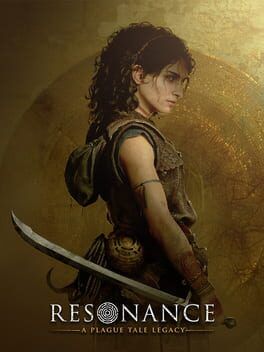
Asobo’s latest update hints that Resonance: A Plague Tale Legacy is in its final stretch. Here is what the wording tells us about development, how the prequel setup 15 years earlier reframes the saga, and what A Plague Tale looks like without Amicia and Hugo at the center.
Asobo Studio has started talking about Resonance: A Plague Tale Legacy like a game entering the home straight. In its latest status update, the team reiterated the 2026 window but framed the coming months as a period of testing, balancing and polishing. That kind of language tends to appear when a project has locked its core systems and content, and is transitioning from building to refining.
The studio stopped short of giving a fixed date, but phrases like “the release is almost here” generally do not get used while teams are still cutting or adding major features. Instead it suggests Resonance is content complete or close to it, with level layouts, story beats and progression structure already in place. What remains sounds like tuning: encounter pacing, stealth readability, AI behavior, and the fine line between tension and frustration that defined Innocence and Requiem.
For fans watching the calendar, this points to a launch that is not years away but months, nestled in the back half of 2026 barring delays. It also reflects a studio that has learned to manage expectations after Requiem’s breakout success. Rather than announcing a specific day that might slip, Asobo is signaling confidence in the state of the build while keeping room to adjust the exact timing.
While the update was framed as a reassurance on schedule, the real intrigue is how Resonance positions itself inside the series. Set 15 years before the events of A Plague Tale: Innocence and Requiem, it is not a direct continuation of Amicia and Hugo’s arc but a look at the world that existed before the De Rune tragedy became legend. The plague, the Inquisition and the Macula mythology cast a long shadow over the first two games. Resonance has the chance to show life in this universe when those forces are not yet converging on a single family.
Asobo has chosen Sophia as the lead, a character introduced in Requiem as a worldly smuggler with a murky history and a conscience that kept peeking through the cynicism. In Resonance she is 22, freshly rejected by her old mentor and thrown into a treasure hunt that doubles as a search for identity. That alone suggests a different emotional cadence from the desperate sibling bond that drove Amicia and Hugo. This is more about agency, betrayal and the cost of chasing fortune in a world already fraying at the edges.
Shifting to Sophia allows the writers to examine A Plague Tale’s themes from the other side of the social spectrum. Amicia was a noble forced into the mud; Sophia is a plunderer who has already embraced its reality. The player is not shepherding a fragile younger brother through horrors, but inhabiting someone who has chosen a dangerous life and must reckon with what it turns her into. The mentor break in her backstory hints at moral lines crossed or refused, and the treasure hunt premise suggests the game will test where she ultimately draws those lines.
The prequel structure also changes how the series can deploy its supernatural and historical elements. With the story anchored 15 years earlier, the Macula may be more rumor than dominant force, and the rat swarms that defined the previous games might be rarer or differently contextualized. That opens the door to a stronger emphasis on myth and legend, such as the Minotaur’s Island mentioned in early materials. Instead of escalating the same plague imagery, Asobo can broaden the universe’s folklore, exploring how stories and superstitions shape people before catastrophe fully hits.
From a franchise direction standpoint, Resonance looks like a deliberate test of whether A Plague Tale can sustain itself as a world rather than a single closed family saga. Requiem provided a powerful sense of finality for Amicia and Hugo, and continuing directly with them could have cheapened that ending. By going backward and sideways instead of forward, Asobo preserves that emotional closure while experimenting with new protagonists, new corners of the map and new flavors of stealth adventure.
Gameplay-wise, that shift in perspective will likely influence how encounters are built. Sophia is a capable adult, not an older sister forced into violence by circumstance, which may allow for more assertive tools and traversal without turning A Plague Tale into an outright power fantasy. The focus on treasure hunting and deadly trials implies more environmental puzzles and trap-filled spaces in place of constant flight from soldiers and rats. That would keep the tension intact while avoiding repetition of Innocence and Requiem’s most iconic sequences.
If Resonance succeeds, it could mark the start of A Plague Tale as an anthology of intertwined stories rather than a trilogy centered on one duo. Each entry could explore another facet of the same blighted Europe, tied loosely through recurring side characters, shared myths and the lingering specter of the Macula. Sophia stepping into the lead is the first big experiment in that direction, and the current update makes it sound like the team is far enough along that what we are seeing now is close to the final vision rather than a moving target.
For now, the key takeaway from Asobo’s wording is that Resonance: A Plague Tale Legacy has left the most volatile part of development behind. The prequel premise, the fifteen year gap and the focus on Sophia all signal a confident attempt to expand the universe beyond Amicia and Hugo without undoing their story. With testing and polish as the stated priorities, the next time we hear about Resonance may well be for a date, not just a window, and a clearer picture of how this new chapter will redefine what an A Plague Tale game can be.