
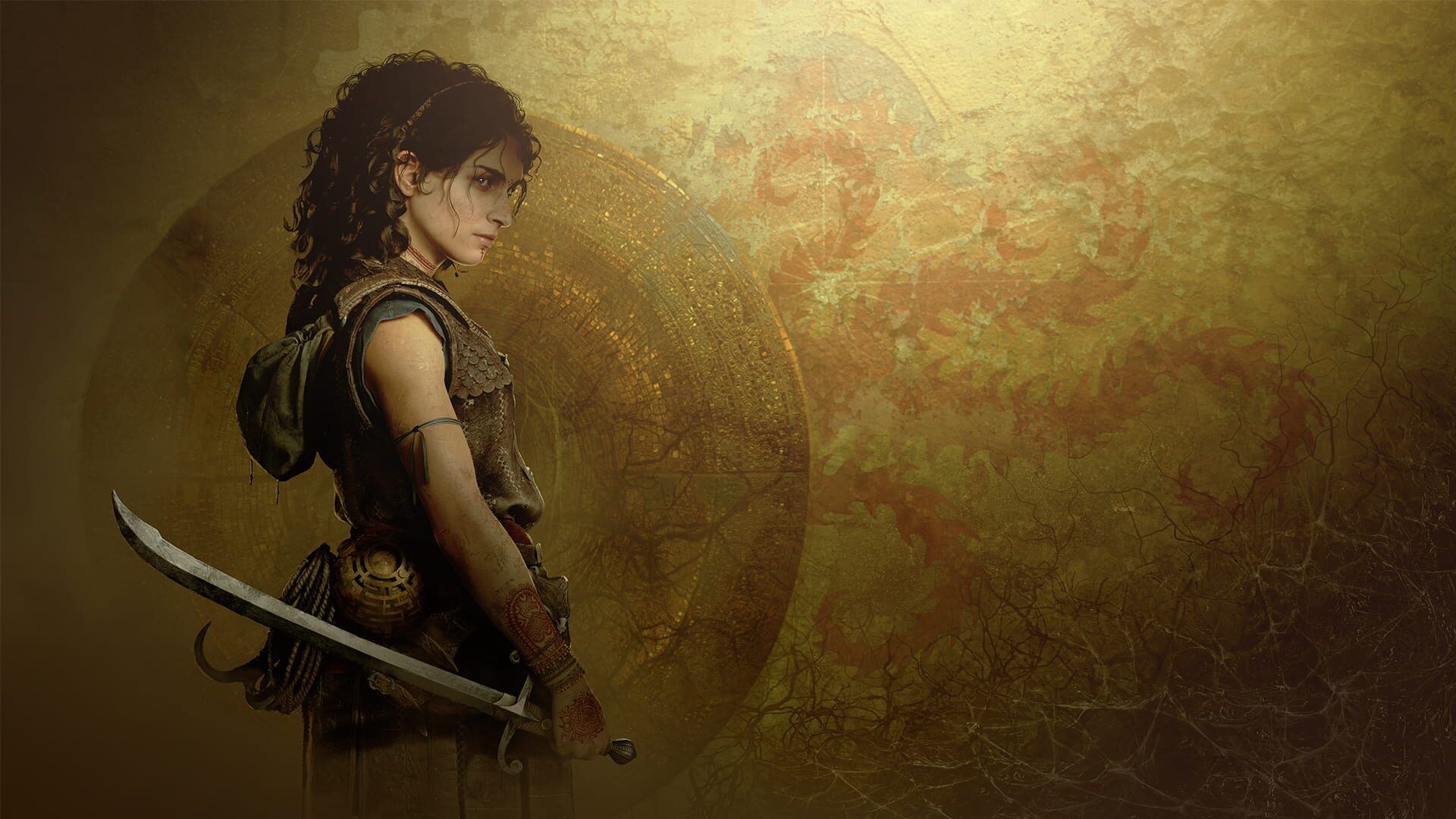

How August’s prequel, Resonance: A Plague Tale Legacy, shifts the series toward sun‑baked myth, stabby action, and Sophia’s own haunted past while deepening the wider Plague Tale universe.
A New Plague Tale Arrives This August
The next chapter in Asobo’s plague‑stricken saga is arriving sooner than expected. Focus Entertainment has confirmed that Resonance: A Plague Tale Legacy launches on 27 August 2026 for PS5, Xbox Series X|S, and PC. It arrives as a self‑contained prequel, but it is also the clearest sign yet that A Plague Tale is ready to stretch beyond Amicia and Hugo’s story.
Resonance rewinds the timeline by around 15 years before Requiem and hands the spotlight to Sophia, the quick‑witted smuggler who stole scenes in the second game. This time she is not the sidekick with the flare and the ship. She is the protagonist, and the entire game is built around her history, her skills, and the ghosts that follow her.
Sophia Steps Out Of The Shadows
For players who loved Sophia’s swagger in Requiem but only caught fragments of who she really was, Resonance is pitched as her origin story. We meet her long before she sails into Amicia and Hugo’s lives, when she is still a young plunderer drawn toward a mystery that seems to know her name.
This is not simply a case of swapping character models into an old template. Asobo is reshaping the series around Sophia. Her background as a former buccaneer and thief informs nearly every system. Where Amicia’s toolkit revolved around slings, alchemical ammunition, and working around rats, Sophia’s arsenal leans into blades, movement, and the kind of improvisation you expect from someone who has survived a lifetime of bad deals and worse seas.
Her personal stakes are different as well. Rather than protecting a sibling from an apocalyptic force, Sophia is chasing truths about her own past and the mysterious pull of a cursed island. That change in motivation gives the story a more adventurous, treasure‑hunt tension, even as the familiar Plague Tale dread seeps in around the edges.
From Rotting France To The Minotaur’s Island
The biggest shift for the series comes in its setting. Instead of trudging through mud‑choked French villages and battlefields, Resonance takes place on the so‑called Minotaur’s Island, a sun‑blasted outcrop steeped in Minoan‑inspired myth.
The Mediterranean light makes a striking contrast with the cold greys of Innocence and Requiem. Crumbling temples sit above turquoise bays. Wind‑scoured ruins hide mechanisms tied to an ancient labyrinth. The island is still a death trap, but visually it is far more vibrant and dreamlike than anything the series has done before.
Lore wise, the island lets Asobo braid A Plague Tale’s pseudo‑historical plague fiction with older myths. Dual time frames weave in and out, hinting at how the island’s ancient civilization once grappled with forces that feel a lot like the Macula. It is less about real‑world history and more about building a mythic prehistory for the curse that will one day consume Hugo.
More Steel, Fewer Rats: A Shift In Gameplay Focus
Resonance also nudges the formula away from slow, rat‑driven stealth toward faster, up‑close action. Combat encounters put Sophia’s agility and knife work at the center. Trailers and previews show parries, quick dodges, and aggressive finishers that reward reading enemy patterns rather than just sneaking around them.
That does not mean stealth vanishes, but it feels more like a tool in Sophia’s kit than the main course. She can still slip through patrols and use the environment for cover, yet fights often encourage you to stand your ground, deflect a strike, then counter in a flurry before repositioning. It is the closest A Plague Tale has come to a character‑action flavor, without losing its grounded, desperate feel.
In another sharp break from tradition, rats are taking a back seat. Instead of seas of chittering bodies acting as the primary environmental hazard, Resonance leans harder into puzzles and a single oppressive pursuer. Much of the problem‑solving revolves around a stolen Minoan sphere that manipulates light and mechanisms throughout the island.
Light is still a lifeline, but now it functions as the key to elaborate contraptions instead of a torch keeping swarms at bay. Turning mirrors, redirecting beams, and aligning ancient devices becomes its own rhythm, folding nicely into the island’s labyrinth motif.
Hunted Across Two Timelines
The island is not just empty ruins waiting to be solved. As Sophia digs deeper, a mysterious creature stalks her progress, echoing survival horror in a more focused way than past games. Rather than juggling rats, soldiers, and siege engines, Resonance repeatedly pushes you into tense cat‑and‑mouse encounters with a singular threat.
Combined with the dual‑timeline structure, that presence helps the game feel like a haunted excavation. You are uncovering what happened centuries ago while something born of those events refuses to stay buried. Every new chamber or puzzle solution is tinged with the sense that you are being watched, and that the past is not done rewriting the future of the Macula.
Building The Wider Plague Tale Mythology
As a prequel, Resonance faces a familiar challenge: adding weight to a story when players already know where the mainline characters end up. Asobo’s answer is to widen the universe rather than retread it. By anchoring the narrative in Sophia and an entirely new location, the game introduces fresh history for the Macula and new factions who have spent lifetimes trying to control or understand it.
Threads that once seemed purely medieval and localized now reach back into older cultures and belief systems. The implication is that Hugo’s tragedy is only one chapter in a much older and broader saga. That perspective shift could help A Plague Tale sustain itself over more games without feeling like it is endlessly tormenting the same characters.
For returning players, Resonance promises to recontextualize moments from Requiem, giving new meaning to Sophia’s choices and her knowledge of the curse. For newcomers, it is built to stand alone, offering a sharper action adventure with enough lore hooks to entice them back into Innocence and Requiem afterward.
Why August 27 Matters For The Series
Launching late in August positions Resonance as one of the first big narrative adventures of the fall season, and it arrives with a clear identity. It is not a numbered sequel, but it is not a throwaway side story either. Instead, it feels like a deliberate test bed for where A Plague Tale can go next.
If the experiment lands, Sophia could become a recurring lead, and the series might increasingly explore different corners of its world in discrete arcs rather than marching in a straight line from Amicia’s childhood. The focus on action, myth, and isolated, high‑concept settings suggests a future where each Plague Tale entry has its own tone and mechanical tilt, all orbiting the same supernatural disease at the core.
In the meantime, Resonance: A Plague Tale Legacy looks set to deliver a tightly framed, character‑driven adventure when it hits PS5, Xbox Series X|S, and PC on 27 August. Sophia is finally getting her story, and with it, the Plague Tale universe is stepping off familiar soil and into a new kind of nightmare under a harsher sun.