
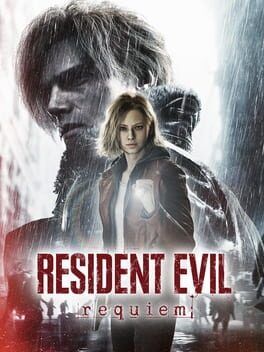

Breaking down the community’s hunt for Resident Evil Requiem’s ultra‑cryptic ‘The Final Puzzle’ challenge, the current best theories, and why this convoluted secret is keeping the game in the spotlight.
Resident Evil Requiem has been out long enough for players to find most of its weapons, secrets, and late‑game twists. Yet one tiny line in the Challenges menu is already eclipsing everything else.
The Final Puzzle: “Let the sweet pair hear the voice.”
That’s it. No location hint, no icon, no reward preview. Just an unnervingly poetic instruction that has reviewers, data‑minded fans, and veteran easter‑egg hunters all grinding to a halt.
This feature looks at what we actually know about The Final Puzzle, how the community is trying to crack it, why it might be the most convoluted secret in Resident Evil history, and how this kind of design keeps a single‑player horror game alive long after the credits roll.
What The Final Puzzle actually is, in game
Capcom hides The Final Puzzle at the bottom of Requiem’s Challenges list. Every other challenge reads like you would expect: finish the story on higher difficulties, craft every item at least once, read every file, clear specific scenarios with ranking conditions.
Then there is this single entry with a riddle instead of an objective. No progress tracker, no percentage bar, no CP payout number. From the UI alone it is not even clear whether it is a one‑step challenge or the end point of a much larger meta‑puzzle.
The one concrete thing we have is that description: “Let the sweet pair hear the voice.” Every current theory and investigation spirals outward from that sentence.
To keep things readable and spoiler‑safe, anything that touches late‑game environments or characters is grouped under clearly marked sections below.
The leading “sweet pair” theories so far
Right now, the community is split across three primary interpretations of “the sweet pair,” with a few fringe ideas orbiting them.
Theory 1: Leon and Grace as the “sweet pair”
This is the cleanest reading, because Requiem keeps Leon S. Kennedy and Grace Ashcroft at the center of almost everything. The challenge description sits in the same global menu that tracks how you play both campaigns, which nudges players toward a character‑driven interpretation.
Supporters of this theory note how often the game underlines their bond not only in cutscenes but through mechanics, like joint interactions, contextual barks when they assist one another, and specific scenes where the audio design focuses on what they can or cannot hear.
Under this lens, “hear the voice” might indicate some hidden line of dialogue, a radio transmission you can force to trigger under strange conditions, or even a secret scene only unlocked when both characters have met a set of invisible criteria.
The biggest issue is that no one has yet reproduced a consistent event tied to both characters that looks like challenge progress. There is no pop‑up, no subtle UI response. The Leon and Grace reading still feels right thematically, but at the moment it is more story logic than mechanical evidence.
Theory 2: The banshees of Rhodes Hill Clinic
The second camp dives deeper into pure horror imagery. Early‑to‑mid game, Requiem sends you through Rhodes Hill Clinic, home to banshee‑like infected whose attack patterns and screams stand out even within Resident Evil’s long history of awful monster noises.
Players have quickly latched onto them as potential candidates for the “sweet pair.” The clinic arenas often feature enemies in twos, their shrieks modulate in unusual ways, and some rooms include audio equipment and sound‑focused environmental dressing. Fans have tried everything from luring two of them into specific spots to deliberately using different weapons or sound sources around them.
So far, though, there is no clear sign that doing anything specific with these enemies changes the Challenges menu. If they are part of the solution, they are likely just one piece of a chain instead of the whole answer.
[LIGHT LATE‑GAME SETTING MENTION] Theory 3: The mysterious pair of girls
Articles and community posts reference a later section of the game that introduces a different “pair,” but tend to avoid detail to keep spoilers light. It is enough to say that a certain duo appears together in ways that are emotionally charged and framed very deliberately.
Because The Final Puzzle’s wording leans on “sweet” rather than “twisted” or “cursed,” some players read that as pointing to this later duo instead of banshees or even Leon and Grace. The idea is that helping this pair “hear the voice” could require revisiting their area under unusual conditions or triggering an optional audio event.
At this stage, no one has produced a consistent cause‑and‑effect chain between any interaction with them and The Final Puzzle challenge, so this stays firmly in theory territory.
Concrete clues and weird items the community has found
If the “sweet pair” debate is the poetic half of the mystery, the other half is brutally practical. Players and early reviewers are cataloging any object or readout that looks too strange to be there just for flavor.
The two stand‑out discoveries that come up across coverage are a severed hand and a peculiar hourglass.
The severed hand
The hand shows up as an inventory object that, at first glance, seems like the sort of gross collectable the series has always loved. What makes it suspicious is that it does not fit cleanly into the usual crafting or key‑item categories, and it can be carried long past the point where you would expect it to be spent.
Puzzle hunters have tried using it on everything that remotely resembles a sensor, lock, or biometric scanner. They have experimented with dropping it in precise places, combining it with other oddities, and even testing whether you have to keep it in your inventory across both protagonists’ sequences.
So far, nobody has uncovered a unique interaction that clearly feeds into The Final Puzzle. It remains a likely component just because Capcom knows the community will not accept a bizarre, mechanically persistent body part as a pure joke item in the era of mega‑ARGs.
The strange hourglass and its hidden formula
The hourglass is less visceral and more overtly “puzzle‑y.” When you flip it and wait for the sand to fully settle, a mathematical formula appears on the base.
People have drawn, screenshotted, and digitized this formula in hopes of decoding it. There are running spreadsheets attempting to interpret it as:
A timer value pinned to a specific room or in‑game clock.
A cipher key for translating letters or file fragments.
Coordinates for a map grid, either in‑game or relative to something like sound frequencies.
Part of the thrill is that no interpretation has yielded a clean result yet. The formula is too cleanly presented to be random, yet broad enough that it could support several layers of meaning. It might even combine with other, yet‑to‑be‑found inscriptions or numbers, which would fit the idea that only a few early access players have “progressed far” into the overall puzzle without solving it.
Synth Potato’s investigation and the “no one has solved it yet” status
One name keeps coming up whenever The Final Puzzle is mentioned: content creator and puzzle hunter Synth Potato. They were among the reviewers with early access and, according to multiple write‑ups, have been chipping away at Requiem’s deeper secrets since before launch.
By their own account, the underlying easter egg tied to The Final Puzzle is “ridiculously complicated.” They believe that only a handful of early players have even reached the later steps of the chain and that there is still no complete solution, even among people who have data‑mined certain aspects of the game.
Crucially, they have said they intend to publish a more detailed breakdown of their progress and decoded clues only after launch, giving the broader community a window to hunt for things organically. That decision has effectively turned the puzzle’s early days into a community sprint: can Reddit threads, Discord servers, and scattered solo hunters beat a dedicated specialist to the punch when both are working from incomplete information?
This current phase is always the most electric part of a modern game mystery. The line between “hidden mechanic” and “wild overreach” is blurry, but a consensus gradually forms as more people test the same ideas and document their failures. At the time of writing, The Final Puzzle sits exactly in that sweet spot where no one is sure which wild theory will end up being right.
Why The Final Puzzle feels more convoluted than past Resident Evil secrets
Resident Evil is no stranger to hidden challenges and meta‑puzzles. The series has experimented for decades with obscure unlocks, with some entries quietly brushing up against ARG territory. Yet The Final Puzzle already feels different in a few key ways.
Older games often tied their hardest secrets to sheer performance or to a small number of specific triggers. Unlock Hunk in Resident Evil 2 by meeting strict time and save requirements. Discover hidden modes or weapons by finishing the game under a rank threshold. The steps could be demanding, but once known, they were linear.
Requiem’s puzzle, by all current accounts, is less about “play perfectly” and more about “understand the game’s language on a meta level.” Instead of a single condition like finishing the story under a set time, it seems to rely on a distributed network of clues scattered across items, audio design, and weird one‑off environmental details.
Compared with more recent experiments such as Village’s Mercenaries unlocks or the playful, if opaque, achievements hidden in the RE Engine remakes, The Final Puzzle is outright hostile to brute‑force grinding. You cannot simply replay a chapter until the controller vibrates in a new way and call it a day. You have to recognize that a random formula on an hourglass and an otherwise pointless severed hand could be conversing with a line in a text file three chapters away.
That puts it closer to classic community ARGs. There is a shared expectation that the solution is not meant for one isolated player but for a loosely organized crowd pooling information across languages and time zones.
Parallels with ARG‑style hunts and hidden modes in the series
If you pan back, The Final Puzzle fits into a wider history of Capcom using obscurity and post‑launch chatter to keep Resident Evil relevant.
The original extra modes, like The 4th Survivor and Extreme Battle, were early forms of this philosophy. They rewarded players who either pushed themselves mechanically or pored over guidebooks and nascent fan sites. Later on, oddities like the Konami‑style input codes, unlockable difficulty settings, and hidden requirement lists kept forums buzzing even in pre‑social media eras.
More recently, you can see similar design DNA in the way the RE2 remake concealed certain weapon pickups and costumes, or how Village toyed with players through its challenges and mercenaries upgrades. None of those went as far into multi‑step riddle territory as what Requiem appears to be doing, but they primed the fanbase to assume that every weird little detail could be meaningful.
The Final Puzzle feels like the culmination of that tradition. Instead of an extra mode or a discrete side campaign, it is an invisible thread laced through the entire game, tugging on side content, item descriptions, ambient sound, and who knows what else.
How this kind of mystery keeps Requiem alive after launch
For a linear, story‑driven horror game, the post‑launch window can be brutally short. People rush through the campaign, trade spoiler‑tagged impressions for a week or two, and then move on to the next release. Long‑tail interest usually belongs to multiplayer titles or live‑service updates.
Ultra‑opaque challenges like The Final Puzzle are one of the few tools a single‑player game has to fight that gravity. While most players will never solve the mystery on their own, they do not have to. They only need to know that something big is unsolved and that “the community” is on the case.
That knowledge does a few important things.
It keeps Requiem’s name circulating across social networks, not as a generic “review score” but as an active detective story that people can join at any time.
It encourages mechanically minded players to dive back in, test obscure interactions, and share footage or breakdowns. Every new theory spawns clips, diagrams, and thinkpieces that reach far beyond the core horror audience.
It reframes the replay value of the campaign. On a second or third run, rooms that felt like filler suddenly seem full of possibilities, because any stray symbol or distant whisper might be a piece of the big riddle everyone is talking about.
And, of course, when the solution does finally drop, it arrives as an event rather than a quiet line in a patch note. There will be breakdown videos, diagrams of every step, debates about whether the logic was fair, and renewed play sessions from people who want to see the solved version in action.
The joy of not knowing, at least for now
Right now, the best thing about The Final Puzzle is that it is still unsolved. The community only has fragments: a haunting line about a “sweet pair,” a severed hand that refuses to be explained away, an hourglass that whispers in math instead of words, and scattered hints from an investigator who promises to show more of his work later.
Whether it ultimately pays off with a new scene, a hidden mode, or just a beautifully obtuse achievement, its real value might be the shared curiosity it inspires. For a series built on dread and uncertainty, there is something fitting about Resident Evil Requiem hiding its most devious horror in a quiet menu entry that nobody fully understands yet.
Until someone finally lets the sweet pair hear the voice, the hunt continues, and that may be the scariest, and most exciting, part.