
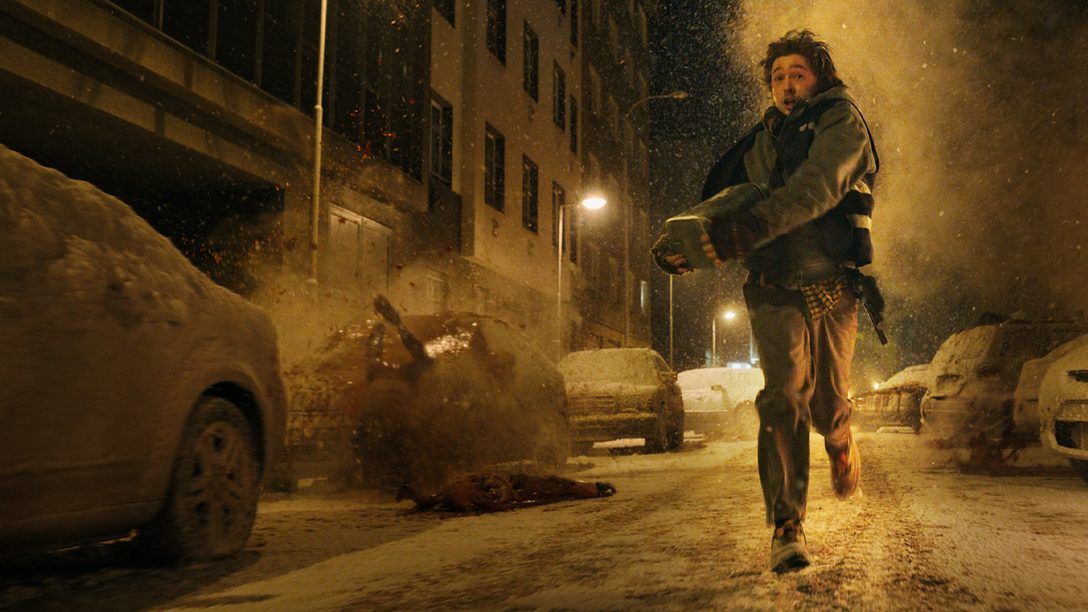

Zach Cregger’s Resident Evil movie is being framed through 1917-style pressure, game-like survival structure, and a separate, still-unconfirmed Silent Hill film reboot rumor.
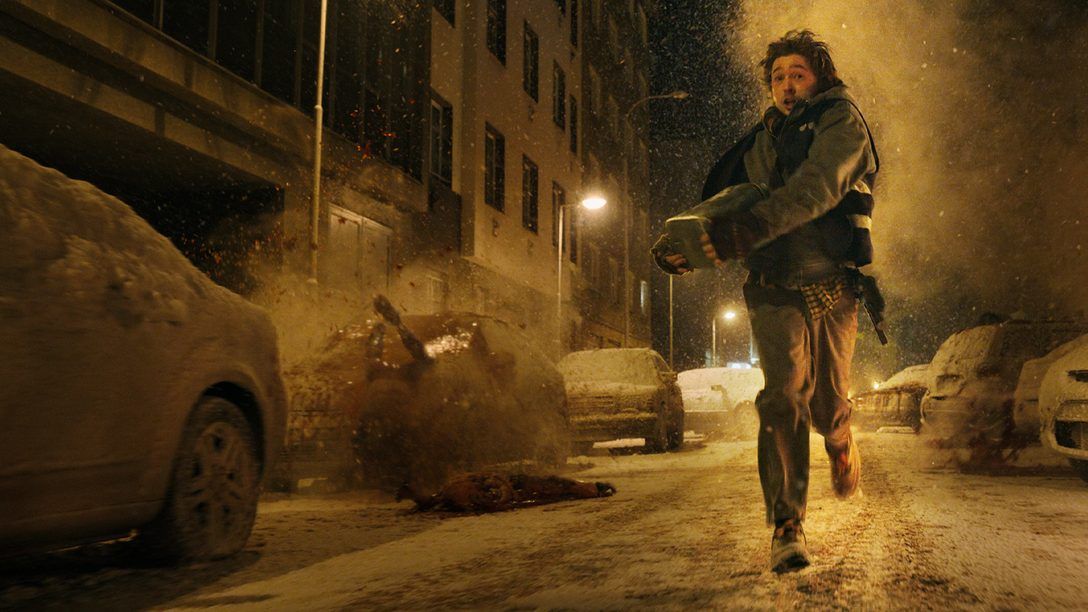
Image: blog.playstation.com
Cregger’s clearest Resident Evil clue is 1917, not the old film canon
The most concrete creative signal around Zach Cregger’s Resident Evil movie is an unexpected one: according to GamesRadar+, Cregger named Sam Mendes’ 2019 war film 1917 as an inspiration for his take on the zombie survival franchise. PC Gamer also frames Cregger’s comments as involving two movie influences and quotes him describing the blend as “like if those movies loved each other very much,” but the provided excerpt identifies only 1917 by name. That distinction matters because it keeps the confirmed part of the story clean. We can say 1917 is part of the stated recipe. We cannot, from the supplied material, responsibly name the second film.
That still tells us a lot. 1917 is built around forward movement, limited breathing room, and the illusion of a continuous ordeal. For Resident Evil, a series that often turns survival into route planning, inventory anxiety, and doors you cannot open yet, that influence suggests pressure over lore sprawl. It points toward a movie less concerned with checking off every Mansion Incident reference and more interested in trapping one human body inside an escalating route.
Yahoo’s published article on the film supports that reading through plot and form rather than direct quotation. It describes Cregger’s Resident Evil reboot film as following Bryan, played by Austin Abrams, a medical courier who accepts a job delivering what he believes is an organ across snowy mountain roads toward Raccoon City. He begins outside the conspiracy. The familiar pieces are still there, according to Yahoo: Umbrella Corporation, a virus, zombies, monsters, and Raccoon City. But the entry point is a courier, a road, and a job that turns hostile step by step.
That is a survival-horror premise before it is a franchise premise. It narrows the flashlight beam. The audience learns danger as Bryan does, which is closer to the sensation of wasting bullets in a corridor than watching a mythology briefing unfold from a safe distance.
The confirmed film details point to a game-shaped survival route
The Resident Evil movie details currently supported by the provided sources are specific enough to separate this project from a vague reboot label. Yahoo describes Cregger’s film as the eighth big-screen Resident Evil movie and says it is “its own beast,” with Cregger and Shay Hatten credited for the screenplay. The same article identifies Austin Abrams as Bryan, the courier protagonist, and names Paul Walter Hauser and Kali Reis as characters Bryan encounters along the way.
The shape of that journey is where Cregger’s horror instincts appear to meet the games. Yahoo reports that the camera follows closely behind Bryan and that Cregger uses first-person-shooter point-of-view shots. It also describes a structure built around encounters with villains and helpers, tools and weapons, locked doors, obstacles, and empty spaces that Bryan has to explore. Those are not stray aesthetic choices. They are the grammar of Resident Evil: progress held hostage by scarcity, navigation, and dread.
For players, the practical question is whether a film can translate that pressure without becoming a filmed walkthrough. The Yahoo account suggests Cregger is not adapting one specific game plot in a strict way. Instead, he appears to be adapting the sensation of playing: moving through hostile geography, finding gear, meeting threats in stages, and slowly understanding the rules of the outbreak. That approach has risks. Too much game logic can feel mechanical on screen. Too little, and fans wonder why the name Resident Evil is attached at all.
The cast and premise also indicate a different kind of vulnerability than the heavily armed team dynamic associated with parts of the older film franchise. Bryan is described as hapless and unaware, not as a trained Umbrella expert. In survival-horror terms, he starts with poor map knowledge and bad information. That is often where Resident Evil is at its sharpest.
Cregger’s own horror history sets expectations for misdirection
The Guardian’s profile frames Cregger as a filmmaker who arrived at Resident Evil after two original horror successes: Barbarian in 2022 and Weapons in 2025. According to The Guardian, Barbarian grossed $46 million and built Cregger’s reputation among horror audiences, while Weapons increased the scale of attention around him and won an Academy Award for Amy Madigan’s supporting performance as Aunt Gladys. The Guardian also notes that both films tackle volatile subjects while resisting easy interpretation and begin in one narrative direction before swerving elsewhere.
That history is relevant because Resident Evil adaptations have often been judged by a different yardstick: fidelity. The Guardian says Cregger’s pivot to a 30-year-old video game franchise caused a storm among protective fans, which fits a series whose audience knows the difference between a good locked-room scare and a random monster cameo. The same profile quotes Cregger responding to the question of why he would take on IP by saying, “Look, I could make a different movie now if I wanted to,” then describing the IP concern as secondary. The provided excerpt cuts off before his full explanation continues, so the safe conclusion is limited: Cregger is aware of the skepticism and does not present Resident Evil as a fallback assignment.
There is also a useful negative confirmation in The Guardian headline: “Resident Evil movies? I’ve never seen one.” If that headline accurately reflects Cregger’s position in the interview, his new film is not being presented as a direct conversation with the Paul W.S. Anderson cycle or the later reboot attempt. That does not mean he is ignoring the games. GameSpot’s article says Cregger is a huge fan of the games, while Yahoo’s description of the finished film emphasizes game mechanisms in the staging.
Taken together, the picture is of a filmmaker approaching Resident Evil through playable tension rather than franchise archaeology. For a horror audience, that is promising only if the monsters still have rules, the spaces still feel dangerous, and the resources still feel finite.
The old Resident Evil movies are the shadow this reboot has to move through
Any new Resident Evil movie arrives with baggage because the film series has never had one stable identity. GameSpot’s retrospective argues that the Paul W.S. Anderson movies were not faithful to the games but were enjoyable as Y2K, nu-metal-drenched action films influenced by Hong Kong action cinema. The same piece recalls that Capcom had tried to turn Resident Evil into a film shortly after the first game’s release, including an unfilmed George A. Romero script that GameSpot describes as a more faithful take on the Mansion incident and Raccoon City outbreak.
GameSpot says the 2002 Anderson film used an original cast because Anderson believed uncertainty over who would live or die was vital. That film followed Alice, played by Milla Jovovich, and a mercenary team entering Umbrella’s underground Hive. According to GameSpot, it borrowed creatures and gore from the games but told an original story, then set a pattern in which later films used selected game elements while continuing to center original material. The article also notes that the films were critically panned despite moderate box office success.
ComicBook.com adds another cautionary piece of history: when Resident Evil: Welcome to Raccoon City tried a closer game adaptation, it performed worse than the Jovovich films, with ComicBook attributing part of the problem to cramming the first two game stories into one movie. That matters for Cregger’s reboot because “faithful” is not a complete strategy. The games create fear through space, repetition, ammo math, sound, and backtracking. A movie cannot simply stack canon events and expect that pressure to survive.
Cregger’s reported route, a courier moving toward Raccoon City while the outbreak logic closes in, sidesteps one classic adaptation trap. It does not appear, based on the supplied sources, to be a condensed museum tour of Resident Evil 1 and 2. It uses known franchise materials, especially Umbrella and Raccoon City, while giving the audience a new vulnerable body to follow.
Silent Hill talk is a rumor, even if the business logic is obvious
The Silent Hill film reboot rumor should be handled separately from the confirmed Zach Cregger Resident Evil details. DualShockers, citing Dread Central, reports that Konami is weighing potential Hollywood partners for a fresh Silent Hill film continuity after the success of Cregger’s Resident Evil. ComicBook.com also cites Dread Central and describes the reported Silent Hill project as a “bold new take” in early stages. Neither provided source includes an official Konami announcement, a named studio partner, a director, a cast, or a release window.
That makes the status clear: Resident Evil’s new film details are supported by published coverage of Cregger’s movie, while the Silent Hill film reboot rumor remains a report about what Konami may be considering. DualShockers says details are scarce and frames Konami’s interest as a response to Capcom’s apparent theatrical win. The same article reports that Cregger’s Resident Evil opened above $100 million worldwide and set a franchise record, while also earning strong Rotten Tomatoes scores. Those figures are part of DualShockers’ account, and readers should treat them as attributed reporting from that outlet unless confirmed elsewhere by studio box office releases.
ComicBook.com gives additional context for why Silent Hill would be tempting and risky. It notes that Return to Silent Hill released in the U.S. in January, says the film made $47 million internationally on a $23 million budget, and argues that the third film received little attention domestically. DualShockers says Return to Silent Hill retold Silent Hill 2 with characters including James Sunderland, Eddie, and Laura, and describes the response as poor, citing reviews that called it visually tacky.
The business incentive is easy to understand. Horror games with recognizable imagery are valuable in theaters if the film captures dread rather than cosplay. But Silent Hill is not Resident Evil with fog. Its pressure comes from guilt, distortion, oppressive sound, and spaces that feel psychologically contaminated. A reboot can be announced quickly. Earning the town’s silence is harder.
For fans, the useful wait is for official boundaries, not louder rumors
Readers trying to track the Resident Evil movie and the adjacent Silent Hill speculation should watch for different kinds of evidence. On Resident Evil, the current sourced details give a reasonable sense of creative direction: Cregger is attached as filmmaker, 1917 is a named influence according to GamesRadar+, Yahoo describes a plot centered on Austin Abrams’ courier Bryan, and the film uses Umbrella, Raccoon City, viral mutation, game-like camera language, weapons, obstacles, locked doors, and staged encounters. That is enough to discuss tone and structure without pretending every monster, game reference, or sequel plan is confirmed.
What remains unconfirmed in the supplied material is just as important. The excerpts do not provide a complete release strategy beyond coverage that treats the movie as recent and theatrical. They do not give a home-video or streaming date, a rating, a full creature list, a confirmed second inspiration title from Cregger’s quoted comparison, or a studio statement laying out franchise plans after this film. Anyone promising a full roadmap is moving beyond the evidence here.
On Silent Hill, the practical guidance is simpler: wait for Konami or a studio partner. The Silent Hill film reboot rumor has a credible chain of entertainment reporting behind it through Dread Central citations in DualShockers and ComicBook.com, but it is still described as early and unannounced. No viewer can buy a ticket, track a release date, or judge a creative team yet.
The interesting tension is that both franchises are chasing the same lesson from opposite directions. Resident Evil has often been loud, kinetic, and mutated by action spectacle, while Cregger’s reported approach seems to pull it back toward sustained pressure and vulnerable movement. Silent Hill, if the rumor becomes real, would need to resist turning its fog into decoration. Survival horror lives in the seconds before the door opens, when you count what you have left and listen for something breathing on the other side. Cregger’s Resident Evil appears built around that count. Silent Hill has not yet shown its hand.