

Breaking down the Resident Evil Code Veronica remake reveal, its surprise first-person presentation, how Capcom is modernizing a Dreamcast cult classic, and where it fits in the publisher’s broader remake strategy.
Resident Evil Code Veronica has always been a strange outlier in Capcom’s horror pantheon. It is a numbered game in everything but name, central to the Redfield saga yet left to languish on aging hardware while Resident Evil 2 and 4 received lavish remakes.
At Summer Game Fest, that finally changed. Capcom closed its segment with the long-rumored Resident Evil Code Veronica remake, framing Claire Redfield’s return in a way that signals both mechanical risk and strategic clarity for the series.
The remake reveal: a bait-and-switch horror vignette
The reveal trailer opens far from Rockfort Island. Viewers are pulled into a cramped French apartment in first person as something claws at the door. The camera stumbles through the dark, past news clippings about biochemical attacks and old Umbrella logos, while off-screen screams echo through the stairwell.
For most of the teaser, Capcom hides the game’s identity. There is no immediate Claire, no twin siblings in powdered wigs, no gothic prison island. Instead it leans into contemporary horror, hand-held and intimate. Only when a familiar red jacket appears in a shattered hallway mirror does the title card snap into focus: Resident Evil Code Veronica.
The structure of the trailer is deliberate. It anchors Code Veronica in the modern first-person language that defined Resident Evil 7 and Village, then pivots to flashes of reimagined locations and characters. You get a quick montage of Rockfort’s rain-battered courtyards, the Antarctic facility’s frozen labs and a distorted glimpse of Alfred and Alexia as their voices bleed over a distorted rendition of the classic score.
Capcom’s message is clear. This is not just a careful HD touch up. It is a full-scale remake that treats Code Veronica as a pivotal chapter instead of a spin-off relic.
First-person presentation: flavor or full commitment?
The key talking point from the reveal is perspective. The trailer is almost entirely first person, which naturally set off speculation that Capcom is turning Code Veronica into another RE Engine chiller in the mold of 7 and Village.
Capcom has not confirmed final camera options, but the way the trailer is cut hints at a hybrid approach. The opening apartment sequence feels like a bespoke framing device, possibly a cold open centered on a new character in Paris to link with Claire’s original prison escape. Later shots in the trailer briefly pull back, giving quick third-person glimpses of Claire exploring Rockfort and taking aim at a lunging Bandersnatch.
That duality lines up with Capcom’s broader experimentation. The past decade has seen the series oscillate between third-person remakes of classics and first-person mainline entries. Using Code Veronica as a bridge lets Capcom experiment with radical perspective shifts for tension-heavy story beats while retaining a more traditional over-the-shoulder view for the bulk of the campaign.
Even if the finished game ships with pure third-person gameplay, the marketing push through first-person is telling. The publisher wants Code Veronica to feel aligned with modern prestige horror instead of a nostalgic throwback. Putting players in the victim’s shoes for the reveal drives home how vulnerable and grounded this remake aims to feel.
Modernizing a Dreamcast cult classic
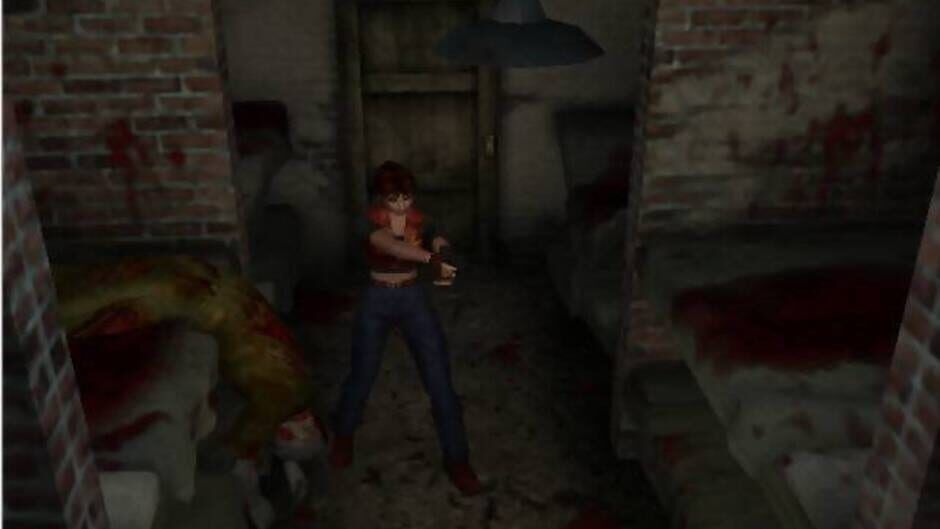
Underneath the stylistic tricks, the core project is about reworking a 2000-era design that already tried to break away from classic Resident Evil constraints. The original Code Veronica was the first mainline entry to abandon pre-rendered backgrounds for full 3D environments. It stretched camera angles, embraced more cinematic cutscenes and leaned heavily into gothic melodrama.
Two decades later, many of those strengths have become rough edges. Backtracking through sprawling levels, stiff aiming and awkward item management can make the original feel hostile to new players. A modern remake in the RE Engine is an opportunity to reframe those ideas without losing what made the game divisive yet beloved.
Expectations are that the new version will lean on the visual fidelity and atmospheric detail seen in the Resident Evil 2 and 4 remakes, with rain-streaked stone corridors, dynamic lighting in the prison barracks and more expressive facial animation for the Ashford twins. Code Veronica’s theatrical tone is uniquely suited to this treatment. Alfred’s breakdowns, Alexia’s transformation and the fraught relationship between Claire and Steve should land with far more emotional punch.
Narratively, Capcom is in a different place than it was in 2000. Modern entries have tightened the lore around Umbrella, the BSAA and the global bio-terror landscape. A remake allows for some careful retcon work, aligning Rockfort’s experiments and the T-Veronica virus with the realities introduced by 7 and Village. Small dialogue rewrites, added documents and new cutscenes can bridge Code Veronica’s events more cleanly into the contemporary timeline.
Anticipated gameplay changes: from clunky survival to flexible horror
Anyone who has fought a helicopter chase or survived Code Veronica’s infamous difficulty spikes knows the remake cannot be a one-to-one translation. The PC Gamer and Eurogamer writeups both highlight fan expectations that Capcom will smooth out the campaign’s most punishing elements while preserving its survival horror backbone.
Control and combat are the most obvious candidates. The original’s tank-like movement and limited aiming will almost certainly give way to the modern over-the-shoulder system honed in Resident Evil 2 and 4 remakes. That shift alone transforms how players read spaces, respond to ambushes and manage ammunition. Expect contextual melee follow-ups, clearer weak point feedback and enemy behaviors tuned for more readable combat encounters.
Puzzle design is another area ripe for refinement. Code Veronica is loaded with obtuse item chains and easy-to-miss keys that send players wandering in circles. A remake can streamline this without gutting the satisfaction of cracking a puzzle-box facility. Smarter map notation, environmental hints and better signposting can keep exploration tense rather than tedious.
Difficulty curves will likely see the most invisible work. The original is notorious for resource traps, situations where careless ammo use early on can render late game bosses nearly impossible without restarting. Modern Capcom tends to bake in subtle safety nets. Adaptive difficulty, more generous autosaves and rebalanced enemy health pools can maintain stress without hard-locking players.
One wildcard is how the remake treats its split-protagonist structure. Code Veronica alternates control between Claire and Chris with shared inventories that can be unforgiving. A refreshed system might mirror Resident Evil 0’s partner mechanics or the character switching seen in Resident Evil 2’s scenarios, but with smarter item transfer options and clearer UI cues.
Capcom has also been consistent about accessibility and modern convenience. Expect a photo mode, multiple control presets, aim assist and perhaps optional hints for players less interested in old-school trial and error. The challenge will be preserving the brittle, desperate feel of early 2000s survival horror while making the game approachable for audiences raised on the more fluid pacing of Resident Evil 4 remake.
Where Code Veronica fits in Capcom’s remake strategy
Capcom’s decision to remake Code Veronica next is not just about fan service. It is a strategic move in a remake pipeline that has been both financially and critically successful.
Resident Evil 2 remake reintroduced the classic fixed-camera era to an audience that had mostly grown up on Resident Evil 4. Resident Evil 3 remake followed quickly with a shorter, more action-heavy reimagining. Resident Evil 4 remake then became the fastest in the franchise to hit 10 million sales, proving there is still enormous appetite for thoughtful reworks of the back catalog.
Many assumed Resident Evil 5 would be next. On paper it makes sense as a direct follow-up to 4 with a huge sales legacy. In practice, however, its portrayal of Africa and tonal tilt toward co-op action present serious creative and cultural challenges. Rebuilding it for modern audiences would require more than a mechanical overhaul.
By contrast, Code Veronica is both safer and more important. It is the missing bridge in the remake lineup that connects the Raccoon City events of 2 and 3 with the global bio-terror escalation of 4 and 5. It deepens Claire’s arc, gives Chris crucial development and foregrounds the fall of Umbrella in a way no other entry does. Bringing it up to the same technical and narrative standard as the other remakes tightens the entire saga.
It also broadens Capcom’s options moving forward. A successful Code Veronica remake buys time to decide how to handle Resident Evil 5 and 6. The publisher could pivot into a full reimagining of that era, lean into new mainline entries, or alternate between smaller experimental remakes and large flagship projects.
In that sense, Code Veronica is a litmus test. If Capcom can take one of the series’ most structurally awkward but narratively crucial games and turn it into an accessible modern horror highlight, the remake initiative will feel less like a greatest hits tour and more like a long-term strategy for curating Resident Evil’s history.
A long wait, but a pivotal return
Resident Evil Code Veronica remake is targeting a 2027 launch on PC, PlayStation 5, Xbox Series X/S and Nintendo’s next-generation Switch hardware. That long runway suggests a project with scope closer to Resident Evil 4 remake than the more compact Resident Evil 3.
For long-time fans, it is the long overdue elevation of a once side-lined classic. For newcomers whose entry point was Resident Evil 7 or Village, it could become the definitive way to experience one of the saga’s most dramatic chapters.
From the first-person fake out in a Paris apartment to the promise of modernized survival horror systems, Capcom is signaling that Code Veronica is not an oddity to be tolerated, but a pillar worth rebuilding. If the finished game lands, the series timeline will finally feel complete in a way it never has in the remake era, and the question will not be whether Capcom should keep remaking its past, but just how far into it they are willing to go.