
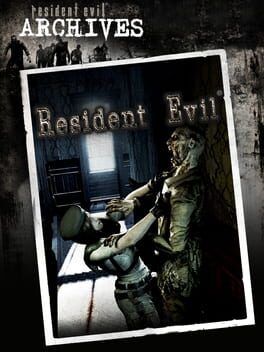

Capcom's Jun Takeuchi says Resident Evil 1 was too stoic to launch the modern remake run, clarifying the Resident Evil remake order and the wait for a Spencer Mansion remake.
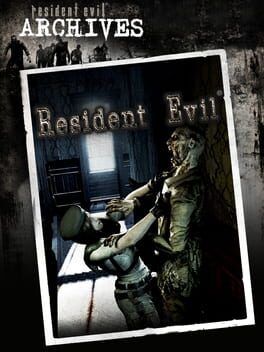
Image: IGDB
Capcom’s answer puts the mansion back in the shadows
Capcom did not begin its modern Resident Evil remake run with Resident Evil 1 because the company saw the original as a riskier starting point for today’s audience, according to producer Jun Takeuchi. In comments published in the Biohazard 30th Special magazine book and reported by Nintendo Everything, Takeuchi described the first game as “such a stoic game” and said Capcom worried that horror built from that stoicism “might not resonate with today’s game fans.”
That is the clearest explanation yet for a question that has followed Capcom’s Resident Evil remake order since Resident Evil 2 arrived first. From a simple chronology view, starting at the Spencer Mansion sounds obvious. It is the first game, the first outbreak most players associate with the series, and the natural place to rebuild the survival-horror template in the RE Engine era. Capcom’s reasoning points in a different direction: the company was not only choosing an origin point, it was choosing the kind of origin that could reintroduce Resident Evil to a larger modern audience.
Takeuchi’s wording is important because it does not dismiss Resident Evil 1. It frames the game’s strength as the challenge. The original’s power comes from restraint, scarcity, quiet rooms, locked doors, and the long pause before something moves. In practical horror-design terms, that is a harder sell than a citywide collapse with multiple public spaces, heavier spectacle, and a clearer disaster hook. For fans still waiting on a Resident Evil 1 remake, the message is both encouraging and sobering: Capcom understands what makes the mansion distinctive, but that same identity appears to be why it was not chosen to lead the modern remake wave.
The remake run was organized around Raccoon City
Takeuchi also said Capcom felt the Raccoon City incident was “essentially the starting point of the Resident Evil saga,” according to Nintendo Everything’s report on the Biohazard 30th Special comments. That rationale explains why Resident Evil 2 became the first major entry in the modern remake line, followed by remakes of Resident Evil 3 and Resident Evil 4.
There is an obvious tension here. Resident Evil 1 is the franchise’s debut, while Resident Evil 2 is being described by Takeuchi as the better way to introduce the saga’s origins. Capcom’s logic appears to separate release order from franchise identity. The mansion is the original survival-horror pressure cooker, but Raccoon City is the incident that defines the broader series for later entries, spin-offs, characters, and Umbrella’s public catastrophe.
Big-N, covering the same Takeuchi comments in French, framed Capcom’s choice as a move toward a more accessible and more action-oriented entry while retaining the series’ horror identity. The outlet also pointed to the 2019 Resident Evil 2 remake as a successful launch point for the current remake chain. That interpretation fits the sequence Capcom actually followed: start with a larger, more legible outbreak, then move through Resident Evil 3 and Resident Evil 4, each of which naturally supports more movement, escalation, and combat variety than the mansion’s tighter design.
For readers tracking Capcom remake strategy, this matters less as a statement about one missing game and more as a window into selection criteria. Capcom seems to have prioritized entries that could reintroduce the world, systems, and threat language of Resident Evil to a broad audience before returning to the most austere version of the formula.
The word “stoic” says a lot about the Resident Evil 1 problem
Takeuchi’s use of “stoic” is doing heavy lifting. Resident Evil 1 is not simply older, and Capcom’s concern was not described as a technical problem. The issue, as Takeuchi presented it, is tonal and structural: horror that comes from restraint may be less immediately compatible with current expectations.
Big-N’s article described the 1996 original as known for its heavy atmosphere, demanding puzzles, and slow pace. Those are exactly the elements that make a Spencer Mansion remake so tempting for survival-horror diehards. They are also the elements that could make a modern redesign difficult. A faithful version risks feeling too static for players brought in by Resident Evil 2 remake’s over-the-shoulder tension or Resident Evil 4 remake’s more aggressive pacing. A heavily revised version risks sanding down the mansion’s identity until the remake no longer feels like Resident Evil 1.
That is the design knot Capcom would have to untie. The mansion works because the player is contained. Resources matter because retreat costs time and safety. Enemy placement matters because one hallway can become a long-term tax on ammunition, healing, and nerve. Audio matters because silence is part of the threat. If Capcom modernizes that space, it has to preserve pressure without turning every room into a combat arena.
None of the provided sources say Capcom is currently making a Resident Evil 1 remake. The Takeuchi quote should not be read as an announcement, a tease, or a production update. It is an explanation of a past strategic choice. Still, it clarifies why the missing mansion entry has remained such a charged subject: the first game is not an easy remake candidate despite being the first game.
Veronica is next, not a confirmed Spencer Mansion remake
Nintendo Everything notes that Resident Evil 1 still does not have a modern remake and says the next remake fans can look toward is Resident Evil Veronica in 2027. Based on the provided source material, that is the clearest practical answer for anyone asking whether Capcom’s comments change the release calendar: no Resident Evil 1 remake has been announced here, and no date, platform list, price, or upgrade path for a new mansion project is provided.
That platform gap is worth keeping separate from speculation. Capcom explaining why Resident Evil 1 was not first does not confirm it is next. It also does not confirm that it is in development after Veronica. The remake order so far shows Capcom is willing to skip strict numbering when it sees a stronger strategic fit, and Veronica’s placement reinforces that the company is still curating the remake line rather than simply marching through the shelf in order.
For players hoping specifically for a Spencer Mansion remake, the safest reading is patience with lowered assumptions. Capcom has now acknowledged the reasoning that kept Resident Evil 1 out of the lead position, but the sources do not show a commitment to solve that design problem on a schedule. If anything, Takeuchi’s explanation suggests Capcom knows that returning to the mansion would require a different pitch than the Raccoon City remakes.
Capcom’s wider story planning may explain the order too
Jeuxvideo.com reported separate comments from Takeuchi about Capcom working for several years to build a more coherent main Resident Evil storyline, with that thinking taking shape during preparation for the Resident Evil 2 remake, released in 2019. That context helps explain why Capcom might view Resident Evil 2 as more than a popular sequel to refresh. It was also a useful structural anchor for a modern franchise plan.
If the remake line is partly about rebuilding the series’ connective tissue, Raccoon City gives Capcom a dense narrative hub. It touches Umbrella’s collapse into public disaster, introduces major long-running characters to new players, and creates a disaster zone that is easier to position as the saga’s central wound. Resident Evil 1 remains foundational, but its horror is secluded. It is a contained nightmare before the wider infection becomes impossible to hide.
There is also a current-story reason fans are watching the name Spencer closely. GamingBolt reported that Resident Evil Requiem screenwriter Haris Orkin said at Meadowlark Comic Con that an in-development Requiem expansion will revolve around Umbrella co-founder Oswell E. Spencer in some way. Orkin said he was working “hand-in-hand” with Capcom and added that the DLC would further explain Spencer’s arc after Requiem, while also acknowledging he probably should not have revealed that information yet. GamingBolt also noted that Capcom itself had been quiet about the expansion’s specifics.
That does not amount to a Spencer Mansion remake signal. It does show that Spencer-linked material still has room in Capcom’s current Resident Evil plans, at least through Requiem’s expansion according to Orkin’s public comments. Fans should treat that as a separate story thread, not evidence that Resident Evil 1 is next in the remake queue.
What to play while waiting for a Resident Evil 1 remake
For now, the practical route is simple. Nintendo Everything points out that Capcom already released a remake of the original Resident Evil for GameCube in 2002, and that this version can be played on Nintendo Switch and Switch 2. That is the available mansion option cited in the source material, not a newly announced RE Engine remake.
That distinction matters for expectations. The 2002 version is an updated version of the original game, while the unannounced Resident Evil 1 remake fans discuss would presumably be judged against Capcom’s recent remake language and presentation. The sources provided do not confirm such a project, so players should not wait on a date that does not exist. If the appeal is the mansion’s slower pressure, puzzle-box structure, and survival economy, the existing remake remains the concrete way to experience that design today.
If the appeal is seeing Capcom reinterpret Resident Evil 1 with the modern camera, production values, and enemy behavior associated with the newer remake run, Takeuchi’s comments are useful but limited. They explain why Capcom started elsewhere. They also suggest that any future Resident Evil 1 remake would have to answer the same concern he named: how to make stoic horror land with today’s audience without draining the silence, scarcity, and dread that made the Spencer Mansion endure.