

Limited Run’s seven‑game Ren & Stimpy compilation digs deep into the weird SNES and Game Boy catalog, adds modern emulation comforts, and slots neatly into a broader 90s Nicktoon revival on Switch and PC – even if a few fan‑favorite titles are conspicuously absent.
Ren & Stimpy are about to scream their way back onto modern hardware with the Happy, Happy, Joy, Joy Collection, a seven‑game bundle of early 90s adaptations headed to Nintendo Switch, PS5 and PC. Limited Run Games is handling both the digital release and a trio of physical editions, framing the set as a preservation project for some of the strangest licensed games of the 16‑bit era.
Underneath the loud branding, this is a very specific slice of Ren & Stimpy history. Every title in the package comes from the Nintendo side of the fence, focusing on SNES, NES and Game Boy releases and leaving the Sega library untouched. That makes for a quirky, uneven lineup, but also a pretty honest snapshot of what the show looked like in video game form at peak Nickelodeon.
The seven games in the Happy, Happy, Joy, Joy Collection
Limited Run and developer Mighty Rabbit Studios are presenting this as a seven‑game compilation, but it is really five distinct titles plus alternate platform versions. From a player perspective though, you are getting seven separate ROMs to dip into.
On Game Boy, you have The Ren and Stimpy Show: Space Cadet Adventures, a monochrome platformer where Ren tries to keep Stimpy from accidentally destroying the universe. It is stiff, basic and absolutely of its time, exactly the kind of handheld tie‑in you would have found in a kid’s backpack alongside a worm‑eaten lunchbox.
The handheld side is rounded out by The Ren and Stimpy Show: Veediots! on Game Boy. This shrinks down the cartoon‑sketch format of its console counterpart into bite‑sized stages that loosely reference episodes like “Stimpy’s Invention” and “The Cat That Laid the Golden Hairball.” It is clumsy, but there is something charming about how it tries to cram character animation into such a small canvas.
On NES, the bundle includes The Ren and Stimpy Show: Buckeroo$!, a late‑life 8‑bit budget title that revolves around collecting cash and trinkets in loose, wandering stages. It wears its license on its sleeve with weird background gags and slapstick, but mechanically it feels closer to a generic action platformer that just happens to star a very angry chihuahua and his idiot cat roommate.
SNES is where the collection really leans in. You get Veediots! in its 16‑bit form, presented as a series of sketch‑inspired levels that have you reenacting specific moments from the show with much chunkier sprites and more voice quips than the 8‑bit hardware could handle. It is not a great platformer by modern standards, but it is a neat time capsule of how TV writers’ rooms and game designers tried to meet in the middle.
Buckeroo$! appears again on Super Nintendo with sharper visuals, rearranged music and somewhat tighter controls, turning the money‑grab premise into a more palatable side scroller. Seen today, the NES and SNES versions side by side are an interesting case study in how licensed games were scaled across hardware tiers.
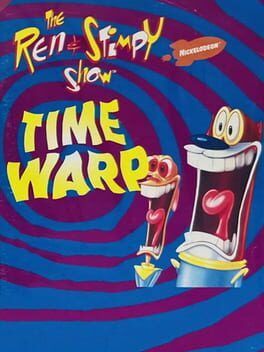
The deep cuts come with The Ren and Stimpy Show: Time Warp and The Ren and Stimpy Show: Fire Dogs on SNES. Time Warp sends the duo careening through eras in a time‑travel platformer packed with oddball weapons, from beaver saws to watermelon‑launching contraptions. Fire Dogs focuses on the episode of the same name, turning Ren and Stimpy’s stint as firehouse mascots into a sequence of slapstick rescues and obstacle courses. Neither set the world on fire in 1994, but both are strong picks if you want something that feels bespoke rather than reskinned.
Taken together, the seven‑game spread covers most of the Nintendo‑published Ren & Stimpy catalog. You get portable oddities, multiple interpretations of the same concept and a couple of games that genuinely try to build mechanics around specific episodes rather than generic platforming.
Limited Run’s emulation and extras
If you have touched Limited Run’s previous compilations, the feature list here will look familiar. Happy, Happy, Joy, Joy layers modern quality of life atop straightforward ROM emulation, aiming to keep the original feel intact while shaving off some of the era’s roughest edges.
The headline comfort is a rewind function that lets you spool back a few seconds at any time. For early 90s platformers with one hit kills and blind jumps, that is a big deal. Instead of replaying entire stages after mistiming a leap, you can simply scrub back to before the mistake and try again, which makes the weaker level design easier to tolerate.
Save‑anywhere support is the other essential upgrade. None of these games were built with generous checkpointing in mind and a couple still rely on passwords. Being able to drop a suspend point mid‑level means you can chip away at them in short handheld sessions on Switch or alt‑tab out on PC without losing a run.
Beyond the gameplay tweaks, Limited Run is packing in a music player and an artwork museum. The soundtrack mode lets you listen to crunchy chiptunes and 16‑bit takes on the show’s chaotic jazz without loading into each individual cart, while the gallery pulls together key art, box fronts, manuals and marketing material. Given how ephemeral licensed game ephemera can be, this kind of archival work is often the most valuable part of these sets.
Technically, Limited Run is not promising widescreen overhauls or big visual remasters, and that fits the company’s usual philosophy. Expect clean, accurate emulation with optional filters rather than touched‑up sprites. The point here is preservation first, convenience second and heavy modernization not at all.
Where it sits in the 90s Nicktoon revival
Happy, Happy, Joy, Joy is arriving just as Nickelodeon and Limited Run are leaning hard into a wider 90s cartoon comeback. The Nicktoon‑themed Nickelodeon Splat Pack collection is already on the way, pulling together games based on Rugrats, Doug and Rocko’s Modern Life for Switch and PC. Rugrats: Adventures in Gameland is getting a modern reimagining that deliberately looks like an NES platformer. Across the board, Nick is treating its 16‑bit back catalog as something worth resurfacing rather than quietly leaving to ROM sites.
Within that context, the Ren & Stimpy collection feels like the weirder, riskier sibling. Where Splat Pack is a broader sampler of multiple properties, Happy, Happy, Joy, Joy drills down into a single, heavily stylized show and sticks with the Nintendo branch of its game history. It is less likely to pull in casual nostalgia buyers who just remember the orange splat logo, but more likely to satisfy the subset of fans who remember specific carts and box art.
On Switch especially, the compilation sits comfortably alongside other retro‑leaning releases. The system already hosts modern takes on TMNT, classic Disney platformers, and a steady stream of Arcade Archives drops. A Ren & Stimpy bundle stocked with Game Boy curiosities and shed‑tier SNES platformers feels right at home in a library that increasingly treats the 90s as a living genre rather than a past decade.
For PC players, it is also a rare way to pick up these games in a legal, permanent‑ish form without chasing down original carts and aging hardware. That fits Limited Run’s stated mission of making hard‑to‑find games accessible again, even if the quality bar of the source material wobbles.
The games that did not make the cut
As thorough as the Happy, Happy, Joy, Joy Collection looks at a glance, fans are already pointing to some conspicuous holes. The biggest absence by far is The Ren & Stimpy Show: Stimpy’s Invention on Sega Genesis and Mega Drive, widely regarded as the one genuinely strong Ren & Stimpy game. Its co‑op focus and tighter feel give it a better reputation than most of the titles that did make the bundle, so its omission will sting for anyone who grew up playing it on Sega hardware.
Quest for the Shaven Yak is another missing piece, a Game Gear outing that digs into one of the show’s more absurd premises. Even if it is not a classic, completists will notice that the Sega handheld is not represented at all, which makes the collection feel explicitly Nintendo‑only rather than a full Ren & Stimpy anthology.
There are also various regional and platform variants that do not appear to be included, such as additional Sega ports and PC versions. In practice that means the collection tells one very specific story about Ren & Stimpy’s game history, filtered through what is likely a complicated web of rights and source code availability.
None of this breaks the package, but it does define expectations. If you head into Happy, Happy, Joy, Joy looking for a definitive museum of every Ren & Stimpy release, you will notice what is missing. If you are instead after a well‑wrapped snapshot of the Nintendo side of the franchise equipped with modern saves, rewinds and a decent museum, this aligns much more closely with what Limited Run is actually selling.
A strange but fitting return
There is a kind of poetic justice in Ren & Stimpy returning to relevance in the form of janky, over‑animated 16‑bit tie‑ins that were never quite mainstream classics. These were messy, noisy games even by the standards of their era, full of gross‑out jokes, awkward controls and surprisingly ambitious attempts to force TV comedy into side‑scrolling stages.
Happy, Happy, Joy, Joy does not magically transform them into lost masterpieces, but it does give them context, comfort features and a platform where they can be appreciated as oddball artifacts. Paired with Nickelodeon’s broader Splat Pack push, it suggests we are at the start of a longer‑term project to drag more licensed TV games out of the cartridge drawer and onto modern storefronts.
For fans of 90s cartoons and the stranger corners of retro game history, that is worth paying attention to, even if your favorite Sega cart is still absent from the invite list.