
How Nerial and CD Projekt are using Reigns’ minimalist, choice-driven formula to remix Geralt’s greatest hits and expand The Witcher’s growing transmedia universe.
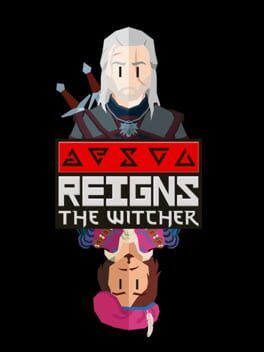
Reigns: The Witcher arrives February 25, 2026, as one of the more unexpected ways to step back onto the Continent. Rather than another sprawling open world or crunchy RPG, it wraps Geralt’s life in the minimalist, choice-driven structure of Reigns, inviting Witcher fans to guide his fate one left or right swipe at a time.
Where previous Witcher games leaned on dense systems and vast maps, Reigns: The Witcher pares it all down to a deck of cards and a bard with a flair for embellishment. It is developed by Nerial, creators of the Reigns series, in partnership with CD Projekt RED, and it is pitched less as a side-story you can safely ignore and more as a playful character study of Geralt and the people orbiting him.
At the heart of Reigns is a simple idea: every situation is framed as a card, and you decide what happens next by swiping left or right. Those binary choices ripple out across a web of systems that track how different groups view you, from nobles and mages to villagers and monster hunters. Reigns: The Witcher carries that same structure over to the world of Witchers and sorceresses, but it uses Dandelion as the storyteller. You are not just playing through history, you are playing through his version of it.
That framing device matters. Dandelion is the lens through which these events are filtered, which gives Nerial license to remix familiar beats. Iconic characters like Yennefer, Triss and Vesemir show up, but their scenes are colored by his dramatic instincts. A routine contract becomes a soaring ballad about impossible odds. A bathhouse interlude can be framed as either romantic legend or farce, depending on the choices you make. The result is a Witcher story that feels intimate and exaggerated at the same time, focused less on map markers and loot tables and more on what people remember about Geralt when the song is over.
Because the Reigns format thrives on brevity, it is also well suited to exploring alternate takes on well-known moments from the wider saga. The series has always been about navigating moral gray areas, and here those dilemmas are condensed into single-sentence prompts with immediate consequences. Do you take the coin and clear the contract quickly, or dig deeper into a village’s troubles and risk upsetting half the town? Do you indulge a sorceress’s scheme or keep your distance to protect those around you? Each choice nudges multiple meters at once, and the game promises thousands of narrative combinations as these small decisions stack up.
Reigns: The Witcher does not abandon action entirely. Combat appears as short, stylized encounters where Geralt faces familiar monsters like ghouls and rotfiends, along with some more whimsical foes that exist mostly in the bard’s imagination. These sequences act as sharp punctuation marks in Dandelion’s tale, something for him to hang a verse on between political intrigues and messy romances.
For CD Projekt, this project is also another piece in a much larger puzzle. The Witcher has steadily become a full transmedia universe, stretching from Andrzej Sapkowski’s novels to CD Projekt’s RPG trilogy, multiple board games, a Netflix adaptation, comic runs and smaller digital spin-offs like Thronebreaker and Gwent. Reigns: The Witcher fits neatly into that strategy by focusing on what the brand can be in a compact format that lives comfortably on PC and mobile.
Where a board game translates Witcher contracts into tabletop strategy, and Thronebreaker turned card battles into a narrative campaign, Reigns: The Witcher asks what happens if you strip everything down to choices and consequences. It is less about mastering a new combat system and more about inhabiting Geralt’s persona, feeling out how his reputation shifts with every decision. In that sense, it aligns closely with the core appeal of the books and games: the idea that there are rarely clean solutions, only trade-offs and stories people tell afterward.
It also plays into the franchise’s ongoing effort to spotlight its supporting cast. By centering Dandelion as narrator and weaving in key figures like Yennefer, Triss and Vesemir, the game functions as an accessible anthology of their relationships with Geralt. Newcomers who bounced off the scale of The Witcher 3 get a low-commitment way to meet these characters and sample the tone of the world, while long-time fans can enjoy a self-aware remix of events they already know by heart.
With a February 25 release date and platforms that include PC and mobile, Reigns: The Witcher is positioned as a bite-sized companion to whatever comes next for the mainline series. It may not advance the overarching canon in dramatic ways, but it does something just as important for a long-running universe: it keeps the characters alive in the cultural imagination, makes space for humor alongside grim monster work and shows that there is more than one way to sing the story of Geralt of Rivia.