
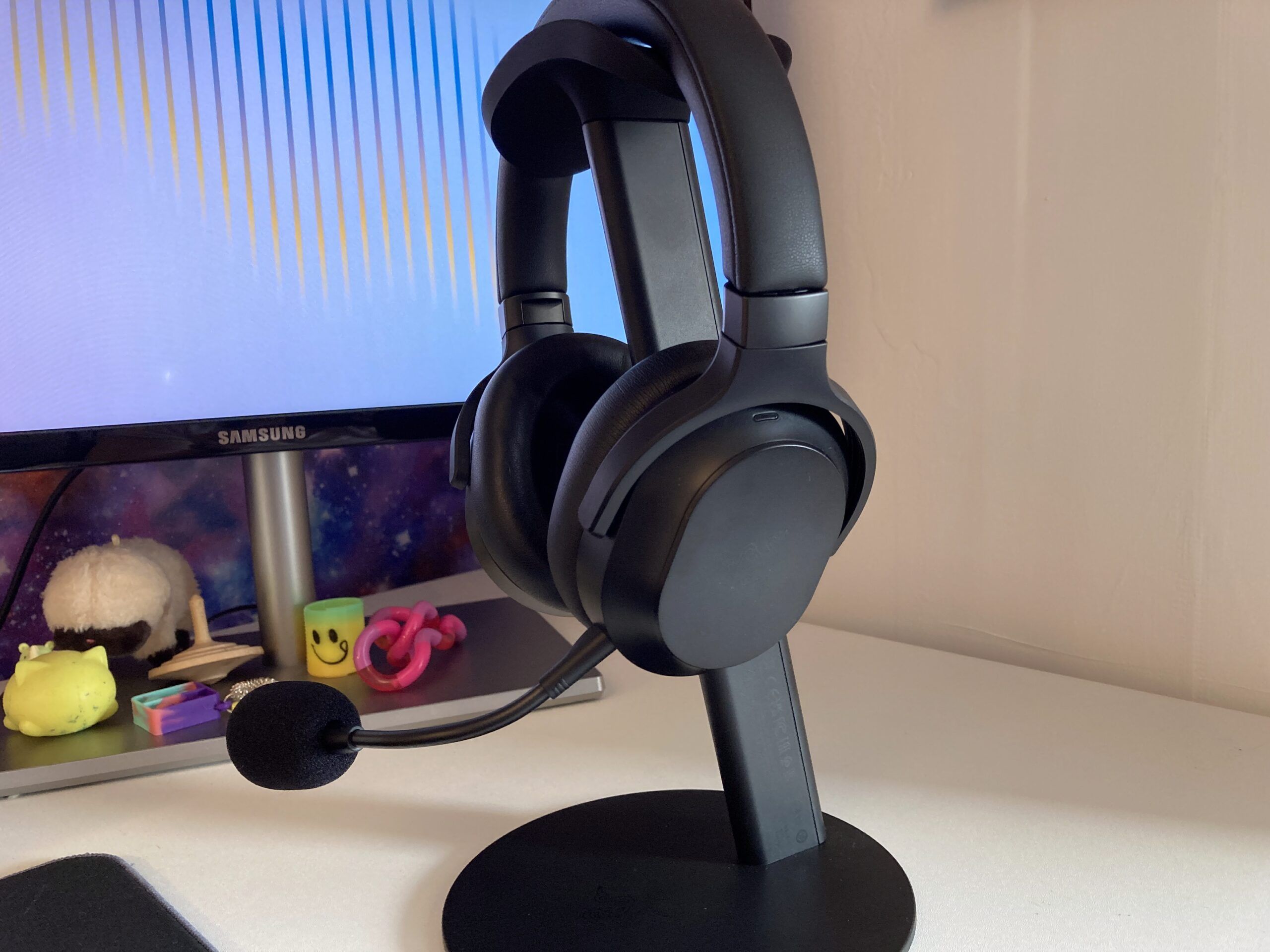

Razer’s new Barracuda V2 Pro targets players who want one premium wireless gaming headset for PC, console, handheld, mobile, calls and travel, with simultaneous Bluetooth and 2.4GHz audio, Hybrid ANC, THX Spatial Audio+ on PC and an advertised 70-hour battery claim.
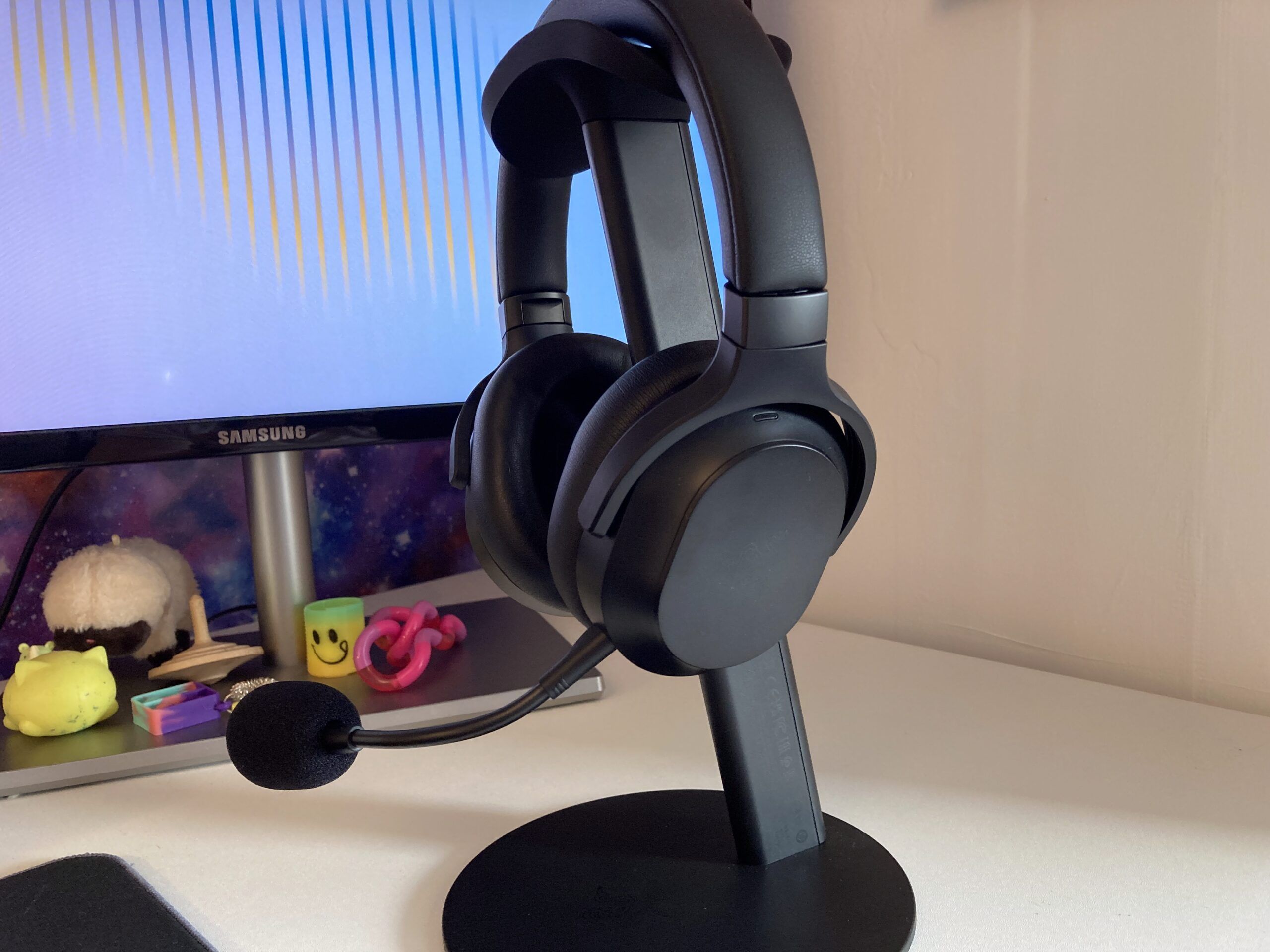
Image: cubed3.com
Razer’s new premium headset launches into a crowded wireless market
Razer has announced and released the Razer Barracuda V2 Pro, a premium wireless gaming headset built around a specific promise: one headset for desktop gaming, console and handheld play, mobile use, calls, travel and everyday listening. According to Razer’s own newsroom post dated October 15, 2026, the headset combines Razer TriForce Bio-Cellulose 40 mm drivers, THX Spatial Audio+, Hybrid Active Noise Cancellation, AI-powered microphone noise cancellation, simultaneous 2.4 GHz and Bluetooth connectivity, and up to 70 hours of battery life.
The immediate tension is price versus consolidation. GamersHeroes reports that the Barracuda V2 Pro is available for $199.99 through Razer.com, RazerStores and select retailers worldwide, while Notebookcheck lists the headset at $200 and notes availability through Razer’s store and Amazon. In the UK, Wolf’s Gaming Blog and Invision Community both cite a £199.99 price. That puts the Razer Barracuda V2 Pro price firmly in the premium tier, where the question is less whether the spec sheet is long and more whether its features replace enough other gear to justify the spend.
Razer’s positioning is clear. Barrie Ooi, Head of PC Gaming Division at Razer, said in the company’s announcement that gamers want “one headset that keeps up with their whole day.” The Barracuda V2 Pro is aimed at that behavior pattern: PC at the desk, console on the couch, handheld gaming away from the monitor, Bluetooth audio from a phone, and voice calls without changing headsets. For a buyer, that makes this less of a traditional competitive headset pitch and closer to a cross-device audio strategy.
The headline feature is simultaneous 2.4GHz and Bluetooth audio
The most practically interesting feature is not the battery claim by itself. It is the simultaneous 2.4 GHz and Bluetooth setup, because that changes how the headset can be used during a session. Razer says the Barracuda V2 Pro uses Razer HyperSpeed Wireless for low-latency gaming audio and includes a SmartSwitch button for moving between 2.4 GHz wireless and Bluetooth. The company also says simultaneous audio lets players stay connected to calls, messages or music without leaving the game.
Wolf’s Gaming Blog, which reported that the headset launched on October 15, described this as the main selling point: game audio can continue through the wireless dongle while a phone supplies a podcast, music or calls over Bluetooth. That outlet’s writer said the feature had quickly become one of the most useful parts of the headset during testing, while noting that a full review was still to come.
That distinction matters. Switching between wireless modes is convenient, but simultaneous audio is the higher-value play. Many wireless gaming headsets can handle multiple platforms in some form, yet the Barracuda V2 Pro’s pitch is that a player does not have to choose between game audio and the phone channel. For live-service players, Discord users, remote workers sneaking in lunch-break handheld sessions, or anyone who routinely juggles a console and a mobile device, that is the feature that could reshape daily use.
Razer also claims HyperSpeed Wireless is up to twice as fast as Bluetooth LE, according to its announcement and Invision Community’s report. That is Razer’s latency claim rather than an independently tested result in the supplied material. The safer takeaway is that Razer is separating the roles: 2.4 GHz for gaming responsiveness, Bluetooth for the phone-side layer of the day.
The 70-hour battery claim is strong, but the fine print still matters
The Razer Barracuda V2 Pro battery life claim is up to 70 hours on a single charge. That headline makes it a 70 hour gaming headset on paper, and it is one of the reasons Razer can frame the product as an all-day, travel-ready device rather than a desk-bound accessory.
There is an important caveat in the available reporting. Notebookcheck states that Razer’s 70-hour figure applies with ANC turned off. Wolf’s Gaming Blog also cautions that battery life will depend on how features such as ANC are used. The source material does not provide a confirmed runtime for simultaneous 2.4 GHz and Bluetooth audio with Hybrid Active Noise Cancellation enabled, nor does it give separate figures for Bluetooth-only use, dongle-only use, or wired operation.
That is not a flaw by itself, but it is the key buying variable. ANC, dual wireless connections and microphone processing are exactly the sort of features that can change real-world endurance. If your use case is long PC sessions with ANC disabled, the 70-hour number is likely the most relevant claim Razer is making. If your plan is to commute with ANC, take calls, and keep Bluetooth and 2.4 GHz active at the same time, the supplied sources do not confirm how close the headset gets to that ceiling.
In strategy terms, battery life is the economy stat. A large number on the box gives you more margin for travel, forgotten charging cables and multi-day use, but the effective value depends on how many premium features you keep switched on. Buyers who care most about battery should wait for testing that breaks down runtime by mode rather than treating the maximum claim as a universal result.
Audio, ANC and PC-only spatial features define the premium stack
Razer says the Barracuda V2 Pro uses TriForce Bio-Cellulose 40 mm drivers tuned for crisp highs, clear mids and deep bass. Notebookcheck adds more specification detail, reporting a 12 Hz to 20 kHz frequency response range and 32 ohm impedance. These are confirmed product specs and claims, not a substitute for listening tests, but they explain where Razer is placing the headset: above basic wireless utility and into premium audio presentation.
On PC, the headset supports THX Spatial Audio+ with 7.1.4 virtual surround sound. Razer says this adds four overhead channels, positioning audio cues around and above the player for a more layered soundstage. The platform limitation is important. The supplied sources repeatedly frame THX Spatial Audio+ as a PC feature, so console and handheld buyers should not assume the full spatial package travels everywhere the headset connects.
Hybrid Active Noise Cancellation is another major part of the proposition. Razer says the system uses external and internal-facing microphones to reduce background noise, while Invision Community and Techaeris describe the feature as intended for use at home, in transit or in busy environments. This is where the Barracuda V2 Pro moves away from a pure esports headset identity. ANC is valuable if you share a room, travel, play on a handheld outside the house, or use the headset for work calls and entertainment. It is less critical if your headset never leaves a quiet desk.
The strongest third-party listening note in the supplied material comes from Invision Community’s review, whose writer said the Barracuda V2 Pro sounded immersive and detailed across games including World of Warcraft: Forever, The Blood of Dawnwalker and The Witcher 3: Wild Hunt Remastered, and described it as a clear improvement over their previous Razer Barracuda Chroma. That is one outlet’s review experience, not a universal verdict, but it does support the idea that the headset’s spec sheet is not purely theoretical.
Design choices point to travel, calls and long sessions
The Barracuda V2 Pro weighs 285 g, according to Razer’s announcement and multiple reports. Razer also describes a foldable, lay-flat design, while Notebookcheck reports that the 2.4 GHz dongle can be stored inside the left earcup. Those details matter because the headset’s whole argument depends on leaving the desk without turning into a cable-and-dongle management problem.
The microphone setup follows the same logic. Razer lists a dual-mode microphone system with a detachable boom microphone and integrated beamforming microphones. The boom is aimed at PC gaming and team communication, while the internal microphones allow a cleaner look when using the headset outside the house. Razer says AI-powered microphone noise cancellation supports the voice system, with the goal of reducing background noise during calls and multiplayer sessions.
Notebookcheck further identifies the detachable mic as a Razer HyperClear full-band mic and reports leatherette memory foam cushions. It also notes that the headset has no RGB lighting and appears to come in a single black color option. The absence of RGB may disappoint some brand-loyal setup builders, but it also fits the Barracuda line’s lifestyle angle. A headset meant for trains, airports, work calls and handheld gaming benefits from looking less like a desk ornament.
There is also a third connectivity route beyond the two wireless modes. Notebookcheck reports that the headset has three connectivity options in total, with wired connection joining 2.4 GHz and Bluetooth. The supplied sources do not give enough detail to evaluate wired audio quality, cable behavior or microphone support in wired mode, so that should be treated as a compatibility note rather than a buying reason until fuller testing is available.
Who should consider it over other wireless gaming headsets
The Razer Barracuda V2 Pro makes the most sense for players whose device map is messy. If your week includes PC gaming, a console or handheld, phone calls, Bluetooth music, travel and shared-room play, the headset’s combined feature set has a coherent purpose. Simultaneous Bluetooth and 2.4 GHz audio is the anchor feature, because it solves a real friction point: staying in the game while keeping the phone channel open.
It is also a strong candidate for buyers who value ANC in a gaming headset. Hybrid Active Noise Cancellation, beamforming microphones, a detachable boom and a fold-flat 285 g build all point toward a headset that is expected to move between contexts. That is the clearest reason to consider it over a simpler wireless gaming headset that focuses narrowly on desk play.
The harder sell is for players who only need one low-latency PC headset and do not care about Bluetooth mixing, ANC or travel design. At $199.99 in the US and £199.99 in the UK, according to the cited reports, the Barracuda V2 Pro is asking buyers to pay for flexibility. If your audio setup never leaves a single platform, some of that flexibility becomes unused budget.
There are also unanswered questions. The supplied material confirms the 70-hour maximum battery claim, but Notebookcheck ties that figure to ANC being off, and the sources do not provide confirmed battery results for every feature combination. THX Spatial Audio+ is framed as a PC feature, so console-first players should weigh that limitation. Razer says the headset supports PC, mobile, console and handheld devices, but the supplied sources do not provide a detailed platform-by-platform compatibility table.
For now, the practical guidance is straightforward. Consider the Razer Barracuda V2 Pro if you want one premium wireless gaming headset to cover gaming, calls, travel and mobile audio, and if simultaneous Bluetooth plus 2.4 GHz audio sounds like something you would use every day. Wait for mode-by-mode battery and platform testing if your purchase hinges on ANC endurance, console feature parity or competitive latency numbers rather than the broader all-device proposition.