
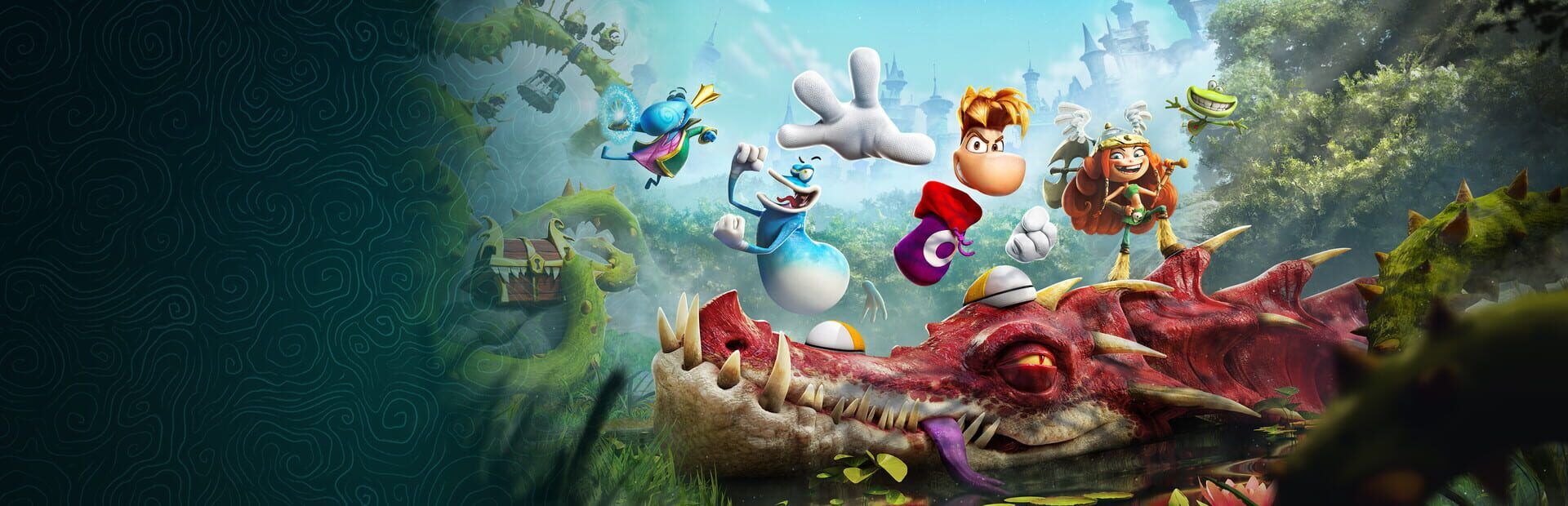
Ubisoft confirms the original Rayman Legends will stay on stores alongside Rayman Legends Retold. Here is why that decision is a big deal for preservation, player choice, and how remakes should work.
Ubisoft has confirmed that the original Rayman Legends will remain on digital storefronts after Rayman Legends Retold launches, and that simple clarification quietly puts the new remake in a very different light.
Rather than treating Retold as a replacement, Ubisoft is positioning it as an alternative. In a landscape where remasters often arrive hand in hand with delistings, that stance matters for game preservation, consumer choice, and how publishers think about reviving their back catalogues.
What Ubisoft Actually Said
The confirmation came from the official Rayman account on X, responding to fan concern that Rayman Legends might vanish once Retold arrives. The message was clear: Ubisoft has no plans to delist the original versions of Rayman Legends when Rayman Legends Retold launches.
That means the 2013 release will continue to coexist with the new retelling, rather than being quietly removed the way some publishers have handled older editions when a remake is on the way.
Why Keeping The Original Matters For Preservation
Rayman Legends is already a modern classic for 2D platformers, but it is also a snapshot of a particular time in Ubisoft’s design philosophy. Its hand drawn art, rhythm stages and specific physics all contribute to a distinct feel that a remake, no matter how careful, may not perfectly reproduce.
When publishers delist originals, they effectively overwrite that historical record. The industry has already seen examples of this problem, from remasters that changed mechanics while removing access to the original release, to licensing driven delistings that lock away whole eras of digital only games.
By keeping Rayman Legends available, Ubisoft is ensuring that players, critics and historians can still access the authentic 2013 experience. If Retold tweaks level layouts, enemy timings or movement, there will still be a baseline to compare against. For a series with such a strong identity built on animation and timing, that continuity is especially important.
Consumer Choice: Two Versions, Two Audiences
There is also a straightforward benefit for players. Rayman Legends Retold brings updated visuals, new levels and extra content to modern platforms like PlayStation 5, Xbox Series X|S, Nintendo’s next generation hardware and PC. It is clearly aimed at both newcomers and fans who want a new excuse to revisit the game.
But not every player wants a retuned experience. Some will prefer the exact pacing, art treatment and structure of the original. Others may have performance preferences on older systems, or simply care about playing the version they remember from a decade ago.
Leaving the original on sale lets those groups self select. New players can jump straight into Retold for the most feature rich take, while purists and returning fans can choose the classic build without resorting to secondhand discs or piracy. It is a simple, consumer friendly decision that sidesteps the usual remake dilemma of forcing everyone onto the new version whether they like it or not.
A Smarter Remake Strategy
The decision also signals a more nuanced approach to remakes. Rather than treating Rayman Legends Retold as a hard reset for the franchise, Ubisoft appears to be framing it as a parallel experience. That framing changes expectations in some key ways.
First, it relieves pressure on Retold to be a definitive replacement. If both versions are available, Retold can afford to experiment a little more with its new content and visual touches. Fans who are not onboard with every change still have a safe fallback in the original game.
Second, it allows Ubisoft to market Retold on its own strengths instead of asking players to trade in what they already own. The pitch becomes about added value, not forced migration. For a platformer so beloved for its level design and co op chaos, that may encourage more double dipping rather than resentment.
Finally, keeping both versions live offers a clean A/B test for Ubisoft itself. Player engagement, reviews and word of mouth across the two versions will provide clear data on what modern audiences actually want in a remake of a 2D classic. That feedback can shape how the publisher handles future revivals of its catalogue.
How This Compares To Less Friendly Delistings
The contrast with more aggressive delisting strategies in the industry is stark. When an original game is removed on the day its remake launches, there is no option to stick with what you liked. Players who bounce off the new version are simply out of luck.
The Rayman Legends approach shows another path. You can still build excitement around a new edition without erasing the old one, particularly when the original is already widely loved and broadly available. For a series that has often been missing in action between releases, encouraging more people to sample any version of Rayman is only going to help the character’s long term health.
What It Means For Rayman Going Forward
Rayman Legends Retold is more than a visual touch up. With extra stages, expanded musical content and co op for up to four players, it has the potential to reintroduce Rayman to an audience that may have missed the character entirely on older hardware.
By promising that the original Rayman Legends will remain available, Ubisoft is building that revival on a foundation of trust. Fans who have carried the series for years can revisit the exact game they remember, while newcomers can choose the fresh coat of paint.
If the strategy pays off, it could become a template for how Ubisoft and other publishers handle beloved platformers and action games in the future. Rather than viewing preservation and progress as opposing forces, Rayman Legends Retold suggests they can coexist. For one of the best 2D platformers of the last decade, that feels like the right call.