
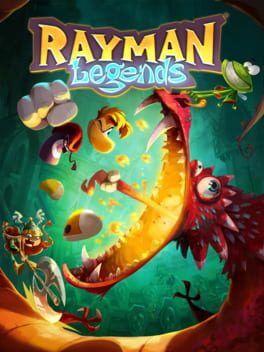

With Rayman’s 30th anniversary stirring up remake rumors, it’s the perfect time to reappraise why Rayman Legends remains a 2D platforming masterpiece, and what a modern PS5 and “Switch 2” version would need to feel essential rather than nostalgic.
Rayman has quietly turned 30, and the series is suddenly back in the conversation thanks to ratings-board leaks for a Rayman 30th Anniversary Edition tied to PlayStation 5 and Nintendo Switch. The listings do not confirm a Rayman Legends remake, and they even curiously credit Atari rather than Ubisoft, so for now any talk of a new version is speculation.
What is not speculative is the legacy. More than a decade after release, Rayman Legends is still regularly held up as a high watermark for 2D platformers, mentioned in the same breath as Super Mario World, Donkey Kong Country: Tropical Freeze and Celeste. With a new generation of consoles now standard, it is worth unpacking why Legends remains so beloved, and what a hypothetical modern remake would actually need to feel relevant on PS5 and a next-generation Switch rather than just like another port.
Why Rayman Legends Still Feels Timeless
Released in 2013 as the follow up to Rayman Origins, Legends could have been a simple content expansion. Instead, Ubisoft Montpellier treated it like a second draft of the same design philosophy, sanding off friction points and doubling down on flow, readability and surprise.
The first thing that still hits you is how good it feels to move. Rayman’s run speed, jump arc, hover time and attack animations are tuned to make continuous motion feel natural. There is just enough inertia to sell physicality, but not enough to make you feel out of control. Levels are built around this specific movement model. Slopes subtly accelerate you into jumps, wall runs give you extra height and rhythmically placed enemies act as springboards rather than interruptions.
Many 2D platformers talk about flow. Legends builds its entire campaign around it. Checkpoints are frequent and snappy, deaths are quick resets rather than momentum-killing punishments. Collectible Lums are laid out in lines that trace the optimal path through each space, almost like an illustrated suggestion from the level designers. When you are in sync with that path, stages feel like musical score sheets you are performing rather than obstacle courses you are solving.
That feeling is reinforced by how readable everything is at a glance. Ubisoft’s UbiArt Framework allows background elements, platforms and hazards to be layered with painterly detail, yet silhouettes and color contrast keep the critical information clear. Rayman’s hitbox matches what you see. Platforms with different properties have distinct shapes and audio cues. It sounds basic, but in a genre that often demands frame-perfect jumps, being able to parse a scene instantly is a huge part of why Legends still feels fair.
Then there is the pacing. Legends is not content to run one idea into the ground. Every world introduces a set of mechanics and then remixes them in short, punchy levels. A stage built around stealthy sneaking through shadows might be followed by a chase that weaponizes the same light-and-dark rules at high speed. Instead of forcing you to master one gimmick for hours, the game cycles through concepts at a brisk tempo while returning to core movement enough to keep you grounded. That variety is a big reason players still revisit it years later.
The Music Levels And The Art Of Playable Spectacle
If there is one aspect of Rayman Legends that still comes up whenever the game trends, it is the music stages. These rhythm-infused levels are more than a novelty. They are the purest expression of the design team’s obsession with flow.
On paper, they are straightforward auto-scrollers where you run to the right and jump, punch or glide in time with the beat. In practice, every obstacle and enemy placement is synchronized with the soundtrack, from drum hits that line up with bounces to guitar stabs that match midair attacks. You do not follow a metronome; you become the metronome by playing correctly.
This turns platforming into choreography. The game nudges you toward instinctive play. You stop counting beats and start trusting the music. Failures feel less like the level being unfair and more like you falling out of rhythm, which makes instant retries strangely compelling rather than frustrating.
Visually, these stages double as set pieces. Background elements pulse with the track, camera shakes punch up riffs and the art leans into wild, occasionally surreal imagery. The trick is that none of that spectacle ever obscures your path. Even when the game is throwing fireworks at the screen, your route remains legible. It is a lesson many modern platformers and action games could still stand to learn.
Co-op Chaos That Actually Works
Local co-op is another reason Legends is remembered so fondly. Many 2D platformers technically support multiplayer but quietly punish it with cramped spaces and friendly-fire chaos. Legends treats co-op as a first-class mode rather than a bolt-on.
Level geometry offers multiple layers and generous ceilings so extra players have room to improvise without constantly colliding. Bubble respawns keep the action moving; if a friend falls into a pit, they are back in play almost immediately, floating on screen waiting to be popped back into action. Enemy and hazard layouts are tuned so that one player can take the aggressive path while another focuses on collecting or scouting.
This design makes Legends one of the rare platformers that is as enjoyable with a full couch of four players as it is solo. It also happens to make it a natural fit for modern online features that it never fully embraced at launch.
A Level Design Clinic In Player Onboarding
Beyond its flashy set pieces, Rayman Legends is a quiet masterclass in teaching mechanics without tutorials. New ideas are typically introduced in safe, low-stakes contexts where the consequence for failure is minor. A collapsing platform might appear over solid ground, giving you room to misjudge the timing. Later levels then raise the stakes once you have internalized the rule.
The game regularly uses enemy behavior as teaching tools. A creature might demonstrate that a certain surface is bouncy or that a wind current behaves a specific way long before you are asked to make a critical jump that relies on that knowledge. This form of environmental teaching is subtle enough that many players do not consciously notice it, but it is central to why the difficulty curve feels smooth rather than spiky.
Importantly, Legends also respects your time. Secret areas are hidden, but not maliciously so. Out-of-the-way alcoves are telegraphed by audio stings and visual hints like slightly misaligned tiles or trails of Lums leading just off the main path. Completionists have something meaningful to chase without everyone else feeling like they are missing half the game.
What A Modern Rayman Legends Remake Would Need
Nothing about the recent ratings-board leaks guarantees that Rayman Legends is getting a dedicated remake, and platform listings alone cannot confirm what form Rayman’s 30th anniversary celebration will take. But if Ubisoft and its partners do decide to bring Legends forward again specifically for PS5 and a new Nintendo system, there are clear opportunities to make the game feel current without upsetting its delicate balance.
The first is technical performance. Legends already runs beautifully, but a native 4K presentation on PS5 and high-resolution output on a new Switch would let the hand-painted art truly sing. More importantly, running at up to 120 frames per second on capable hardware would supercharge the game’s feel. The platforming rhythm and music stages thrive on responsiveness. Lower input latency and higher frame rates would not just be an indulgence; they would meaningfully enhance the design.
Modern online infrastructure is another obvious missing piece. The original game focused on local co-op and asynchronous online challenges. A remake built for PS5 and Switch 2 would benefit massively from full online co-op across the campaign and Challenge Mode, with drop in and drop out support. Being able to share the entire game with friends regardless of location would unlock the same co-op magic that used to require a shared couch.
Cross play and cross progression would be natural extensions of that. One of the strengths of Legends over the years has been its presence on almost every platform under the sun. Letting players bring saves between PS5, Switch 2 and PC and queue together regardless of system would keep the community from fracturing yet again around hardware lines.
A final, potentially transformative addition would be a robust level editor. Rayman Legends already feels like a showcase for what UbiArt can do in skilled hands. Opening a portion of that toolbox to players could dramatically extend the game’s lifespan. The key would be keeping creation intuitive and curated. Template-driven tools, remixable developer stages and a well-moderated sharing hub could let fans build rhythm levels, challenge rooms and short campaigns without diluting the quality bar that makes the shipped content so strong.
None of these features would matter, though, if they upset the core that made Legends special. The priority for any modern version should be preservation. The physics, level layouts and animation timing need to remain identical. Online and technical upgrades should exist to showcase that design, not overwrite it.
A 30th Anniversary Worth Celebrating Either Way
Whether Rayman’s 30th anniversary leads to a fully fledged Rayman Legends remake or a broader collection, the renewed interest is a reminder of how rare this kind of 2D platformer has become. Legends is not just a nostalgia piece from the early 2010s. Its focus on readable spectacle, frictionless flow and co-op-friendly level design still feels refreshingly confident in a market where many platformers chase difficulty spikes or roguelike hooks.
For a new generation that might have missed it the first time, a modern release with smart online support and technical enhancements could easily cement Rayman Legends as more than a cult favorite. It could reaffirm it as one of the clearest examples of how playful, expressive and finely tuned 2D platforming can be when a team is willing to treat it as more than a retro throwback.
Confirmed remake or not, revisiting Legends in 2025 is a reminder that Rayman remains one of the genre’s sharpest silhouettes. If the future of the series is being built on this foundation, that is something to quietly get excited about.