
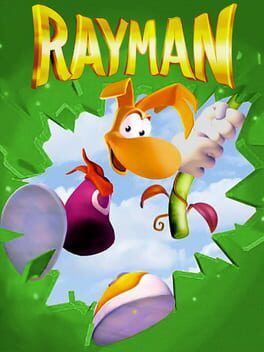
With Michel Ancel hinting at a Rayman HD re‑release, here is what made the 1995 classic special and what a modern version should improve without losing its soul.
Michel Ancel has never been shy about his affection for the original Rayman, but his latest comments have quietly lit a fuse under long‑time fans. In a recent Retro Gamer interview, the series creator said he believes “there’s a kind of remake planned” for Rayman 1, in HD, with added checkpoints and adjustments to make the game less punishing. Those remarks line up with a Rayman 30th Anniversary Edition rating spotted on the Australian board, even as Ubisoft itself maintains total silence.
That leaves us with an unusual situation. The creator is talking openly about an HD project that the publisher will not publicly acknowledge. Taken together with the rating board leak and years of rumors about a Rayman project codenamed “Iceman,” it feels less like wild speculation and more like an unannounced plan slowly coming into focus. Until Ubisoft speaks, though, it is all technically unconfirmed.
Regardless of what marketing label ends up on the box, the idea of a modernized Rayman raises a key question. How do you update one of the most distinctive 2D platformers of the 90s without sanding off exactly what made it memorable in the first place?
Why the 1995 Rayman Still Matters
The original Rayman arrived in 1995, right as the industry was pivoting hard toward 3D. It was a bold choice to ship a strictly 2D platformer on hardware that was busy selling players on polygons. Yet Rayman carved out an identity through its art, animation and mood.
The first thing everyone remembers is how it looks. Rayman’s hand‑painted backdrops, floating limbs and rubbery animation gave it a storybook feel on par with the best cartoons of its era. The absence of outlines on many characters, the deep color gradients in the skies and forests, and the exaggerated squash‑and‑stretch all combined to make the world feel alive in a way pixel‑driven platformers often did not. It was a game that felt like it had been illustrated rather than rendered.
Then there is the tone. Rayman’s world is whimsical and surreal, but not weightless. The goofy enemies and musical levels sit alongside areas like the Band Land storms or the darker late‑game zones that introduce a real sense of danger. This blend of lighthearted designs with demanding platforming gave the game a strange charm that modern Rayman titles like Origins and Legends would later expand on.
Finally, there is the structure. Rayman looks like a friendly platformer aimed at children, yet it is notoriously tough. Its difficulty spikes, sparse checkpoints and strict life system can turn gorgeous stages into exercises in repetition. For many players, conquering Rayman became a badge of honor. For others, it was a game they loved to look at but never finished.
Any HD remake that wants to honor Rayman has to preserve that visual identity and playful tone while reconsidering how it treats the player’s time and tolerance.
What Michel Ancel Has Actually Said
The recent wave of coverage around Rayman’s possible return all traces back to a few specific points from Michel Ancel’s Retro Gamer interview, amplified by news sites.
Ancel says he believes a kind of remake of Rayman 1 is planned, with the project targeting HD presentation. Crucially, he mentions that Ubisoft is adding more checkpoints and similar tweaks to make the game less frustrating, especially for less skilled players. He calls this a “nice move” and reiterates that he still sees the original as a very nice game, even if it can be harsh.
The language around the project varies between sources. Retro Gamer reportedly describes the first Rayman as being “rebooted,” while Ancel’s own phrasing makes it sound more like an HD rerelease with some modern quality‑of‑life changes than a ground‑up remake. Reports also tie this project to the Rayman 30th Anniversary Edition name that appeared on the Australian ratings board, and to older rumors of a Ubisoft project codenamed “Iceman.”
What Ancel does not do is outline specific features or platforms, nor does he confirm a release window. There is no official Ubisoft announcement, trailer or key art. For now, all solid information fits into three buckets: the existence of a rating, the creator’s belief that an HD remake is in the works, and repeated mentions of added checkpoints and reduced frustration. Everything beyond that sits firmly in speculation.
Fixing the Difficulty Curve Without Flattening It
If there is one element of the original Rayman that cries out for adjustment, it is the difficulty curve. The game ramps up quickly, throws players into tricky platforming sequences with minimal preparation and often punishes experimentation with long walks back from distant checkpoints.
A modern Rayman HD needs to rethink how it introduces complexity. Early levels were already lush showcases for the art, but they can also serve as better tutorials. More deliberate teaching of Rayman’s abilities, from his later‑unlocked punch to helicopter hair gliding and precise swinging, could bring the challenge ramp more in line with current expectations without losing teeth.
Later stages should feel like the culmination of skills learned, not sudden walls. Adjusted enemy placement, slightly more generous jump windows or tweaks to instant‑death hazards could all bring the experience closer to the demanding but fair standard set by Rayman Origins and Legends. The aim would be to keep the game proud of being hard while cutting back on avoidable frustration.
Ideally, difficulty should also be configurable. An optional harder mode that preserves the original enemy layouts and damage values would give experts the authenticity they crave, while a default or “modern” mode could layer in the new safeguards. That dual approach is becoming common in retro rereleases and would suit Rayman perfectly.
Smarter Checkpoints and Friendlier Lives
Ancel’s own comments highlight checkpoints as a focus of the HD project. In the original, spacing between checkpoints could be brutally long. Dying near the end of a level might send you back through several demanding sequences you had already cleared, not because the game was asking you to master something new but because the save structure was dated.
Modern checkpoint design could retain tension without wasting time. More frequent markers before major hazards and bosses, autosaves on completion of tough set pieces and smart mid‑stage saves for particularly long levels would go a long way. The challenge should come from clearing an obstacle, not from repeating the walk to reach it.
The traditional life system is another candidate for modernization. Infinite retries with sensible checkpoints have largely replaced harsh life counts in contemporary platformers. A Rayman HD that gives players the option to disable life limits or choose between classic and modern rules would acknowledge both nostalgia and accessibility. Those who loved the stressful resource management of extra lives could keep it, while newcomers would not bounce off the game in its first world.
Accessibility That Respects The Original
Accessibility in a Rayman HD remake should not mean rewriting its identity. Instead, it can open the door to players who were excluded by the 1995 design.
Customizable controls are the baseline. Remappable buttons, toggles for hold versus tap inputs on actions like helicopter gliding, and support for a wide range of controllers all matter more today. Expanded visual options such as color contrast tweaks, scalable HUD and clearer indicators for hazards or collectables would make the intricate backgrounds easier to parse without redrawing them.
Difficulty assists could sit alongside the earlier checkpoint and life changes. Optional slow‑motion assists for tricky platform segments, an invincibility or reduced damage mode, or a hint system for hidden cages could all be layered as toggles. Games like Celeste and modern Mario releases have proven that assist modes can coexist with demanding platforming without diluting the experience for purists.
Audio and text options are just as important. Subtitles for all spoken lines, volume sliders separated for music, effects and voices, and perhaps even basic narration support for menus would help bring Rayman up to modern standards. None of these features undermine the core design. They simply ensure that more people can appreciate it.
Preserving The Hand‑Drawn Magic In HD
The visual upgrade is where Rayman HD could either shine or stumble. The original’s hand‑drawn, almost painterly sprites and backdrops are its soul. A faithful HD treatment should aim to preserve that look rather than overhaul it into something more generic.
One route is high‑resolution redraws in the original style. Cleaned‑up sprites, sharper backgrounds and more animation frames could all enhance the impression of a living cartoon. The key is to keep the shapes, proportions and color palettes consistent. Rayman should still look like a limbless hero from a 90s storybook, not a plastic figurine.
Another approach would be modern upscaling techniques combined with careful manual touches. AI‑assisted scaling can ruin art if left unchecked, but when used sparingly and followed by human retouching, it can help restore detail that was previously lost to low resolutions.
Any change to aspect ratio and framing will need careful thought. Widening the viewport from the original formats without redesigning levels could make some jumps trivial or reveal off‑screen hazards too early. A best‑case solution would allow players to choose between original aspect ratios with tasteful borders and a modern widescreen view adapted to maintain level flow.
Finally, the audio. Rayman’s soundtrack, with its playful melodies and darker late‑game tracks, deserves a clear remaster. Higher‑quality recordings and subtle remixing could bring out details buried in the old mixes without changing the compositions themselves. Optional legacy audio, perhaps as a toggle, would be a welcome nod to long‑time fans.
Ubisoft’s Silence And The Retro Remaster Trend
Ubisoft’s refusal to formally acknowledge Rayman’s HD return stands out mostly because it runs counter to how common retro remasters have become across the industry.
Publishers like Capcom and Konami have spent recent years systematically revisiting their back catalogues. Whether it is lavish remakes that reinterpret classics from the ground up or carefully curated collections that preserve original versions with light modernization, players are now used to seeing older games given second and third lives. These projects double as preservation efforts and as relatively safe commercial bets built on long‑standing nostalgia.
Against that backdrop, an HD version of Rayman looks almost inevitable. The character remains iconic, Origins and Legends proved that there is an audience for 2D Rayman in the modern era, and a 30th anniversary is a marketing hook that publishers rarely ignore. In that context, Ancel talking publicly about a remake and a ratings board listing surfacing feel less like wild rumors and more like the early noise around a standard retro remaster play.
Ubisoft’s silence could be strategic. The company may be saving an announcement for a showcase, bundling Rayman HD with other anniversary projects, or still finalizing scope and positioning. Until it speaks, expectations should stay measured. What seems clear is that the appetite is there, and the broader trend of retro revivals suggests Rayman will not be left behind forever.
A Careful Balancing Act
If and when Ubisoft finally unveils Rayman HD, it will be judged on how well it walks a fine line. The original is beloved for its art, atmosphere and uncompromising design, but those same qualities can turn it into a wall for new players.
The strongest path forward is one that treats Rayman like a classic worth preserving rather than raw material to be replaced. Improved difficulty curves, smarter checkpoints, flexible accessibility options and careful high‑definition art restoration can all make the game more welcoming without diluting what made it iconic. Optional modes that let veterans experience something close to the 1995 ruleset would complete the package.
Michel Ancel’s comments suggest that at least some of these ideas, especially around checkpoints and frustration, are already on Ubisoft’s radar. If the publisher follows through, Rayman’s 30th anniversary could be more than a nostalgic rerun. It could be a model for how to bring a 90s platformer into the present while keeping its limbless heart intact.