
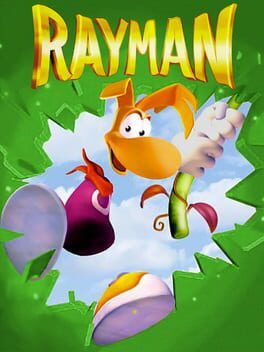
The surprise Australian rating for Rayman 30th Anniversary Edition on Switch and PS5 raises big questions: what is Atari doing with a PS1-era Ubisoft platformer, is this a port, remaster, or collection, and how does it fit into the new wave of 90s mascot comebacks?
The Australian Classification Board has quietly given Rayman 30th Anniversary Edition a G rating for Nintendo Switch and PlayStation 5, and that one listing tells us far more than it seems at first glance.
It confirms platforms, hints at physical distribution, and, most intriguingly, lists Atari as both developer and publisher, with U&I Entertainment as the applicant. For a character so closely tied to Ubisoft and mid‑90s PlayStation nostalgia, that is a surprising combination and it shapes what this project is likely to be.
What the Australian rating actually tells us
The public classification page describes Rayman 30th Anniversary Edition as a game with very mild violence and minimal impact, suitable for a general audience. That lines up almost perfectly with the tone of the original 1995 Rayman rather than the more slapstick chaos of the Rabbids era or the punchier Rayman Legends.
More telling is the crediting. Atari is listed as both developer and publisher, while U&I Entertainment appears as the applicant. None of the ratings materials mention Ubisoft by name, even though it owns the Rayman IP. That strongly suggests a licensing or co‑publishing arrangement where Atari is handling the production and distribution of this specific anniversary product while Ubisoft remains in the background as rights holder.
Nintendo‑focused outlets that spotted the listing, along with PlayStation‑centric coverage, all converge on the same key details. The project targets Switch and PS5, both platforms where retro‑styled platformers tend to thrive, and it appears to be a self‑contained anniversary release rather than just dropping the old PS1 version into a subscription service.
Port, remaster, or collection?
With no official announcement yet, the big question is what form Rayman 30th Anniversary Edition will take. The wording suggests more than a straight emulated ROM, but probably less than a full remake.
A simple port would likely mean a lightly touched‑up version of the original release, perhaps the PlayStation build or the PC “Rayman Forever” variant, running under modern emulation. That would be the cheapest route but also the least exciting, and the fact that this is being positioned as a 30th anniversary product and not a quiet catalog addition makes that feel unlikely as the only selling point.
A collection is the dream scenario for long‑time fans. The 90s alone saw Rayman appear on PlayStation, Jaguar, Saturn, PC and Game Boy Color, with each version making tweaks to level design and performance. A curated package gathering the most significant variants, with configurable soundtracks and visual options, would play directly into today’s appetite for preservation‑minded compilations. It would also help justify a boxed release on PS5 and Switch shelves.
The most plausible middle ground is a light remaster of the original with select extras. That could mean higher‑resolution assets based on the original art, cleaned‑up audio, widescreen support, and some modern conveniences such as rewind, save states and maybe a bonus museum section that digs into concept art and platform differences. Atari has been building that kind of tooling already through its recent retro initiatives and could reuse it here.
There is also a technical argument for a remaster‑style approach. Rayman’s 2D art is crisp and hand‑drawn, which tends to scale well on modern screens if handled carefully. Properly filtered and re‑framed, it can look surprisingly contemporary without sacrificing the 90s charm that made it stand out next to grittier contemporaries like Crash Bandicoot or more angular polygonal mascots.
Why Atari’s involvement makes sense
At first glance, Atari being listed as developer and publisher on a Rayman project looks like a database error. Historically, Rayman is a Ubisoft creation. Look a little closer at recent Atari activity and it starts to make more sense.
Modern Atari has essentially rebuilt itself around heritage projects, boutique physical releases and collaborations on classic‑inspired games. Its recent output trends toward carefully presented retro titles, compilations and celebratory editions aimed at collectors and nostalgic players. Structurally, that is exactly the kind of operation you would tap if you were Ubisoft and wanted to mark Rayman’s 30th without spinning up a full internal team.
There is also a symbolic link. The original Rayman shipped not only on PlayStation and PC but also on the Atari Jaguar. Though that version is a niche footnote compared to the PS1 release, it gives Atari a small historical stake in the character’s early days. Positioning Atari as the face of the anniversary edition lets the company lean into that shared past while Ubisoft quietly signs off in the background.
If you imagine this project as a boutique celebration of a mid‑90s platformer rather than a full‑scale franchise revival, Atari’s role stops being strange and starts feeling logical. It has the infrastructure, the retro‑focused branding and the motivation to make this work.
U&I Entertainment and the physical edition angle
The other interesting name on the Australian listing is U&I Entertainment, which appears as the applicant. U&I is known primarily as a distributor and packager, regularly involved when mid‑tier or retro‑oriented projects are headed for retail shelves.
That presence is a strong signal that Rayman 30th Anniversary Edition is being planned as a physical product. For a small digital‑only release, Atari could often handle classification internally. Bringing in a company like U&I lines up with boxed copies, retail coordination and perhaps multiple regional print runs.
That, in turn, supports the idea that this is at least a lightly premium package rather than a bare‑bones ROM dump. Physical buyers expect some level of additional value, whether that is a reversible cover that nods to the PS1 artwork, an in‑box mini manual styled after 90s instruction booklets, or in‑game galleries and bonus modes that justify its place on a cartridge or Blu‑ray.
A physical edition also ties neatly into the broader strategy of making retro games feel like events again. Lining a Switch or PS5 shelf with modern takes on 90s boxes has become part of the appeal for collectors, and Rayman is an obvious candidate given how iconic its original box art and key art remain.
How Rayman fits into the 90s mascot revival
Rayman’s return slots cleanly into a wider pattern of 90s mascot comebacks that has been gathering momentum over the last few years. Crash Bandicoot saw a resurgence with the N. Sane Trilogy and a new numbered sequel. Spyro returned with the Reignited Trilogy. Klonoa, Gex, Kao the Kangaroo, Croc and even more obscure platform icons have either been remastered or are rumored to be on the way.
Publishers have discovered that there is a lucrative middle ground between budget retro rereleases and risky new AAA entries. Carefully updated collections and anniversary editions can satisfy nostalgia, introduce younger players to foundational games and test the waters for possible new projects.
Rayman is almost uniquely well positioned in that landscape. The original sits at an interesting crossroads between European PC sensibilities and console‑friendly design, with surrealist worlds, sharp difficulty spikes and a distinctive art style that has aged better than many early 3D mascots. Later 2D entries like Rayman Origins and Rayman Legends already proved there is still strong appetite for his style of platforming, especially on Nintendo hardware.
If Rayman 30th Anniversary Edition lands well, it could act as step one in a broader plan. A successful, well handled anniversary release would make follow‑ups like a Rayman 2 or Rayman 3 revisit more feasible, or even clear a path for a new 2D Rayman project that draws on the Origins and Legends blueprint.
Even if it remains a one‑off, the game adds another data point to a trend where publishers are increasingly comfortable letting third parties handle retro‑leaning revivals. At the same time that Atari is shepherding this project, other companies are leaning on specialist studios and distributors to bring forgotten mascots back in a way that fits modern storefronts and collector expectations.
What a good anniversary package should deliver
Until Ubisoft, Atari or U&I formally reveal Rayman 30th Anniversary Edition, speculation is all we have. But the context around the classification rating and the wider industry trend suggests what this release should aim for if it wants to stand out.
It needs to preserve the original level layouts and challenge curve that defined Rayman for a generation of players, while smoothing off the rough edges that will frustrate new audiences. That means smart checkpointing, clear difficulty options and a respect‑first approach to the game’s art, music and sound.
It should offer visual and technical options that let the game shine on high‑resolution displays without smearing its pixel‑adjacent artwork. Proper widescreen support, sharp scaling and optional CRT‑style filters can go a long way toward bridging nostalgia and clarity.
Finally, it would benefit from acknowledging Rayman’s multi‑platform history. Whether that takes the form of bonus galleries, a timeline, unlockable variants or simply in‑game references, leaning into the character’s journey from Jaguar and PS1 to modern systems is the fastest way to make this feel like a true 30th anniversary celebration rather than just a digital reissue.
For now the Australian rating is all we have, but it paints a picture of a carefully targeted retro project. With Atari and U&I attached and a generation of 90s mascot fans hungry for one more run through Band Land and Picture City, Rayman 30th Anniversary Edition is already one of the most intriguing unannounced platformers on the horizon.