
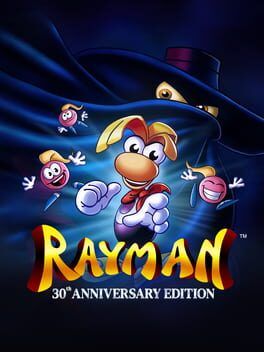
Ubisoft’s new Rayman collection celebrates a platforming classic, but soundtrack swaps, a serious save-data bug and unclear post-launch support raise big questions about how retro games are being preserved.
Rayman: 30th Anniversary Edition arrives with the kind of pitch retro fans dream about. Multiple versions of the 1995 classic, a playable SNES prototype, over 120 extra levels, and an interactive documentary that treats a mid‑90s mascot platformer like the piece of history it is. On paper, this is the definitive way to experience Rayman’s first adventure.
Once players got their hands on it, though, the conversation shifted. Instead of just celebrating how much is here, fans are debating what has been lost, what is currently broken, and whether Ubisoft is willing to fix it. The result is a release that doubles as a case study in how modern retro collections can both protect and quietly rewrite gaming history.
A celebration with asterisks
Digital Eclipse’s work hits many of the right preservation notes. Rayman: 30th Anniversary Edition collects five distinct versions of the original game across PlayStation, MS‑DOS, Atari Jaguar, Game Boy Color and Game Boy Advance, then layers in fan‑famous expansions like Rayman 60 Levels and Rayman By His Fans. The package also includes a never‑before‑playable Super Nintendo prototype and a chunky, interactive documentary that digs into concept art, interviews and production ephemera.
Framed purely as an archival effort, it is the kind of curated, context‑rich treatment players have been asking publishers to give their back catalogues. You can see design ideas evolve across platforms, compare spritework and level layouts, or drop into the prototype to get a glimpse of the Rayman that might have been.
But the closer fans look, the harder it is to call this collection definitive without caveats.
The soundtrack swap that rewrites the mood
The most immediate flashpoint is the music. Ubisoft and Digital Eclipse have confirmed that Rayman: 30th Anniversary Edition uses a newly produced, “reimagined” soundtrack across its included versions instead of the original recordings. That choice affects everything from the iconic Dream Forest theme to the bouncy tracks that defined Band Land.
On a surface level, the new music is competent and, in spots, quite good. Instrumentation sounds cleaner, arrangements are fuller, and there is clear intent to honor the tone and structure of the 1995 score. For newcomers, the updated soundtrack is unlikely to be a deal‑breaker.
For players who grew up with Rayman on PlayStation or PC, the reaction has been far more conflicted. Threads on community hubs and comment sections point to that specific early‑CD‑era texture as part of the game’s identity. Swapping tracks rather than presenting both old and new is being read as a quiet revision of history rather than an additive option.
What stings is that the overall package is otherwise preservation‑minded. The collection takes pains to show how Rayman looked, controlled and evolved across platforms, yet it stops short of giving the same respect to its soundtrack. There is no toggle to restore the original audio, no separate “classic” mode that matches period‑accurate sound, and no in‑game explanation of why that option is missing.
For preservation, that is an important line. You can still play Rayman in 2026, but you cannot easily play the original Rayman as it actually sounded unless you track down old hardware or existing digital releases. A collection that wants to be the historical record is instead becoming an alternate cut.
A save-data bug that undercuts authenticity
The soundtrack debate is at least partly philosophical. The newly discovered save‑data bug in the Jaguar and MS‑DOS modes is not. As highlighted by reports this week, those two versions currently do not save progress at all inside the Anniversary Edition wrapper.
On original hardware, both the Atari Jaguar and PC versions of Rayman supported saving your game. The fact that the collection’s emulated or simulated implementations silently fail at such a basic feature is a serious problem, especially for the audience this release is courting. Retro fans who choose specific ports usually do so precisely because they want to experience that version’s quirks and pacing as they remember it.
Right now, players who boot into the Jaguar or MS‑DOS builds inside this collection are getting something that looks authentic but is functionally compromised in a way the originals never were. Long play sessions can be wiped the moment the system is turned off, and there is no upfront warning about the issue in the collection’s menus.
As a pure nostalgia product, that is frustrating. From a preservation standpoint, it is worse. A core advertised feature of this package is the ability to explore different historical versions of Rayman. If some of those versions cannot reliably save, they are not actually preserved in a usable state.
Ubisoft’s reported stance on fixes
The tension around the bug intensified once players reached out to Ubisoft support. According to screenshots and reporting shared this week, customer service replies have stated that post‑launch support for Rayman: 30th Anniversary Edition has “ended,” implying that no further patches are planned.
Official public channels have not yet provided a clear, detailed statement about the save issue on each platform, nor a roadmap of what will be addressed. That vacuum has led fans to interpret the support response as the final word. For a brand new release celebrating a major anniversary, the idea that post‑launch support is already over has not gone down well.
For players, the expectation around a modern retro collection is simple. If a serious functional problem is discovered, especially something as fundamental as broken saving in headline modes, a fix should follow. The work of preservation does not end the day a collection ships. It extends through post‑launch patching so that the versions being preserved actually work.
If Ubisoft sticks to a stance of minimal or no further updates, it risks souring the long‑term reputation of this whole project. The collection would be frozen in a state where certain modes are known bad options, and future players would need to navigate online guides or community warnings just to avoid losing progress.
How players are reacting
The reaction around Rayman: 30th Anniversary Edition has split into two overlapping conversations.
On one side, players are genuinely impressed by what Digital Eclipse has assembled. Reviews and impressions praise the breadth of content, the inclusion of the SNES prototype, and the depth of the interactive documentary. For many, it is a thrill simply to see Rayman treated with the kind of archival care more often reserved for genre‑defining arcade hits.
On the other, long‑time fans feel like the package is undermined by avoidable decisions. The lack of original audio sits awkwardly beside the emphasis on history. The save‑data bug in two of the most interesting versions makes them hard to recommend. Ubisoft’s unclear messaging about support has increased skepticism that these issues will ever be addressed.
Community discussions increasingly frame the release as both an exciting celebration and a cautionary tale. Players are sharing workarounds, warning each other away from Jaguar and MS‑DOS modes until a patch materializes, and debating whether to buy now or wait. Others are stepping back entirely and returning to existing PC and PlayStation versions that, while less feature‑rich, are more faithful to how Rayman originally sounded and behaved.
What this means for retro collections
Rayman: 30th Anniversary Edition highlights a few expectations that are rapidly becoming non‑negotiable when it comes to retro compilations.
First, “definitive” needs to mean more than “most complete on paper.” Including multiple builds and a documentary is valuable, but it does not excuse quietly replacing core elements like music without providing access to the original assets. When a company controls a series’ history, fans expect options, not revisions.
Second, functional fidelity matters as much as visual authenticity. It is not enough for an emulated Jaguar or MS‑DOS game to look correct. Save systems, performance, and quirks need to match what players could rely on in the 90s, or at least be clearly communicated when they do not. Broken saving takes a version from preserved curiosity to unreliable novelty.
Third, post‑launch support is part of preservation. Retro collections live longer than most new releases because they are meant to stand as reference points. That longevity makes it even more important for publishers to commit to addressing serious problems, even if they are discovered weeks or months after launch.
Rayman’s latest outing delivers a lot of what fans have been hoping to see from big‑budget retro projects: multiple cuts of a classic, archival extras, lavish presentation. At the same time, the soundtrack swap and unpatched save bug show how easily those gains can be undercut when the details are not handled with the same care.
For players who value history, that does not make Rayman: 30th Anniversary Edition worthless, but it does make it conditional. It is a strong celebration of a beloved platformer that also demonstrates how fragile “definitive” really is when preservation and expectations fall even slightly out of sync.