
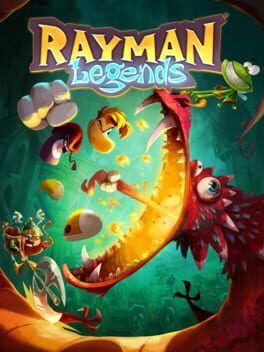

The Australian rating for Rayman 30th Anniversary Edition, reports of a Rayman Legends remake, and why Atari’s surprise involvement could shape a full modern Rayman revival across 2D and 3D platformers.
A Quiet Rating, A Loud Signal
Rayman has gone a long time without a proper headline release. Since Rayman Legends in 2013, the limbless hero has mostly survived through ports, mobile spin offs, and a memorable DLC appearance in Mario + Rabbids: Sparks of Hope. That changed when a new, unannounced title called Rayman 30th Anniversary Edition quietly appeared on the Australian Classification Board.
The listing rated the game G for “very mild violence” and, interestingly, specified only PlayStation 5 and Nintendo Switch as target platforms. Even more surprising, it cited Atari as both developer and publisher, with no direct mention of Ubisoft. Combined with previous reports that Ubisoft itself has multiple Rayman projects in the works, including a Rayman Legends remake, the stage is set for a layered revival that could reintroduce classic Rayman while setting up something new.
What The Rating Actually Tells Us
Officially, the Australian board entry confirms three things. There is a product called Rayman 30th Anniversary Edition. It is currently planned for PS5 and Switch. The work is attributed to Atari rather than Ubisoft.
Everything else is still unannounced, but the context is telling. Atari has been rediscovering its identity through retro focused projects and collaborations: collections, remasters, and preservation led work. It owns Digital Eclipse and works closely with studios such as Nightdive, both of which specialize in historical collections and high quality remasters.
Eurogamer, VGC and others highlight those connections to suggest that 30th Anniversary Edition is unlikely to be a brand new mainline Rayman. It instead fits the pattern of a celebratory re release, likely centered on the original 1995 Rayman and possibly some of its early follow ups.
The G rating with “very mild impact” violence also leans toward the earliest games, which are whimsical, surreal and relatively gentle compared to some later, more chaotic platformers.
What Could Be Inside Rayman 30th Anniversary Edition?
The safest interpretation is that this is at minimum a modern remaster of the first Rayman, with visual and quality of life improvements and support for current hardware. A stronger, but still believable, scenario is a curated collection that lays out Rayman’s early history in a cohesive package while still staying manageable for a third party partner like Atari.
A reasonable, collection style line up could look like this:
A definitive version of Rayman 1 built from the strongest existing assets, with higher resolutions, proper widescreen support and cleaned up animation. Potentially accompanied by a museum style section that digs into sketches, the original Atari Jaguar focus, and early development lore.
Selection based extras from Rayman 2 and Rayman 3 such as time trial stages, boss rushes or curated “best of” levels. These might appear either as fully ported slices or as a gallery of historically important builds and prototypes, something Digital Eclipse style projects have championed.
Bonus material celebrating UbiArt era Rayman like Origins and Legends in an archival way. Even if those games are not fully included, concept art, soundtrack samples and timeline style presentations would help frame the series’ evolution from mid 90s pixel art to painterly 2D.
Classics focused challenge modes and speedrun friendly options, like quick reset, rewind or practice tools that help modern players deal with Rayman 1’s infamous difficulty spikes without completely rewriting the game.
Because no content list is official yet, all of this sits in the realm of likely design directions rather than confirmed features, but they align well with the way Atari’s current partners build anniversary projects.
How Does A Rayman Legends Remake Fit In?
Separate from Atari’s anniversary work, multiple reports have pointed to Ubisoft developing a Rayman Legends remake under the codename Steambot. Insider Tom Henderson and regional press across Europe have described Ubisoft working on two Rayman efforts: Iceman, believed to be this 30th Anniversary Edition, and Steambot, framed as a full remake of the 2013 UbiArt classic.
Ubisoft has never formally announced Steambot, and the publisher has recently undergone a major internal reset that canceled several projects, including its long troubled Prince of Persia: The Sands of Time remake. That corporate turbulence called the fate of any Rayman remake into question, but later coverage still treats a Legends project as at least having existed in some stage of production.
There are two practical ways a Legends remake could now sit alongside Atari’s 30th Anniversary Edition.
One is a staggered strategy where Atari’s retro collection arrives first to reconnect lapsed fans and introduce younger players to the very beginning of Rayman. Ubisoft would then follow with a more ambitious Legends remake that sells itself as the modern play standard for Rayman and the definitive 2D experience going forward.
The other is a combined marketing arc that treats the anniversary edition as the opening chapter of a larger Rayman revival, using shared branding, cross game rewards or unified social campaigns. In this view Atari handles the museum piece, while Ubisoft delivers the showpiece.
Either way, a Legends remake makes strategic sense. Legends is already considered one of the best 2D platformers of the last decade. A careful remake can refine its visuals for 4K displays, rebuild online infrastructure for co op and challenge modes, and integrate accessibility options the original lacked. By doing so Ubisoft could put Rayman back into regular “best platformer” conversations that are currently dominated by Mario, Sonic and a growing wave of high end indie platformers.
Why Is Atari Involved With A Ubisoft Icon At All?
Seeing Atari attached as developer and publisher has raised eyebrows, but there are clear reasons this partnership works on paper.
Rayman originally shipped on the Atari Jaguar, which gives Atari a small but genuine historical foothold in the franchise’s roots. As the company has repositioned itself around legacy, curation and boutique releases, collaborating on a Rayman anniversary project lets it capitalize on that shared history without needing to own the IP outright.
For Ubisoft, working with a specialist third party solves several problems at once. The publisher recently closed studios and canceled multiple games as part of a restructuring. Internal bandwidth is tight and its big teams are largely tied to ongoing service games or giant open world projects. Outsourcing a heritage focused Rayman release lets Ubisoft keep the brand visible, test demand, and make use of Atari’s preservation focused toolchains while its own studios concentrate on higher budget new titles.
Atari, through Digital Eclipse style pipelines, can deliver documentary like features, timelines, and emulation work that would be comparatively expensive to spin up inside Ubisoft from scratch. If the anniversary edition performs well, both companies get a blueprint for future collaborative projects involving Ubisoft back catalogue.
The Australian classification also notes that the request tied to 30th Anniversary Edition originates from UI Entertainment, suggesting a broader publishing ecosystem. That points to a more complex co publishing and distribution arrangement where Ubisoft retains IP control, Atari handles development and general publishing duties, and UI supports specific markets or physical distribution.
What A Modern Rayman Revival Needs To Compete
Anniversary releases alone will not re establish Rayman as a serious competitor in today’s platformer scene. If Ubisoft genuinely wants the character to stand alongside contemporary 2D and 3D heavyweights, any new project that follows these celebratory releases will need to be designed with the current landscape in mind.
In 2D, Rayman would be reentering a space currently defined by several trends. Nintendo has repositioned Mario in Wonder and other recent entries as kinetic, surprise heavy and co op friendly, with strong readability and breezy onboarding even when levels get wild. Indie hits like Celeste, Hollow Knight, Ori and The Messenger have pushed mechanical precision, emotional storytelling and striking audiovisual identity.
Rayman already has a strong foundation here. Origins and Legends showed how the UbiArt engine can deliver fluid animation, painterly backdrops and musical setpieces that stand out immediately. A new 2D Rayman, whether entirely new or a Legends scale expansion, would need to go further with these strengths. That could mean deeper cooperative systems that build on Legends’ chaotic multiplayer while giving serious players more granular control, such as separate difficulty paths per player or opt in modifiers for speedrunners.
It would also benefit from modern progression ideas, like a flexible structure that lets players chase medals and time trials without being gatekept by every collectible, or robust assist options that smooth out notoriously sharp difficulty spikes. Accessibility toggles, control remapping and visual clarity options are no longer bonus features, they are table stakes if Rayman wants to stand beside today’s best 2D platformers.
In 3D, the opportunity and the challenge look very different. The genre has splintered into nostalgia driven throwbacks such as A Hat in Time and Yooka Laylee, high polish tentpoles like Super Mario Odyssey and smaller but inventive projects like Psychonauts 2. Rayman’s last true 3D outing, Rayman 3, arrived in a very different era.
A contemporary 3D Rayman would need to embrace what makes the character unique instead of chasing generic mascot platforming. The limbless body and elastic animations are perfect for movement systems that lean into momentum, air control and expressive traversal, mixing platforming with light physics play rather than heavy combat. The surreal Glade of Dreams setting can support wildly varied biomes and dream logic level gimmicks that stand apart from more grounded collectathons.
Narratively, Rayman has room to grow. Modern platformers have proven that sharp writing and emotional arcs can sit comfortably alongside slapstick humor. A revival would benefit from a slightly sharper tone, one that keeps the series’ whimsical nonsense but grounds it with character relationships and a stronger overall arc across worlds.
Crucially, any new Rayman should be designed with longevity in mind without falling fully into live service. Regular free challenge updates, creative seasonal time limited trials, and community speedrun features could extend its life without undermining a classic level based structure.
Where All This Could Lead
Taken together, the Australian rating, Atari’s surprisingly central role and ongoing reports of Ubisoft led projects suggest a multi step Rayman comeback.
The 30th Anniversary Edition looks poised to reintroduce the original Rayman in a way that honors its history, likely as a remaster or compact anthology that takes advantage of Atari’s growing retro focused infrastructure. Parallel work on a Rayman Legends remake, if it survives Ubisoft’s restructuring, could restore the series’ modern 2D high point with 4K ready art, refreshed multiplayer features and better online support.
Those efforts set the table for a new Rayman project that can compete in today’s 2D and 3D platformer landscape, drawing on decades of visual identity while borrowing structural lessons from the games that have defined the genre since Legends. The key will be allowing each partner to play to its strengths. Atari can champion preservation and celebration through the anniversary edition, while Ubisoft focuses its internal teams on making a new Rayman that feels as forward looking today as Origins and Legends did a decade ago.
If that balance works, Rayman’s 30th anniversary might turn out to be less about looking back and more about proving there is still space for the limbless hero at the front of the platforming pack.