
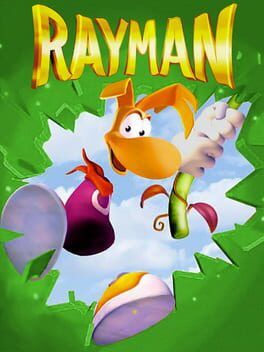

The leaked Rayman 30th Anniversary Edition rating hints at a surprising Atari–Ubisoft partnership, a tightly scoped retro release, and a broader strategy for 90s mascot comebacks.
Rayman’s 30th birthday is about to do more than make veteran platformer fans feel old. An Australian rating for Rayman 30th Anniversary Edition has quietly exposed one of the more unexpected business pairings of 2026: Atari listed as both developer and publisher on a classic Ubisoft IP.
This is not just a curiosity for fans watching for a new port. It is a snapshot of how legacy IP holders, mid‑tier publishers and platform holders are trying to extract value from 90s nostalgia while keeping risk low and relationships flexible.
What the Australian rating actually tells us
The Australian Classification Board entry for Rayman 30th Anniversary Edition does not read like a typical Ubisoft listing.
It specifies PlayStation 5 and Nintendo Switch as target platforms. There is no mention of Xbox or PC in this filing, which does not rule them out long term but does suggest that any initial rollout is focused on Sony and Nintendo’s ecosystems. That is consistent with how many retro reissues are scoped, especially when they target audiences that strongly associate the game with PS1 and Nintendo hardware.
The striking detail is the company line. Atari is named as both developer and publisher. The applicant is U&I Entertainment, a distributor that has repeatedly handled physical editions of Ubisoft titles. Ubisoft itself is not listed in the public metadata, despite Rayman still being one of its flagship historical brands.
Classification data is rarely exciting, but it is almost always accurate in three areas: platforms, content rating and the entities responsible for submission and publishing. The Rayman 30th Anniversary Edition rating therefore strongly indicates that Ubisoft has contracted Atari to handle a retro‑focused project on its behalf, with U&I coordinating physical logistics.
Why Atari on a Ubisoft mascot now?
On paper, Rayman is deeply tied to Ubisoft Montpellier and the company’s internal identity. So why is Atari suddenly attached to his 30th anniversary release?
The answer is less about creative authorship and more about portfolio strategy. Over the last few years Atari has repositioned itself from a struggling legacy brand into a specialist in retro, emulation and low‑risk nostalgia plays. It has bought classic IP, acquired retro‑focused studios and shipped compilations and remasters that live comfortably in the mid‑budget space.
Ubisoft, by contrast, has been in cost‑cutting mode. The company has undergone restructures, cancelled mid‑scale projects and is more selective about where internal teams spend time. Yet it still sits on a long list of dormant but valuable brands. In this environment, outsourcing a small, technically modest project on a legacy character to an external partner that already treats retro work as a core business makes financial sense.
Atari gains access to a well‑loved 90s mascot that fits its own brand story about the history of games. Ubisoft keeps ownership of the IP and can generate incremental revenue and goodwill without committing a full internal team. U&I Entertainment plugs into this as a familiar physical‑distribution partner that already knows how to move niche Ubisoft products at retail.
Legally and commercially, the most likely structure is a time‑limited license from Ubisoft to Atari covering specific platforms and territories, working on a single title with strict brand guidelines. This sort of narrow license is increasingly common in the retro space, letting IP owners test the waters without committing to multi‑project, multi‑year arrangements.
What is Rayman 30th Anniversary Edition likely to be?
The rating alone does not specify whether this is a straight port, emulated classic or fuller remaster. But several contextual clues point to something closer to a premium retro re‑release than a top‑to‑bottom remake.
First is scope. Atari is listed as developer and publisher, not just publisher of a Ubisoft internal build. That suggests the project sits squarely inside Atari’s current retro pipeline, which leans heavily on modern wrappers around original content: higher resolutions, display options, save features and platform‑specific quality‑of‑life layers rather than full asset overhauls.
Second is timing. The rating dropped just as Ubisoft’s latest restructuring news circulated, including the cancellation of higher‑risk projects. An elaborate remake would run counter to that mood. A polished anniversary re‑issue that can be marketed quickly on PS5 and Switch aligns far better with a company trying to de‑risk while still celebrating a key anniversary.
Third is how platform holders have been treating PS1‑era titles. Sony’s PS1 classic line on PS5 and Nintendo’s own treatment of 90s software on Switch both normalize modestly updated, low‑price reissues that rely primarily on nostalgia and convenience. A 30th Anniversary label fits neatly into that expectation.
All of this points to Rayman 30th Anniversary Edition being, functionally, the original 1995 Rayman presented through a modern wrapper with updated UX and system‑level features. Think resolution bumps, possibly widescreen support where viable, trophies or achievements, save states and rewind rather than fully redrawn art or re‑engineered levels.
A collection is less likely, at least out of the gate. The rating and the surrounding reporting consistently emphasize the original PS1 classic. Multi‑game packages typically require broader licensing work and significantly raise scope, which runs against the grain of how this project is being handled.
The Ubisoft–Atari relationship in context
For longtime industry watchers, seeing Atari and Rayman on the same line has a certain symmetry. The original Rayman shipped on Atari Jaguar in the 90s and at one point the character was discussed as a potential mascot that could help the platform compete.
The modern Atari involved in Rayman 30th Anniversary Edition is the successor that has spent the last few years rebuilding itself around retro compilations, boutique hardware and selective third‑party publishing. Its business now revolves around leveraging classic brands, both its own and those it can license.
Ubisoft has historically kept Rayman development internal and Rayman publishing in‑house, using external partners primarily for distribution and co‑marketing. Over the last decade, however, the company has experimented with letting smaller external teams or partners handle legacy‑skewed content while internal studios focus on the next flagship releases.
That is consistent with broader industry practice. Capcom has relied on port specialists and external studios for some of its classic reissues. Square Enix has offloaded smaller remasters to partner teams. SEGA has trusted external developers with collections and retro‑themed projects. Ubisoft handing a self‑contained retro anniversary edition to Atari fits smoothly into that pattern of segmenting work by risk profile and expected return.
The key point is that this move does not signal any loss of control over Rayman as an IP. It instead suggests Ubisoft is more open to tightly scoped, partner‑led projects that can generate revenue and keep a brand visible while core teams pursue more ambitious initiatives.
Where this leaves future Rayman projects
The Australian rating arrived amid chatter that Ubisoft has multiple Rayman efforts in motion. Reporting around the leak has consistently referenced two strands: the 30th Anniversary Edition itself and a separate project widely described as a Rayman Legends remake or remaster.
If that split is accurate, Rayman 30th Anniversary Edition looks like the low‑risk, short‑cycle part of the strategy. It reintroduces the original game to current hardware and tests demand in a format that is cheap to produce and easy to market. A modernized Legends, likely handled closer to Ubisoft’s core teams or trusted tech partners on its UbiArt‑style engine, would be the more substantive follow‑up for modern audiences.
This two‑track approach mirrors what other publishers have done with their mascots. One project targets archival value and fan goodwill through a respectful re‑issue of the first appearance. Another aims to make at least one of the more contemporary entries feel current again, whether through enhanced ports or more ambitious remasters.
If both Rayman projects land well, Ubisoft gains leverage when deciding what comes next. Strong performance on a low‑budget anniversary edition and a mid‑budget modern remaster can support a business case for a new mainline entry. Weak or indifferent performance, conversely, provides data that the audience for large‑scale Rayman projects remains niche at current cost levels.
Part of a wider 90s mascot revival
Rayman 30th Anniversary Edition also fits into a very clear commercial pattern. The last several years have seen platform holders and publishers revisit their 90s mascot libraries in structured ways rather than as one‑off nostalgia plays.
Crash Bandicoot returned through the N. Sane Trilogy before receiving a brand‑new Crash 4. Spyro resurfaced via the Reignited Trilogy. Sonic has oscillated between retro‑styled projects and full new games. Even smaller names from that era have benefited from anniversary‑branded reissues and collections.
The business logic is straightforward. Nostalgic platformer fans are now in their 30s and 40s, with disposable income and a willingness to rebuy familiar experiences for modern hardware. At the same time, modern engines, emulation layers and platform storefronts make it relatively inexpensive to bring PS1‑era content forward compared with building new AAA platformers from scratch.
Rayman sits comfortably inside this trend. The character has cross‑platform history, strong brand recognition and a back catalog that still plays well in short sessions. A 30th Anniversary Edition on PS5 and Switch gives Ubisoft and Atari a way to participate in that revival without the financial exposure of a ground‑up new project.
From Sony and Nintendo’s perspective, having a recognizable 90s mascot appear as a downloadable classic or low‑price retail release also strengthens their own value propositions. It fills out digital libraries, enriches subscription offerings if the title is ever folded into them and taps into the nostalgia that often drives hardware and peripheral purchases.
What to watch for next
Until Ubisoft or Atari formally announce Rayman 30th Anniversary Edition, the public data is limited to the rating, platform details and the business names attached. Even so, those pieces sketch a fairly clear picture of what is happening behind the scenes.
Expect a relatively near‑term reveal framed around Rayman’s 30th birthday and the legacy of the original game. Expect the feature set to lean toward quality‑of‑life upgrades and light visual modernization rather than radical changes. Most importantly from an industry perspective, expect this to act as a test of whether outsourced, partner‑driven anniversary projects can keep Ubisoft’s classic brands active while the company continues to rearrange its internal slate.
If this experiment lands, it will not just be Rayman fans who benefit. It will be another data point that the business of 90s mascot revivals is far from over, and that even unlikely pairings like Atari on a Ubisoft icon can make commercial sense when the right anniversary comes around.