
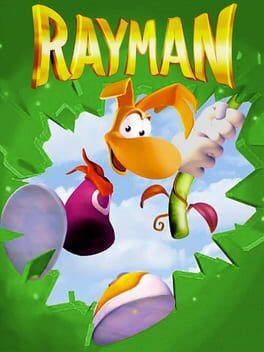

Michel Ancel has quietly confirmed a Rayman 1 HD "kind of remake" lining up with Rayman 30th Anniversary Edition leaks. Here is what we know so far and the modern design, accessibility, and QoL tweaks that could help this faithful remake land with today’s platformer audience.
What Michel Ancel Has Actually Revealed
In a new feature in Retro Gamer, Rayman creator Michel Ancel finally acknowledged what fans have been piecing together from leaks and ratings boards. The original 1995 Rayman is coming back in what he calls “a kind of remake,” an HD project that sits somewhere between a straight rerelease and a full ground‑up reimagining.
Ancel says he does not remember the exact schedule, but he outlines the core pitch clearly enough:
The remake will be in HD, updating the visuals while preserving the look and feel of the original 2D artwork.
Ubisoft is adding “a few more checkpoints and things like that” to make the game “a bit less frustrating,” especially for less experienced players.
He still considers Rayman 1 “a very nice game” with plenty of content, even if its pacing and pixel‑precise platforming reflect a very different era.
Crucially, Ancel stresses that it is not a simple remaster. The goal seems to be to keep the original level layouts and mechanics intact, but smooth out the cadence of play and reduce some of the harshness that defined mid‑90s platformers.
How It Ties Into The 30th Anniversary Edition Leaks
Ancel’s comments arrive just as a wave of leaks around Rayman’s 30th anniversary have hit ratings boards and news sites.
The clearest link is the Rayman 30th Anniversary Edition listing spotted on the Australian Classification Board and other databases. Though Ubisoft still has not formally announced anything, the classification points to a new release targeted at PlayStation 5 and Nintendo Switch, with Atari unexpectedly listed as developer and publisher in some reports. Multiple outlets and insiders have framed that Anniversary Edition as an HD Rayman 1 project meant to anchor the series’ 30th birthday celebrations.
In parallel, Ubisoft has repeatedly talked about “celebrating Rayman’s 30th anniversary” and having Ubisoft Montpellier and Ubisoft Milan “work on the future of Rayman.” Various reports describe a Rayman project in an exploration phase, with Ancel consulted despite his 2020 retirement from the industry. Fans quickly joined the dots between those teases and the ratings leaks.
Ancel’s Retro Gamer interview essentially locks those pieces together. His offhand “I think there’s a kind of remake planned” lines up neatly with a mysterious 30th Anniversary Edition that focuses on the 1995 side‑scrolling original instead of the more recent Origins or Legends. What had been a ratings slip is now backed by the series creator, even if Ubisoft’s marketing machine is still pretending it does not exist.
The lingering question is scope. Some coverage and fan discussion frame this as an HD rerelease with tweaks. Others push the word “remake” harder and expect more dramatic changes. Ancel’s own wording suggests something in between: a visually refreshed, slightly softened version of Rayman 1 that does not tear down its fundamental structure.
Respecting A Brutal Classic Without Freezing It In Amber
To understand what a “kind of remake” needs to do, you have to remember what Rayman 1 actually is in practice. It is a gorgeous, hand‑drawn, side‑scrolling platformer with large character sprites, a slower pace and a difficulty curve that turns downright cruel in later worlds. It was designed for a time when rental stores and replay value drove design, and when long, punishing levels were considered a selling point rather than a barrier.
That identity matters. Even Ancel highlights how the oversized character sprite makes the game feel more deliberate and how its pixel‑precise jumps are part of the appeal. A modern version that simply sandpapers away every edge would risk losing exactly what makes Rayman 1 stand out next to smoother modern platformers.
The trick is to offer that classic experience while also acknowledging that player expectations have changed dramatically. Today’s audience spans nostalgic adults and younger players meeting Rayman for the first time. Difficulty spikes that once felt normal now look like design flaws. Remakes live or die on how gracefully they let players choose their own level of friction.
Smart Modern Design Tweaks That Still Feel Faithful
The first and most obvious tweak is the one Ancel mentions directly: checkpoints. Original Rayman levels can run long, with sparse save points and instant‑death hazards that send you back far enough to turn excitement into repetition. Strategic extra checkpoints would preserve the level layouts but break the punishment loops.
A modern Rayman 1 could go further with a layered approach to difficulty. One option is a Classic Mode that replicates the original’s checkpoint spacing, life system and secrets, and a Modern Mode that quietly adds mid‑level saves, more generous health and perhaps a few extra platforms or safety nets in the worst difficulty spikes. The key would be to keep physics, enemy behavior and level geometry identical between modes so it still feels like Rayman 1 to anyone familiar with the original.
Another subtle but powerful change would be to reduce empty downtime without speeding up the entire game. Slightly faster camera panning, crisper input buffering and cleaner jump arcs could make sequences feel more responsive, even if Rayman’s basic move‑set remains the same. Optional timing assists, like clearer telegraphs on moving platforms or parallax elements that better communicate depth and distance, could help new players read the screen more quickly.
Combat and boss design also offer room for light modernization. Clearer hit flashes, more readable wind‑up animations and consistent invincibility windows could make bosses feel less like pattern memorization and more like readable duels, without altering their attack cycles or arenas.
Accessibility Features That Could Redefine The Remake
If Rayman 1’s remake wants to be more than a nostalgia product, it needs to take accessibility seriously in a way that was not conceivable on 90s hardware.
Configurable difficulty is the baseline. That means toggles for damage taken, optional fall damage forgiveness in specific sections and adjustable game speed for players who struggle with tighter timing. It also means an assist mode where players can add temporary platforms or slow down certain hazards, similar to assist features seen in modern platformers.
Control remapping and input options should be comprehensive. Every action ought to be mappable, with support for multiple presets tailored to different physical needs. Sensitivity sliders for analog sticks and options for digital controls that mimic the original game’s feel would let purists and accessibility‑minded players both get what they want.
Visual accessibility is another pillar. Colorblind‑friendly enemy telegraphs, high‑contrast outlines around Rayman and key hazards, and an optional background dimming setting can all make busy 2D stages easier to parse. Subtitles and visual cues for audio‑driven mechanics should be standard, along with volume sliders for music, effects and ambient sounds.
Cognitive accessibility can be addressed with clear, skippable tutorials, an in‑game glossary of mechanics and an optional hint system that gently points toward exits or hidden cages without spoiling everything by default. A robust pause‑anywhere feature and the ability to save and resume freely would make the remake friendlier to players with limited or unpredictable play sessions.
These tools do not have to touch the core feel of Rayman 1 for those who want it unchanged. Used properly, they expand the audience instead of diluting the design.
Quality Of Life That Today’s Platformer Players Expect
Beyond difficulty and accessibility, a 2026 platformer has to meet baseline expectations for comfort and convenience.
A level select hub with clear completion indicators for cages, lives and secrets would transform replaying Rayman into a satisfying cleanup process instead of a confusing trawl through passwords and half‑remembered routes. Layered progression, such as optional time trials and challenge variants unlocked after the first clear, could provide reasons to revisit worlds without rewriting them.
Quick reloads are also vital. Instant restarts from the last checkpoint, minimal load times between attempts and generous auto‑saving would keep players in the flow rather than staring at loading screens after every mistake.
Cosmetic rewards could give the remake a gentle modern hook without undermining the 1995 art direction. Alternate outfits inspired by later Rayman games, filter options that mimic CRT displays or handheld ports, and a museum gallery of concept art and behind‑the‑scenes materials would let players celebrate the character’s history in‑game.
Online features could be tasteful and light. Global leaderboards for level completion times, optional weekly challenge rotations and ghost runs that show other players’ paths would give the remake a social life and a sense of ongoing discovery, while keeping the core product self‑contained and offline‑friendly.
Finally, a thoughtful onboarding flow could welcome both lapsed fans and complete newcomers. Summaries of the original game’s history, explainers on what has changed and quick tips on how to handle notorious stages would ease players into the experience while celebrating its legacy.
The Opportunity In Front Of Ubisoft
Ubisoft’s broader strategy has pivoted heavily toward open world and live service projects, and that has left Rayman as something of an outlier. The publisher has experimented with him in crossovers and spin‑offs, but a focused, high quality Rayman 1 remake could quietly reassert the series as a premium 2D platformer brand.
Ancel’s description of a modest HD remake with smarter checkpoints might sound conservative on paper, but it speaks to a careful respect for the original game. If Ubisoft pairs that reverence with serious accessibility work and modern quality of life refinements, Rayman 1’s 30th anniversary celebration could be more than a nostalgia tour. It could be a proof of concept that there is still space, and appetite, for tightly crafted, character‑driven platformers in a market obsessed with scale.
The limbless hero’s comeback is not official until Ubisoft says the words on a stage or in a trailer. Yet between the leaks, the Anniversary Edition listings and Ancel’s own offhand confirmation, the outlines of this “kind of remake” are already visible. What remains is for Ubisoft to decide how ambitious it wants this return to be and whether it is willing to let Rayman be a standard bearer for how to treat a classic with care in the modern era.