
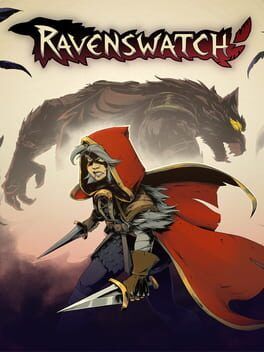

Ravenswatch is arriving natively on Nintendo Switch 2 with a free Songs of Thieves update in May, bringing sharper visuals, steadier performance, and a new wave of co-op roguelike content tailored for handheld play.
Ravenswatch is getting a fresh shot of life on Nintendo’s next handheld. Nacon and Passtech Games have confirmed that a native Nintendo Switch 2 version is coming this fall, arriving just after the free Songs of Thieves update lands on all platforms on May 27. For a game built around short, repeatable runs and tight four-player co-op, this move to more powerful handheld hardware feels like the natural evolution of what Ravenswatch is trying to be.
A native Switch 2 version that fixes the first port’s biggest problems
Ravenswatch already exists on the original Switch, but that version has always been defined by compromise. Lower resolution, aggressive dynamic scaling, soft image quality and performance dips during busy fights all undercut a game that shines when combat is fast and readable.
A native Switch 2 build should address those pain points directly. While Nacon has not yet shared hard numbers, the jump in power from Nintendo’s new hardware makes some expectations reasonable based on how the game runs on current-gen consoles and PC:
On the visual side, players can look forward to a higher baseline resolution in handheld and docked modes, cleaner anti-aliasing on Ravenswatch’s bold cel-shaded art, and more stable lighting and particle effects when the screen fills with enemies and ultimates. Environments like the twisted fairy-tale forests of Reverie or the sun-baked Arabian Nights map should retain far more detail on the Switch 2 screen than they did on the original system.
Performance is just as important for a real-time roguelike, especially in co-op. The original Switch release can struggle when four players are throwing abilities into dense packs of enemies, but the Switch 2 target is clearly a much steadier framerate that is closer to what PS5 and Xbox Series X players already enjoy. That consistency matters for heroes such as Scarlet, whose damage windows depend on precise dashes and combos, or Sun Wukong, who juggles clones and mobility skills. A smoother frame rate equals fairer deaths and more satisfying escapes.
The added memory ceiling should also help with loading, matchmaking and online stability. Faster transitions between hubs, maps and bosses make back-to-back runs more attractive for pick-up sessions, particularly in handheld mode where players may only have thirty minutes on the go.
Songs of Thieves: a free update built for replayability
The Switch 2 version will not be arriving alone. The Songs of Thieves update hits every platform in May and brings a substantial layer of new systems and content that deepen each run.
Passtech is introducing a new Thieves faction that can show up across the existing maps. Bandits, agile assassins and ranged marksmen shuffle the usual enemy compositions and force players to rethink how they position and coordinate. They slot naturally into Ravenswatch’s quick, high-stakes arenas, where one misread attack pattern can drain your precious health bar before the next day-night cycle.
New Thieves’ Stashes rooms add more flavor to the map rotation. Combat rooms filled with traps reward aggressive play, treasure rooms and cursed rooms offer bigger risks and payouts, and mirror rooms let players duplicate magical objects to power up specific builds. Every one of these room types pushes co-op groups to communicate, negotiate who gets what loot and decide how greedy they want to be before the next boss.
The new Melodies system layers long-term buffs onto runs using magical harps scattered through Reverie. Unlocking and combining melodies provides team-wide bonuses that can change how a party approaches its three days and three nights of preparation before each Nightmare fight. Groups that enjoy theorycrafting will have new reasons to experiment with combinations across the roster of fairy-tale heroes.
Quality-of-life tweaks round out the patch. A long-requested multiplayer pause option finally arrives, allowing groups to take a breather without sacrificing a run to a phone call or a knock at the door. Interface improvements and balance passes are timed alongside the Songs of Thieves release as Passtech continues tuning difficulty across the four core Nightmare levels and the custom modifiers.
For Switch 2 owners, coming in after this update means the handheld version will launch into a more mature and varied meta than day-one Ravenswatch ever had.
Why co-op roguelikes keep thriving on handhelds
Roguelike co-op games have quietly become one of the most reliable fits for handheld platforms, and Ravenswatch is a near-perfect example of why.
Runs are contained and time-boxed. Ravenswatch structures each attempt around a three-day cycle before the boss encounter, which naturally cuts sessions into digestible slices. On a handheld, this matches the reality of commuting, lunch breaks or late-night couch sessions where you may only have time for a single attempt. Even a failed run can feel satisfying when it advances your understanding of a hero or a map.
The moment-to-moment action is readable on a small screen. Passtech’s strong silhouettes and stylized effects mean that Scarlet’s spinning strikes, the Snow Queen’s icy walls or Aladdin’s mobility bursts all stand out clearly in handheld mode. That clarity is crucial when you are sharing a small display locally or playing in busier environments.
Co-op itself benefits from the flexibility of portable play. Online co-op lets friends drop in from anywhere, but handhelds also open up spontaneous local sessions with each player on their own device. Ravenswatch’s focus on up to four-player online co-op fits perfectly with that: a group of friends can each boot up their Switch 2, sync in the lobby and burn through a run together, even if someone has to step out early. With the multiplayer pause and faster loading, the friction around these short sessions falls away.
The genre’s randomness also shines in handheld form. Because each run reshuffles items, talents and events, it remains tempting to launch “just one more attempt” before bed or at the end of a commute. Ravenswatch already provides over 200 talents and 50 magical items, and Songs of Thieves further increases the pool of events and rewards. That density of variation is easier to appreciate when the barrier to starting a run is as low as flipping open a Switch 2.
Finally, handheld hardware has matured to the point where ambitious co-op roguelikes no longer have to bend as many design corners. Hades, Risk of Rain 2 and Dead Cells helped prove that this style of game belongs on portable systems. Ravenswatch on Switch 2 is positioned to follow in their footsteps, offering near-parity with other console versions while leaning into the strengths of playing anywhere.
What Switch 2 owners should expect on day one
Taken together, the native Switch 2 launch and Songs of Thieves update set Ravenswatch up as a much more compelling package for Nintendo’s next system.
Players can reasonably expect a sharper and more stable experience than the original Switch edition, with higher resolution, cleaner presentation and more consistent performance in single-player and four-player co-op alike. The May update ensures that new heroes drop into a richer pool of enemies, rooms, events and progression hooks, while the multiplayer pause and other quality-of-life upgrades align the game with the realities of handheld play.
For anyone curious about co-op roguelikes or looking for a new multiplayer staple on their upcoming Switch 2, Ravenswatch is arriving at exactly the right time. It already had the fundamentals of tight combat and strong buildcraft. On more capable handheld hardware, those strengths finally have a chance to stand out without compromise.