
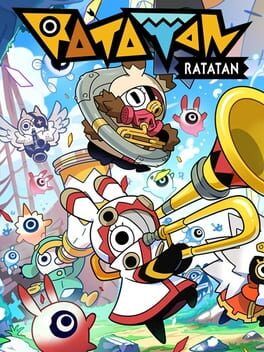

Ratatan’s first Famitsu score is a clean 32/40, with all four reviewers giving it an 8. Here is what that early Japanese review signal does, and does not, tell players watching the rhythm action successor.
Image: IGDB
Store links: Ratatan on Steam
Ratatan opens with a clean 32/40 in Famitsu
Ratatan has its first recorded Famitsu review score, and the early Japanese signal is steady rather than explosive: 8/8/8/8, for a total of 32 out of 40. Nintendo Everything reported the score as part of Famitsu’s review lineup for the week of October 11, 2026, listing Ratatan alongside Ace Combat 8: Winges of Theve, Castlevania: Belmont’s Curse, Akiba Lost, Control Resonant, and Thanks Light.
For players tracking the Ratatan game as a rhythm action spiritual successor, that 32/40 matters because of its shape as much as its total. Famitsu’s panel did not split sharply on it. Each of the four critics landed on the same number, which points to a consistent response inside that review group. It is an encouraging first Ratatan review signal, but it is also a narrow one: a single Japanese magazine score, reported ahead of any broader critical consensus in the provided source material.
That makes the headline simple and the interpretation more delicate. The Ratatan Famitsu review score suggests a game that impressed all four Famitsu reviewers to a similar degree. It does not yet tell us how the game holds up across longer-term play, different skill levels, platform performance, localization, accessibility, or the expectations of players arriving from the rhythm action lineage Ratatan is associated with.
How Famitsu’s scoring format frames Ratatan’s result
Famitsu’s review format is unusually visible in the way it turns individual judgments into a combined number. According to the Famitsu scores overview cited in the source material, the Japanese magazine has four critics each assign a score from 0 to 10, with the four numbers added together for a maximum of 40. GoNintendo, in its explanation of another Famitsu score week, similarly notes that each Famitsu review is handled by four critics whose 1-to-10 scores are then added.
That format is important here because Ratatan did not reach 32/40 through a lopsided path. It was not a 10 from one critic offset by a 6 from another. The reported result was four 8s. In practical reader terms, a uniform 8/8/8/8 is a different kind of early praise than a jagged score with one major dissenter. It implies that, within Famitsu’s reviewing panel, Ratatan came across as solidly successful to every assigned critic.
The ceiling also keeps the number in perspective. Famitsu’s system allows for 40/40, and the Famitsu scores overview says that, as of 2024, thirty games had received perfect scores. Ratatan’s 32 is therefore a positive result, not a historic one. It sits in the zone where a game can look confidently recommended by that panel without being framed as a landmark by the magazine’s own scoring structure.
The October 11 lineup puts Ratatan in a competitive middle tier
Nintendo Everything’s October 11, 2026 Famitsu list gives useful context because Ratatan was not reviewed in isolation. Ace Combat 8: Winges of Theve led the reported week with 9/9/9/9, totaling 36/40. Castlevania: Belmont’s Curse received 8/8/8/8, the same 32/40 pattern as Ratatan. Akiba Lost also landed at 8/8/8/8. Control Resonant came in at 8/9/7/8, which also totals 32/40 despite more variation between reviewers. Thanks Light received 7/8/7/8, totaling 30/40.
Seen against that field, Ratatan’s first score is neither buried nor dominant. It shares the week’s broad 32/40 band with multiple titles, while Ace Combat 8 stands above the group. The useful distinction for Ratatan is the lack of disagreement. Control Resonant reached the same total through a 9 and a 7, suggesting a wider spread of reactions among the four critics. Ratatan, Castlevania: Belmont’s Curse, and Akiba Lost all reached 32 by unanimous 8s.
For a smaller, craft-driven rhythm action project, that consistency is a meaningful early data point. Rhythm-first games often live or die on feel, repetition, readability, and difficulty curve. The supplied Famitsu listing does not tell us which of those elements the reviewers praised or criticized, so any claim about specific mechanics would go beyond the source. What the numbers do show is that four Famitsu critics all placed Ratatan in the same favorable bracket.
A first score is a signal, not a full Ratatan review picture
The phrase “first score” in Nintendo Everything’s headline is doing a lot of work. It tells readers that this is an early public review marker for Ratatan, not a settled critical landscape. That makes it useful for people deciding whether to keep the game on their radar, but risky as the sole basis for a purchase decision.
Famitsu scores have long been watched because they offer an early Japanese critical snapshot, especially for games with Japanese development roots, Japanese releases, or strong interest among Japanese players. Still, the source material provided here contains only the score list and the scoring method. It does not include Famitsu’s written review text, individual reviewer comments, platform tested, performance notes, pricing, or release-state details. Those missing pieces matter for a rhythm action game, where timing windows, input latency, visual clarity, and content pacing can make a large difference to how the game feels in players’ hands.
So the cleanest reading is this: the first Ratatan Famitsu review score is positive and consistent, but it should be treated as an early indicator rather than a verdict on every version or every player’s likely experience. Players who already care about Ratatan have a reason to feel reassured. Players who need details on difficulty, content volume, performance, or platform-specific behavior should wait for reviews that address those points directly.
What the score suggests for rhythm action fans watching Ratatan
Ratatan’s appeal, for many prospective players, is tied to its identity as a rhythm action spiritual successor. That raises a different set of expectations than a conventional action score might. Fans in this space tend to listen for the game beneath the game: whether commands feel sharp, whether stages reward mastery, whether the challenge grows without turning muddy, and whether repetition becomes hypnotic rather than tiring.
The Famitsu score cannot answer those craft questions on its own. The provided listing gives numbers, not prose. But four 8s do suggest that Famitsu’s reviewers found enough quality and cohesion for a shared positive judgment. That matters for a project whose audience is likely to be sensitive to small design failures. In rhythm action, a game can have charm and still stumble if its timing feedback feels soft. It can have style and still frustrate if difficulty spikes do not teach the player. A score line of 8/8/8/8 does not prove Ratatan clears every hurdle, but it does indicate that Famitsu’s panel did not register a major divide over the experience.
For discovery-minded indie players, that makes Ratatan worth continued attention rather than automatic purchase. The best next step is to pair this Famitsu result with future reviews that describe feel, structure, accessibility, and replay value. A 32/40 opens the door. The hands-on details will decide who should walk through it.
Practical guidance before treating 32/40 as your buying cue
If you searched for “Ratatan Famitsu review score” or “Ratatan review” hoping for a simple answer, the careful answer is: good first sign, incomplete evidence. Famitsu’s October 11, 2026 score list gives Ratatan a sturdy 32/40, and the four identical 8s are more reassuring than a split panel with the same total. It places Ratatan in the same reported score tier as Castlevania: Belmont’s Curse and Akiba Lost for that week, below the 36/40 awarded to Ace Combat 8: Winges of Theve.
What it does not provide is equally important. The cited sources do not confirm a price, list platforms for Ratatan in this context, identify performance targets, explain content length, or quote reviewer criticisms. They also do not supply the text behind Famitsu’s score. Anyone deciding whether to buy on day one should keep those gaps in mind.
For now, the fair takeaway from the Famitsu scores October 2026 listing is that Ratatan has made a strong, stable first impression with one major Japanese review outlet. That is the kind of early score that keeps a rhythm action game in the conversation, especially for players hungry for compact, timing-driven design with personality. It is not enough to settle the full Ratatan review conversation, but it is enough to make the next wave of coverage worth watching closely.