

Rasen and Queen’s Domain are drawing Dark Souls comparisons for very different reasons: one tests PvP-first arena combat with rollback netcode, while the other revives old-school first-person RPG exploration.
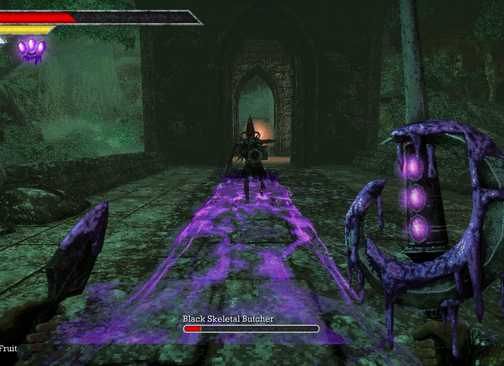
Image: screenrant.com
Two Dark Souls-inspired indies are chasing different instincts
The most concrete split in the current Soulslike conversation is also the most useful one for players: Rasen is available now in early access on Steam, with a demo also available according to Rock Paper Shotgun, while Queen’s Domain has already had a full October 30 launch and is pulling strong player reception across storefront chatter and review coverage. Both are being discussed through the language of Dark Souls, but they are not chasing the same memory of FromSoftware’s work.
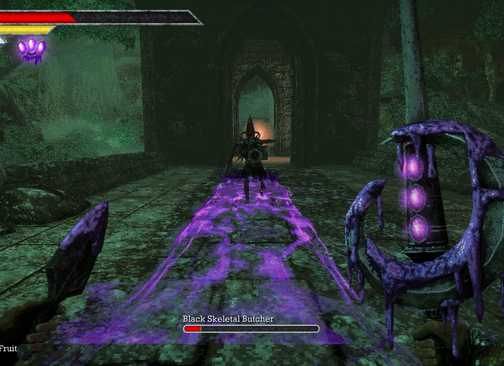
That tension is the story. Rasen, as described by Rock Paper Shotgun, takes the fear and fascination of Dark Souls PvP and builds around it, offering duels, clashes, deathmatches and support for matches with up to eight people. Queen’s Domain, by contrast, is repeatedly framed by GameRant, GameWatcher, Eurogamer and Screen Rant as a retro first-person fantasy RPG that owes as much to King’s Field as it does to later Souls games.
For readers searching for new Soulslike games, or trying to separate a playable curiosity from a full RPG commitment, the comparison is unusually clean. One game asks whether Souls combat can survive as a competitive arena format with fighting-game netcode expectations. The other asks whether the slow, secret-dense dungeon and island design that predates Dark Souls can feel urgent again in 2026.
Rasen early access is selling the duel before the pilgrimage
Rasen’s hook is immediate because it narrows the Souls formula to conflict. Rock Paper Shotgun described it as essentially the PvP component of Dark Souls, while noting that calling it straight Dark Souls combat would be unfair. The outlet’s description points to a blades-only style closer in spirit to Sekiro, with weapons ranging from swords to scythes, halberds and other large or small blades.
That changes the expected progression fantasy. Traditional Souls-inspired RPGs usually teach mastery through a long route: scrounged gear, hostile geography, shortcuts, ambushes, boss walls and small statistical decisions that become personal identity over dozens of hours. Rasen appears to front-load the question of mastery into repeated combat scenarios. Rock Paper Shotgun cites atmospheric duels, clashes and deathmatches, plus PvE against computer-controlled enemies for players who do not want to fight other people.
The buildcraft implications, based only on the reported material, are still unclear. The source text confirms a variety of blade types and describes flashier slashing effects that appear to buff moves, but it does not confirm the shape of character stats, upgrade paths, loot rarity or long-term progression. That is an important distinction for anyone approaching Rasen as a Dark Souls inspired RPG rather than as a competitive action game. What players can try now is the combat proposition, not a confirmed sprawling RPG structure.
Rollback netcode is Rasen’s real statement of intent
The most technically interesting confirmed detail around Rasen is not that it resembles Souls PvP. It is that Rock Paper Shotgun reports the game has rollback netcode, something the outlet calls unusual for a 3D arena fighter. In fighting games, rollback is used to predict inputs and reduce the feeling of delay during online play. Rock Paper Shotgun also notes that this is harder in a 3D environment because movement presents many more possibilities than in a traditional 2D fighter.
That gives Rasen a sharper identity than a simple Dark Souls arena pitch. If the netcode performs well, and that remains an expectation rather than a confirmed outcome from the supplied reporting, the game could appeal to the player who treats spacing, timing, weapon commitment and whiff punishment as the core of the Souls experience. It could also expose a different weakness. Arena PvP lives or dies by consistency, matchmaking health, readable animation language and the gap between expert and casual players.
The early access label matters here. Rasen is playable now, and Rock Paper Shotgun says players can either try a demo or buy it on Steam, but early access also signals that balance, onboarding and the shape of the community may still move. For cautious players, the demo is the practical route. For players already comfortable labbing movement and accepting rough edges, the Rasen early access build is the one offering the more experimental branch of the Soulslike label.
Queen’s Domain follows the King’s Field route through Dark Souls memory
Queen’s Domain is getting buzz for almost the opposite reason. Its appeal, as described across GameWatcher, GameRant, Screen Rant and Eurogamer, is rooted in exploration, atmosphere and old-school first-person RPG structure. GameRant reports that Queen’s Domain was developed by Freshly Baked Games and published by Future Friends Games, and that it launched on October 30 for Steam, Xbox Series X/S, PlayStation 5 and Nintendo Switch 2. Screen Rant likewise identifies it as a first-person fantasy action RPG from Freshly Baked Games LLC and Future Friends Games.
The Dark Souls comparison runs backward through FromSoftware history. GameWatcher says Queen’s Domain draws heavily from King’s Field and early first-person RPGs, while Eurogamer calls it an explicit homage to King’s Field, the dormant FromSoftware series that preceded Demon’s Souls and Dark Souls. That matters because King’s Field influence points to a different kind of difficulty: reading space, remembering landmarks, tolerating limited hand-holding and piecing together a world through navigation.
The reported setup reinforces that design lineage. Eurogamer describes Prince Beriik washing ashore on the Isle of Neasied after an expedition ship is destroyed, searching for his father, King Gius Abraon, while Queen Siraatsu’s army of the damned stirs. GameWatcher describes the same broad premise as a prince searching for his missing king and father on an interconnected island. Screen Rant adds that players uncover sinister secrets across the Isle of Neasied, encounter more than 100 enemies, minibosses and bosses, and can find over 50 melee weapons alongside 20 types of secondary throwing weapons.
For my RPG brain, those details point less to a reflex test and more to a completion structure. Weapons, hidden routes, island geography, optional discoveries and multiple endings all matter if you are the player who wants to exhaust a map rather than simply beat a boss. GameWatcher does note reservations around obscure collectibles and the difficulty of discovering everything required for additional endings, so the same mystery driving Queen’s Domain’s praise may also be where completionists feel the friction.
The reception gap is real, but it is not the same kind of evidence
Queen’s Domain currently has the stronger reception story because the sources cite player and critic response after launch. GameWatcher reported that, as of November 3, Steam showed an Overwhelmingly Positive rating with around 95% of more than 1,500 user reviews recommending it. GameRant similarly reported a 95% Overwhelmingly Positive Steam user rating. Screen Rant reported 96% positive English-language Steam reviews. Those numbers differ slightly by outlet and timing, but they point in the same direction: early Steam reception has been unusually strong.
Critic response cited in the supplied sources is also positive. GameWatcher reports that RPG Site awarded Queen’s Domain 9/10, praising exploration, visual identity and hidden content, while The Wand Report also gave it 9/10 and described it as a throwback that feels refreshing rather than purely imitative. Eurogamer’s piece, written from about five hours of play, says Queen’s Domain had already become one of the writer’s favorite games of the year, while focusing on its mood, compact but labyrinthine island and distinctive retro presentation.
Rasen’s buzz, by comparison, is earlier and more speculative. Rock Paper Shotgun’s coverage is based on its early access launch, demo availability, trailer impressions and the notable presence of rollback netcode. That is a meaningful signal for players tracking best new Soulslikes 2026, but it is not equivalent to a post-launch review consensus. Queen’s Domain has a user-review wave. Rasen has a playable pitch with a technical promise players can test.
How to choose between Rasen and Queen’s Domain right now
If you want something to sample with minimal commitment, Rasen is the easier recommendation to investigate first because Rock Paper Shotgun reports that a demo is available. The pitch is direct: blade combat, PvP focus, optional PvE against computer-controlled enemies and multiplayer matches that can reach up to eight participants. The unanswered questions are also direct. The supplied sources do not establish price, final release timing, long-term progression depth, performance or how stable rollback feels under real player load.
If you want a complete Dark Souls inspired RPG to settle into, Queen’s Domain has the clearer offering. The sources describe a full launch across Steam, Xbox Series X/S, PlayStation 5 and Nintendo Switch 2, with an interconnected island, stamina-based action combat, special attacks, throwing weapons, leveling, stat improvement and a large pool of discoverable melee weapons. GameRant also reports that the Holy Sword Endu lets players fly across gaps and reach previously inaccessible areas, which suggests ability-gated exploration layered into the island design.
The Dark Souls label should not be the deciding factor by itself. For Rasen, it points toward stamina, weapon commitment and the psychology of dueling another human being. For Queen’s Domain, it points toward danger, attrition, cryptic world design and the older FromSoftware inheritance of King’s Field. These are different pleasures, and confusing them is how players end up disappointed by a game that may be doing exactly what it set out to do.
The Soulslike label is splitting into systems, not vibes
The useful takeaway from Rasen and Queen’s Domain is that Soulslike has become a systems argument. Rasen is testing whether the duel can be isolated, accelerated and supported by online technology borrowed from fighting games. Queen’s Domain is testing whether players still have an appetite for low-handholding first-person RPG exploration, with the slow pressure of stamina combat and a world built around secrets rather than spectacle.
That split is healthy for the genre, but it makes precision necessary. A player who wants invasions, frame-tight combat and the anxiety of a smarter opponent should watch Rasen’s early access development and use the demo as a temperature check. A player who wants to map a hostile island, chase obscure upgrades, read environmental clues and sift through optional discoveries has far more evidence pointing toward Queen’s Domain.
Both games are being pulled into the Dark Souls conversation because they borrow recognizable pieces of FromSoftware’s legacy. The difference is which pieces they choose. In 2026, the most interesting new Soulslike games may be the ones willing to admit that Dark Souls was never a single ingredient.