

The infamously adult Rance series is headed to Steam. Here’s which entries are coming, how Kagura Games and MangaGamer are threading Valve’s adult-content rules, and why this matters for niche Japanese eroge on mainstream PC storefronts.
The idea of the Rance series sitting on the front page of Steam would have sounded absurd a few years ago. Alicesoft’s long‑running eroge RPGs lean hard into explicit sex, morally ugly protagonists, and scenarios that have historically lived far from mainstream platforms. Yet that is exactly what is happening: through Kagura Games and MangaGamer, Rance is preparing a multi‑game push onto Valve’s store.
This is not just another visual novel rollout. It is a test case for how far Steam’s adult‑content policies have shifted and how niche Japanese eroge can be repackaged for a mass‑market PC storefront without losing their commercial edge.
Which Rance games are confirmed for Steam
Based on Kagura Games’ announcement, the TechRaptor report, and the current publisher roadmap, the following titles are planned for Steam release:
Rance 01 + 02 will be bundled together. These are modern remakes that introduce new players to Rance’s origins as a crude, dungeon‑crawling womanizer whose behavior sets the tone for the entire franchise. Bringing these first makes sense from a curation standpoint: they are mechanically simpler and visually more accessible than the ancient PC‑98 era originals while still communicating what Rance is about.
Rance 03 continues the early‑series storyline with a substantial visual and systems upgrade. Positioning 01+02 and 03 on Steam gives Kagura and MangaGamer a clear onboarding path for newcomers who might have only heard of the series through fan translations and import sites.
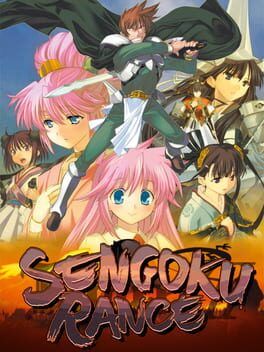
Sengoku Rance, arguably the breakout hit in the West, is also in the Steam slate. Its mix of turn‑based territory conquest, character recruitment, and long‑form campaign structure is one of the reasons the series developed a cult following long before any official English releases. From a business view this is the obvious flagship: it is the Rance game people who do not follow eroge have actually heard about.
Rance Quest Magnum, the definitive version of Rance 8, represents Alicesoft’s move from strategy‑driven campaigns to quest‑based RPG structure. Kagura already sells an adult version on its own store, so Steam becomes a second channel, aimed at players browsing for anime RPGs rather than explicitly eroge sites.
Rance IX and Rance X complete the current roadmap. These are late‑series, big‑budget entries that close out Rance’s long narrative arc. They are also the titles with the clearest expectation of premium pricing and long‑tail sales, which makes their presence on Steam particularly important. Without Valve’s reach, selling such large, text‑heavy games exclusively through specialist storefronts caps their upside.
The oddity is the mention of “Rance IV.” There is no existing official English release of Rance IV on other platforms, while the current Western catalog instead features 5D and Rance VI. TechRaptor notes that promotional footage aligns more with VI and 5D than IV, and storefront listings historically named VI+5D, not IV. That has led some observers to treat the IV listing as a typo. On the other hand, community figures close to Alicesoft have insisted it is not an error, which would imply the first official localization of Rance IV arriving through the Steam initiative. Whether this is a miscommunication or a genuine surprise, it highlights how complicated it is to retrofit a long, staggered eroge catalog into a neat release plan for a mainstream store.
How Kagura and MangaGamer are threading Steam’s adult‑content rules
Rance is not flirting with adult themes; it is built around them. The protagonist’s sexual violence is textually central and presented in an unapologetic, often comedic tone. That content put Alicesoft in the crosshairs of curation policies years before “anime games on Steam” became a talking point. To bring Rance to Valve’s storefront at all, Kagura Games and MangaGamer have to walk a tightrope between policy compliance and product authenticity.
The likely approach follows an increasingly standardized playbook used for adult VNs and RPGs on Steam.
First, the Steam builds are trimmed to fit within Valve’s current thresholds on explicit visuals and sexual violence. Content that would obviously fail a review, such as certain CGs and more extreme encounters, will be pre‑removed or altered for the Steam version. That sanitized build becomes what Valve sees and approves. Kagura’s existing Steam catalog already operates on this model, and the company openly distributes restoration or uncensor patches from its own website that transform the Steam install into the full adult product.
Second, the marketing language and store presentation emphasize Rance as a “hardcore RPG series” rather than leading with its eroge reputation. Trailers focus on map control, battle systems, party building, and series‑spanning story arcs, while the most explicit aesthetic beats are kept off thumbnails and screenshots. From Steam’s side this keeps the games aligned with how other mature‑rated anime titles are presented. From Kagura and MangaGamer’s side it makes Rance discoverable to players browsing for RPGs rather than only those actively searching erotic keywords.
Third, both publishers are leaning on the increasingly accepted split between “base game on Steam, adult upgrade off‑platform.” This separation is not just about technical convenience. It creates a paper trail where Valve is technically selling a mature but non‑pornographic product, while the publisher takes responsibility for what happens once players seek out patches or 18+ builds on their own sites. Kagura’s storefront, and MangaGamer’s own platform, act as the true adult hubs. Steam becomes the funnel and the visibility engine.
Finally, Rance’s arrival comes after years of policy whiplash for erotic and romance‑heavy titles on Steam. Entire games have been quietly removed, others rejected for content that looked comparable to already‑approved releases. Publishers like MangaGamer have publicly voiced frustration in the past about inconsistent application of rules. The fact that Rance is moving forward suggests there is now a clearer internal standard at Valve for how “censored plus external patch” workflows are evaluated, particularly for 2D anime titles that do not cross into real‑person or underage content territory.
The business logic of bringing Rance to Steam now
From a pure revenue perspective, Rance on Steam is as much about catalog survivability as it is about short‑term sales.
For Alicesoft, Kagura Games, and MangaGamer, the PC adult market has fragmented across niche storefronts, gray‑market keys, and direct sales. These channels are essential for fully uncensored versions but have limited reach. Steam, by contrast, remains where many PC players default to searching for anything new. Every Rance game that is not on Steam risks being invisible to the vast majority of its potential audience outside hardcore eroge circles.
The partnership structure also matters. Kagura Games has quickly developed a reputation as a specialist in bringing Japanese adult and adult‑adjacent titles to Steam while managing patches and regional issues. MangaGamer holds the existing Western rights and translation pipeline for much of the Rance catalog. Teaming up lets Kagura handle the Steam‑facing operations and discoverability while MangaGamer leverages its investment in localization and its own 18+ store. For Alicesoft this spreads risk: one partner focuses on exploiting Steam’s algorithmic visibility, the other on long‑term ownership through direct purchases.
Timing is strategic too. All currently translated mainline Rance entries are now accessible via specialist stores like MangaGamer or other adult‑friendly platforms. Moving to Steam at this point lets the publishers re‑monetize an already translated catalog with relatively low new localization cost while using the Steam rollout as a marketing event that can drive back‑catalog sales elsewhere.
There is also a brand‑building angle. For years, Rance in the West was synonymous with fan patches and import workarounds. Positioning it as an official, curated series on Steam reframes it as a legitimate historical RPG franchise rather than something that only exists in the shadows of doujin circles. That reputational shift is valuable if Alicesoft wants future titles, spin‑offs, or spiritual successors to launch simultaneously worldwide without repeating the fan‑translation era.
What this signals for niche adult Japanese franchises on mainstream storefronts
Rance’s migration to Steam is a signal moment for eroge and adjacent Japanese niches.
The obvious message is that content once assumed permanently incompatible with Valve’s platform can make the jump provided it is mediated through experienced publishers and a censorship‑plus‑patch pipeline. If a series as infamously explicit as Rance can carve out real estate on Steam, it sets a precedent for other back catalogues that combine substantial gameplay with adult content.
This does not mean Steam has become a free‑for‑all. The Rance rollout underlines a few boundaries. Developers that rely purely on explicit content without a robust underlying game, or that present sexual violence in ways that trigger Valve’s stricter prohibitions, are still unlikely to pass review. Similarly, titles with even the suggestion of underage characters continue to face a hard wall. Rance threads the needle by being overtly adult, mechanically deep, and easily modifiable into a “Steam‑safe” cut.
From a curation standpoint, it also shows how mainstream storefronts are starting to treat long‑running eroge franchises less as embarrassing edge cases and more as legacy series to be contextualized. Grouping multiple Rance titles under a publisher page, framing them via trailers that highlight RPG and strategy systems, and rolling them out as a unified campaign makes them look more like a historical collection and less like isolated porn games that slipped through the cracks.
For other Japanese developers, the message is that there is now a viable, if constrained, path to global PC audiences without entirely abandoning adult content. The practical playbook looks like this: build a Steam‑acceptable edition, partner with a publisher that already understands Valve’s review process, maintain an off‑platform store for full versions and patches, and accept that marketing on Steam will foreground genre and mechanics over eroticism.
For players, the Rance series arriving on Steam lowers friction dramatically. Instead of tracking down specialized shops and installers, they can click a familiar green button, then decide for themselves whether to engage with the adult restoration path. That makes niche eroge less of a technical project and more of a consumer choice.
Whether this experiment succeeds will be measured in more than sales numbers. If Rance performs well without drawing the ire of Steam’s moderation team, it will strengthen the case for bringing other historically important adult franchises to mainstream storefronts. If it stumbles, particularly due to backlash around its most controversial content, it may reinforce caution among both Valve and publishers. Either way, the series is becoming a test of how far the PC’s biggest store is willing to go in treating adult‑focused Japanese games as part of gaming history rather than something that must remain hidden in the margins.