
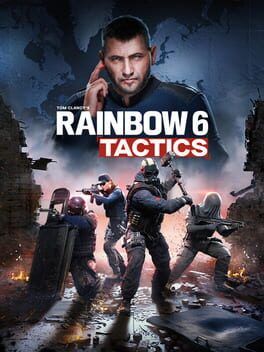
Ubisoft has announced Rainbow Six Tactics, a single-player turn-based Siege spin-off built around operators, drones, breach planning, destructible walls, and squad strategy.
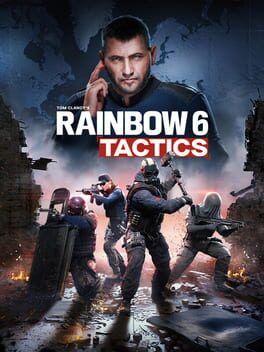
Image: IGDB
Store links: Tom Clancy's Rainbow 6 Tactics on Steam
Ubisoft is turning Siege’s chaos into a turn-based command problem
Ubisoft has announced Rainbow Six Tactics, a single-player turn-based strategy game set in the Rainbow Six universe, and the immediate question is whether Siege’s real-time pressure can survive being moved onto a grid. According to Ubisoft’s reveal, the answer starts with the pieces Siege players already understand: operators, drones, gadgets, breach points, and walls that can be broken to create new sightlines or entry routes.
The new game puts players in the role of Six, the commander of Rainbow, leading squads of up to four operators through tactical missions. Ubisoft says the core loop moves from global command to field execution, with players selecting assignments, preparing operators, resolving turn-based encounters, then returning to HQ to train the team, review intel, and strengthen Rainbow’s capabilities before the next operation.
That structure places Rainbow Six Tactics in a familiar neighborhood for anyone searching for a Rainbow Six XCOM comparison, but Ubisoft’s pitch is more specific than simply putting Siege characters into an initiative order. The official Ubisoft News post describes a campaign built around reconnaissance, operator composition, environmental destruction, and a Breach Planning mode that lets coordinated assaults interrupt the usual turn-based rhythm. In strategy terms, Ubisoft is trying to preserve Siege’s identity by moving its tempo from reaction speed into preparation, sequencing, and controlled bursts of violence.
Operators replace XCOM rookies, which changes the strategy economy
Rainbow Six Tactics will feature 15 operators, each with unique abilities, specialized gadgets, and distinct skill trees, according to Ubisoft. Video Games Chronicle separately reported that players will choose from 15 operators and lead elite teams of up to four. That matters because this is not the classic XCOM structure where disposable recruits gradually become specialists through battlefield survival. Rock Paper Shotgun compared the setup more closely to XCOM: Chimera Squad and Tactical Breach Wizards, where a fixed cast brings bespoke abilities into each mission.
The confirmed and reported roster examples point to that design direction. Rock Paper Shotgun said it spotted Nøkk, Glaz, Montagne, Ash, Doc, Sledge, and Zofia in the reveal trailer, while Game Informer listed Nøkk, Glaz, Ash, Doc, Montagne, Sledge, and Twitch as notable Siege operators appearing in Tactics. Ubisoft has not provided the full 15-operator list in the supplied materials, so the exact team-building meta remains open.
Still, the shape is clear. Montagne implies shield-led positioning and safe angles. Doc suggests support and recovery. Glaz brings long-range pressure. Ash and Sledge are natural wall-breakers. Nøkk, as Geek Culture noted from the trailer, appears with an invisibility-style ability inspired by Siege. In a turn-based tactics game, those kits become action-economy questions. Do you spend a turn opening a new route with Sledge, or do you hold the angle and let a sniper capitalize after the breach? Does a support operator justify a slot in a four-person squad if the mission is target elimination rather than hostage rescue? Those are the kinds of tradeoffs Ubisoft needs if Rainbow Six Tactics is going to feel like a real Ubisoft turn based strategy game rather than a character skin over standard cover tactics.
Drones turn reconnaissance into repeatable strategic value
Ubisoft says players will use recon tools and gadgets in the field, and several reports describe a mission flow that begins before the first shot. Rock Paper Shotgun reported that each mission starts with a reconnaissance phase where players use drones to inspect the map and identify terrorist positions. Geek Culture also described a recon and droning phase using the familiar RC drone before moving into breach planning.
This is one of the cleanest translations from Siege to a turn-based format. Siege’s drone phase is a time-limited information race. In Rainbow Six Tactics, that information becomes the basis for squad selection, entry planning, ability sequencing, and risk control. Ubisoft says preparation and strategizing from HQ are crucial, with players assessing intelligence and assigning up to four operators based on what their abilities bring to the mission.
The twist is that Rainbow Six Tactics is not leaning on XCOM 2-style procedural maps, at least according to the current reporting. Rock Paper Shotgun said the levels are not procedurally generated, but enemy spawn positions will change each time. Geek Culture similarly reported that maps are handcrafted, with procedural variation applying to enemy, bomb, or hostage positions. That combination creates a different strategic texture. Players may learn building layouts over time, but they should not be able to memorize every encounter. If Ubisoft tunes it well, drones become the anti-save-scum tool: the thing you use because the same floor plan can still produce a different tactical problem.
Breach Planning is the key attempt to preserve Siege’s tempo
The most important design bridge is the Breach feature. Ubisoft describes Breach Planning mode as a way to plan coordinated actions for the active squad and execute synchronized assaults in the field. Video Games Chronicle quoted Ubisoft’s description of Breach as a decisive tactical moment that breaks the turn-based rhythm and lets all operators act at once as they storm a new area by surprise, combining operator abilities with environmental destruction.
That is the part of Rainbow Six Tactics that most clearly echoes both Siege and games like Door Kickers. Rock Paper Shotgun reported that after reconnaissance, each map offers several breach points. Players pick an entry based on what the drone phase reveals, then watch four chosen operators stack up, blast into a locked room, and shoot immediate targets before the game shifts into more traditional turn-based play. Geek Culture described players choosing positions around an entry point, routes of assault, and targets before executing a synchronized breach.
For strategy players, the question is whether Breach is a cinematic opener or a real decision engine. If the breach only deletes a few enemies at the start of every room, it risks becoming rote. If it interacts meaningfully with operator kits, enemy placement, hostage risk, bomb timers, destructible walls, and limited resources, it can become the central planning layer. The strongest version of Rainbow Six Tactics would make the breach a commitment: you gain surprise and tempo, but you also expose your squad, destroy cover you may need later, and choose one route while leaving others uncontrolled.
Destructible environments are the feature Ubisoft cannot fake
Ubisoft’s official reveal emphasizes destructible environments as a tactical tool. The company says players can break walls to open new lines of sight, remove enemy cover, or create new entry points as situations evolve. Video Games Chronicle quoted the same design premise, while Game Informer reported that levels include a breach phase where players coordinate units to enter in sync by busting down doors and blowing up walls.
This is the feature that separates a destructible tactics game from a standard cover-based tactics game wearing Rainbow Six branding. In Siege, destruction is both geometry and psychology. A soft wall is never simply a wall. It is a possible angle, a rotation, a trap, a denial tool, or a route that did not exist ten seconds earlier. Turning that into a turn-based rule set is harder than it sounds because every new sightline can affect enemy AI, cover value, hostage safety, objective pressure, and performance.
Rock Paper Shotgun’s preview reaction singled out destructible environments as the element it wanted to see more of in action, precisely because it is central to Siege. That caution is warranted. A turn-based version does not need the same granularity as Siege’s real-time destruction, but it does need consequences. Sledge breaking through a wall should change the map’s decision tree, not simply act as a flashy door-opening animation. If Ubisoft Paris can make walls part of the economy of turns, risk, and information, Rainbow Six Tactics has a stronger claim to its own identity inside the tactics genre.
Campaign structure, story placement, and the return of Paul Bishop
Ubisoft says Rainbow Six Tactics takes place in conjunction with Rainbow Six Siege’s timeline, with a new global threat pushing Rainbow to operate on a broader strategic scale. Kotaku and Game Informer reported a more specific placement, saying the story is set between Siege’s Year 10 and Year 11. Geek Culture described it as occurring between the fall of Rainbow seen in Siege Year 10 and Year 11. The supplied Ubisoft article does not give that exact gap wording, so the Year 10 to Year 11 placement should be treated as reported by those outlets rather than repeated as a direct official quote from the provided Ubisoft text.
The commander is Paul Bishop, also known as Six, according to Rock Paper Shotgun, Kotaku, Game Informer, and Geek Culture. That is a pointed callback to Rainbow Six Vegas and Vegas 2, where Bishop was the protagonist before moving into the commander role here. For players who have wanted a single-player Rainbow Six campaign since the Vegas era, this is the clearest connective tissue in the announcement.
Mission variety is also part of Ubisoft’s pitch. The official post lists Hostage Rescue, Bomb Disposal, and Target Elimination among the mission types, and says the game will include over 45 diverse locations around the world. Kotaku reported missions across over 45 handcrafted maps and more than 90 minutes of cutscenes. Ubisoft’s own supplied article confirms the location count but not the cutscene runtime, so the 90-minute figure remains attributed to Kotaku’s reporting. The practical takeaway is that Ubisoft is positioning this as a campaign-driven single-player game, with HQ upgrades, operator training, and repeated deployments providing the long-term layer.
Release timing, platforms, price, and the unanswered questions
The platform picture is mostly clear. Ubisoft’s official article says players can wishlist Rainbow Six Tactics for PS5, Xbox Series X|S, GeForce Now, Blacknut, and PC through the Ubisoft Store, Steam, and the Epic Games Store. DualShockers also listed Ubisoft+ among the planned availability channels, while Video Games Chronicle summarized the platform list as PS5, Xbox Series X/S, and PC.
Release timing is less tidy across the provided sources. Video Games Chronicle reported that no release date had been confirmed. DualShockers, Kotaku, and Geek Culture reported a 2027 release. The Ubisoft News excerpt supplied here does not include a launch window, so the safest reading is that 2027 is reported by multiple outlets, while the exact date remains unannounced in the materials provided.
Pricing and monetization also come through secondhand in the supplied sources. Kotaku reported that Ubisoft confirmed with IGN that Rainbow Six Tactics will cost $50 and will have no in-game store or microtransactions. That is an important buyer-facing claim, especially for a Ubisoft spin-off built from a long-running live-service shooter, but it should be attributed to Kotaku’s report of Ubisoft’s IGN confirmation until Ubisoft publishes those details in a directly cited listing.
The larger unanswered questions are all design questions. Will there be permadeath? DualShockers specifically noted that remains to be seen. How deep are operator skill trees, and can Ubisoft balance 15 recognizable Siege kits without making a few mandatory? How dynamic is destruction once firefights begin? Are the changing enemy and objective positions enough to keep handcrafted maps fresh? Rainbow Six Tactics has a strong paper design because Siege already runs on information, angles, denial, and commitment. The hard part is making those instincts work when every action is deliberate and every broken wall has to be worth the turn it costs.