
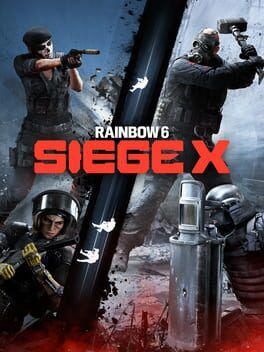
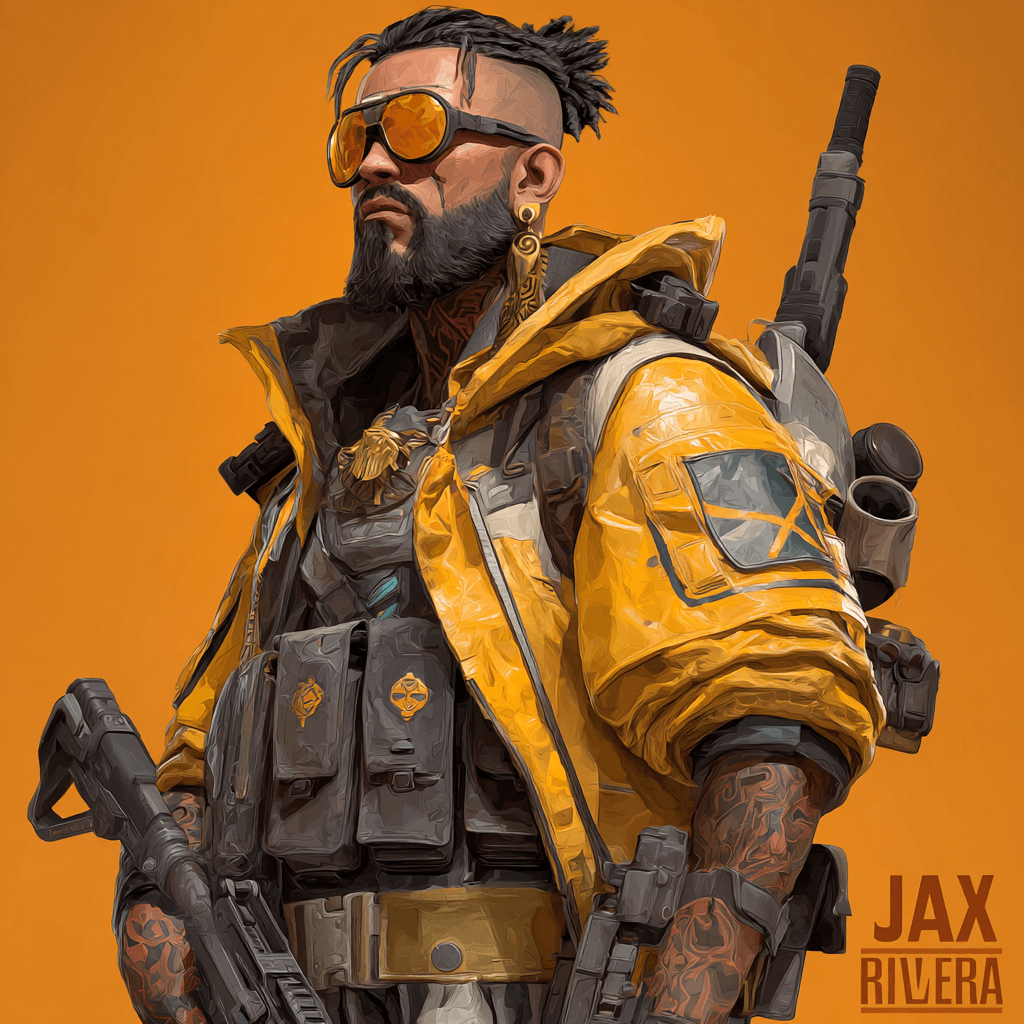
Solid Snake’s arrival in Rainbow Six Siege isn’t just a cool cameo. It anchors a Year 11 roadmap that rewires operators, Ranked, anti‑cheat and even how Siege spans PC, console and mobile.
Rainbow Six Siege is entering Year 11 with a crossover that would have been unthinkable when the game launched in 2015. Solid Snake is stepping out of Shadow Moses and into Siege’s breach in Operation Silent Hunt, and Ubisoft is using his arrival to signal what the next era of Siege looks like across PC, console and mobile.
This is more than a guest skin. Snake is a permanent attacker operator, the face of a full Metal Gear season, and the marketing hook for a roadmap full of systems changes and live service bets that are meant to keep Siege relevant into its second decade.
Solid Snake as an operator, not a costume
In Operation Silent Hunt, Solid Snake joins as a fully featured attacker, not a reskin of an existing operator. Ubisoft and Konami are framing him as the stealth and information-control specialist you would expect from Metal Gear, but built within Siege’s strict competitive rules.
Snake’s signature gadget is the Soliton Radar MKIII, a Metal Gear style sensor repurposed for Siege’s round structure. Instead of turning him into an invisible super soldier, it leans into information warfare, helping track defender positions, control rotations and set up coordinated pushes. It is disruption without outright wallhacks, powerful in coordinated stacks but still readable and counterable in the hands of defenders.
His kit is rounded out by an ability Ubisoft is calling On-Site Procurement. It is a nod to Metal Gear’s “use what you can find” philosophy translated into Siege’s gadget economy. In practical terms, Snake can carry more secondary gadgets than a standard attacker and has tools to adapt mid-round, giving him a level of flexibility that few operators enjoy. He can lean into breaching, utility clear or denial depending on what the team needs.
Where earlier crossover operators like Sam Fisher’s Zero were conceptually close to existing roles, Snake is tuned as a meta-shaper. Extra secondary utility and high-value intel make him a natural pick in coordinated play, and Ubisoft will have to watch closely to keep his loadouts from eclipsing more rigid operators.
Cosmetically, Snake arrives with the treatment you would expect from a full collaboration rather than a one-off bundle. The season battle pass unlocks Solid Snake and folds in a spread of Metal Gear outfits and weapon skins across the roster. The headline example is a Psycho Mantis inspired elite look for Smoke, but Ubisoft is positioning this as a full Metal Gear collection, not just a single operator pack.
How the Metal Gear crossover works in-game
Operation Silent Hunt is built to feel like a Metal Gear season inside Siege’s usual structure. Snake’s operator release is paired with themed cosmetics, a new event and a limited-time mode that finally lets Snake and Sam Fisher share the spotlight.
The battle pass centers Metal Gear visuals and music cues around Siege’s match flow. Operator skins remix classic Metal Gear designs for Siege’s tactical gear, while weapon charms and card backgrounds lean hard into Konami’s iconography. This is still recognisably Siege, but with just enough fan service to sell the fantasy without breaking competitive silhouettes.
Later in the season, Ubisoft is rolling out a dedicated Metal Gear event mode. Details are still intentionally vague, but the pitch is clear: a smaller scale, stealth-flavored playlist where Snake and Fisher can actually team up. Expect restricted HUD, heavier sound cues and objective rules that reward intel play more than raw mechanical skill. It functions as both fan crossover fulfillment and a test bed for stealthier pacing that might influence future arcade modes.
Crucially, Snake is permanent. When the event rotates out, he stays in the attacker pool, unlocked through the usual operator purchase paths. This anchors the crossover mechanically in Siege’s long-term meta rather than treating it as a limited-time novelty.
Year 11’s roadmap: more than a nostalgia play
Snake might be the marketing headline, but Ubisoft’s Year 11 roadmap is structured around deeper systems changes. Across its four seasons, Siege is pushing a philosophy of modernization and accessibility that intersects with crossplay, mobile and long-term competitive health.
Ranked is a focal point. Year 11 continues the shift toward a Ranked 3.0 vision that tries to reconcile competitive integrity with the realities of a now extremely complex operator pool. Matchmaking and progression are being tuned to reduce smurfing incentives, and Ubisoft is tightening how MMR, visible rank and rewards track each other so players feel less punished for experimenting or playing with friends of different skill levels.
Map work is another pillar. Year 11 includes at least one major rework, with Villa flagged as a key example. Ubisoft is smoothing out problem sightlines and chokepoints uncovered over eight years of pro play and ranked grind, while also simplifying certain callout regions that have become overwhelming for new players. This fits into a broader plan to make the map pool legible across PC, console and the incoming mobile audience without flattening Siege’s trademark destructibility and depth.
Ubisoft is also doubling down on arcade and alternative modes. A 1v1 arcade playlist is scheduled for Year 11, giving players a low-stakes, high-rep environment to practice gunfights and map micro without the pressure of full-team coordination. It is a nod to community-made customs that have thrived outside the official UI, and it strengthens Siege as a training and content-creation platform.
ShieldGuard and the fight to keep Siege fair
Anti-cheat and security are central to the Year 11 pitch. Ubisoft is foregrounding its ShieldGuard initiative as the next phase of Siege’s war on cheating and disruptive behavior.
ShieldGuard is not a single feature but a bundle of detection improvements, enforcement tools and in-client protections. Part of the focus is on making bans feel more immediate and visible so that legitimate players see direct responses to report spikes. Another is on closing loopholes that have historically allowed hardware spoofing and certain external tools to slip past automated systems.
From a live-service perspective, this is about trust. Siege has survived this long because its mechanical ceiling is high and its sense of fairness, at its best, is strong. Year 11’s roadmap treats anti-cheat not as a background patch note but as a headline system on par with a new operator or map rework, acknowledging that long-term health depends as much on security as it does on new content.
Crossovers as a live-service pillar
The Solid Snake deal also illustrates how crossovers have become structural to Siege’s live-service strategy rather than occasional experiments. Earlier years saw lighter collaborations and cosmetics from external brands. Year 11 is different: it opens with one of gaming’s most iconic stealth characters as a permanent operator, marketed alongside roadmap-defining system changes.
This approach serves several purposes. It spikes interest among lapsed players who might not return just for a balance patch, and it attracts new audiences from partner franchises that now see Siege as a legitimate destination rather than merely a guest host. Crucially, it gives each seasonal arc a clear identity while the underlying systems become more technical and long term.
The economics of live service also favor this direction. Skins and battle passes tied to recognisable IP sell better and retain their allure longer than one-off original themes. For a game with Siege’s age and complexity, crossovers like Metal Gear essentially subsidize the less marketable work of anti-cheat, Ranked overhauls and map reworks.
Preparing for a unified Siege across PC, console and mobile
All of this is happening as Ubisoft pushes Siege toward a more unified presence across platforms. Rainbow Six Mobile is moving out of soft launch and into broader release windows, and Year 11’s language around systems reads as platform-agnostic. Ranked structures, progression paths and even operator design are being approached with the expectation that players will encounter Siege on multiple devices.
For operators like Snake, that means designing clear silhouettes and readable abilities that survive compression to smaller screens and different input schemes. A gadget like the Soliton Radar MKIII is inherently more portable than precision aim-based utility, which makes it easier to translate into a mobile control scheme without losing its strategic depth.
Map updates like the Villa rework are similarly influenced by multi-platform realities. Simplified callouts, cleaner visual language and reduced visual noise are all quality-of-life wins on PC and console but are practically necessary on mobile. By anchoring those shifts in a Metal Gear-flavored season, Ubisoft can sell modernization to veterans as a thematic event rather than a concession to accessibility.
Crossovers themselves play into this convergence. A Metal Gear event, with a self-contained ruleset and clear objectives, can operate as a shared seasonal moment across all platforms, even if underlying tech or input differs. It becomes a cultural sync point that reminds players they are all in the same ecosystem, regardless of device.
Why Snake matters for Siege’s next decade
On paper, Solid Snake joining Siege is pure fan service. In practice, it is a signal about how Ubisoft plans to run Siege into its second decade. Operators are being built as long-term meta anchors that can live comfortably on PC, console and mobile. Systems like Ranked 3.0, map reworks and ShieldGuard are being elevated to headline status. And crossovers with major IP are no longer side dishes, but the seasonal main course that keeps the audience engaged while the kitchen refits the restaurant.
If Ubisoft can keep Snake balanced, deliver on the promises of a fairer Ranked environment and make ShieldGuard visible in daily play, Year 11 could mark the start of Siege’s “evergreen tactics” era, where the game is less about chasing the next sequel and more about curating a living, evolving competitive platform.
For now, one thing is certain: the fantasy of coordinating a breach with both Sam Fisher and Solid Snake in the same squad is no longer a playground argument. It is Siege’s opening salvo for Year 11, and a statement about where tactical shooters are headed in the live-service age.