
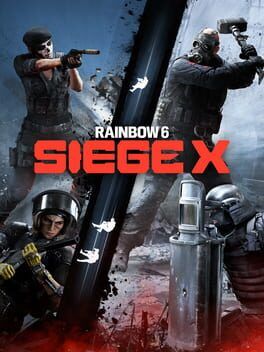

How a massive in-game currency exploit briefly turned Rainbow Six Siege’s economy upside down, Ubisoft’s rollback response, and why incidents like this are getting harder to prevent in aging competitive shooters.
Over the last weekend of December, Rainbow Six Siege briefly turned into a very different kind of tactical game. Players logged in to find their accounts suddenly overflowing with Renown and R6 Credits, the game’s core progression and premium currencies. Some saw balances jump into the billions, enough to instantly unlock the entire cosmetic catalog many times over. It looked less like a glitchy reward and more like someone had flipped a switch on the game’s economy.
Reports quickly spread across Reddit, Twitter and Discord of players waking up to what would, in real money terms, represent millions of dollars worth of currency. This wasn’t the result of a surprise holiday event or a generous compensation package. According to coverage from Kotaku and Polygon, hackers had found a way to inject huge amounts of Renown and Credits directly into player accounts at scale. The result was a kind of Robin Hood style heist, where the usual grind of Siege’s progression was temporarily obliterated.
The community’s reaction captured the confusion of the moment. Some players immediately treated the windfall as radioactive, refusing to spend a single point out of fear Ubisoft would trace the activity and issue bans. Others stress tested the limits of the exploit by trying to buy everything in the in-game store. Screenshots and clips showed players purchasing bundles, operator skins and weapon cosmetics in rapid succession, joking that they were about to finally clear out Siege’s often overwhelming cosmetic catalog.
As more and more players jumped in to see if their accounts had been hit, the game’s backend started to strain. There were reports of the in-game shop slowing down or failing to process the sheer volume of purchases as a suddenly super wealthy player base spammed transactions. In a matter of hours, the exploit went from rumor to full blown crisis for a live-service title that has spent nearly a decade carefully tuning its in-game economy around long-term engagement and cosmetic monetization.
Ubisoft’s response was decisive but came at the cost of downtime. The studio pulled Rainbow Six Siege fully offline, suspending play while it investigated what had happened. This is the nuclear option for any live-service game, especially one that has become a staple in the competitive shooter space, but leaving the servers up would have meant the exploit could continue distorting the economy and data.
Communication to players emphasized two points. First, Ubisoft said that players would not be banned simply for receiving or spending the illegitimate Renown and Credits. That was an important reassurance in a community that has seen strict enforcement around cheating and exploits over the years. Second, the studio committed to rolling back illegitimate transactions and stated it was running extensive quality control tests before bringing the game back online.
The rollback was always going to be messy. Untangling which currency was legitimate and which came from the exploit requires combing through logs, purchase histories and account data for a game that has been running since 2015. The longer the exploit was active, the more it intertwined with normal player activity. Some players used their sudden wealth to buy cosmetics they had been saving for, while others may have mixed hacked resources with legitimately earned ones, making a clean separation tricky.
Once the servers returned and balances were adjusted, questions shifted to the underlying cause of the exploit and what, if anything, had been compromised beyond the in-game economy. At the time of reporting, Ubisoft has not publicly detailed how the hack was executed, what systems were targeted, or whether any sensitive personal or account data was at risk. That lack of transparency has frustrated parts of the community, particularly those used to esports level integrity standards in Siege’s ranked and competitive scenes.
Regardless of the exact technical vector, the incident highlights how fragile live economies can be in long-running competitive shooters. Siege’s Renown and R6 Credits sit at the intersection of multiple systems: match rewards, battle passes, store purchases and real money transactions. An exploit that tampers with any part of that pipeline can ripple outward in unpredictable ways, especially when it affects such a core part of player progression.
For Ubisoft, the crisis also underscores one of the trickiest aspects of maintaining a nearly decade old game as a live service. Rainbow Six Siege launched in 2015, in an era when long-tail support and seasonal updates were still evolving. Over the years, Ubisoft has layered on new operators, maps, systems and monetization structures. Each addition increases complexity, and with complexity comes more potential vulnerabilities. Fixing one exploit can sometimes open a subtle gap elsewhere, especially as original architecture and tools age.
This is not unique to Siege. Other long-running shooters, from Destiny 2 to Counter-Strike 2 and Apex Legends, have all wrestled with the tension between adding new content and maintaining a secure, stable infrastructure. As games transition through console generations and adopt new technologies, codebases stretch further and technical debt accumulates. The longer a competitive shooter runs, the more it starts to resemble a living museum of old and new systems stitched together to keep players online.
Incidents like the Renown heist also expose the tightrope publishers walk between robust anti-cheat and player trust. Siege already has a reputation for being aggressive in its fight against cheating and account manipulation. When a high-profile exploit like this slips through, it can erode the perception that the playing field is level, even if it only affects cosmetics and progression rather than pure gameplay performance.
At the same time, Ubisoft’s choice not to punish players who simply logged in and found themselves rich was a pragmatic one. Blanket bans or mass item wipes would likely have generated even more backlash. A rollback of clearly illegitimate transactions, paired with a promise of no bans for unintentional beneficiaries, tries to strike a balance between restoring order and acknowledging that players were largely bystanders to someone else’s exploit.
From a broader industry perspective, the siege on Siege’s economy is a reminder that the business model of modern shooters is inseparable from their technical security. In-game currencies are both a design tool and a revenue stream, and when they break it is not just an economic issue, it becomes a reputational risk. Competitive games rely on the perception that everything from match outcomes to cosmetic unlocks are earned or purchased on fair terms.
For players, this incident will likely become one of those “remember when” stories, a brief window when Renown was effectively free and Siege’s notoriously grindy unlock structure evaporated. For developers working on live-service shooters, it is another case study in why constant monitoring, rigorous backend validation and clear communication plans are now essential parts of running a game, not optional extras.
Rainbow Six Siege will almost certainly recover. Its core tactical gameplay, deep operator roster and entrenched esports scene give it a resilience many newer titles lack. But as the game moves deeper into its second decade, keeping its infrastructure as sharp as its gunplay is only going to get harder. The Renown exploit was a shock to the system, and a warning that in the evolving war for live-service stability, even seasoned veterans can still be caught off guard.