
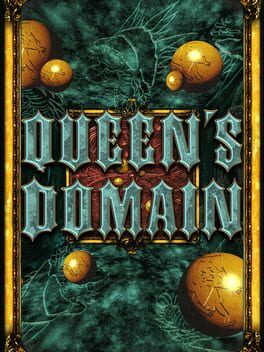

Hands-on preview of the Queen’s Domain beta demo, covering its Isle of Neasied setup, first-person combat and traversal-focused exploration, PS1/Saturn-style visuals, and early thoughts on difficulty and replay potential.
Retro first person RPGs in the vein of King’s Field are having a moment again, and Queen’s Domain is one of the most striking contenders. Its free beta demo on Steam drops you onto the Isle of Neasied with a rusty sword, a vague lead on your missing father, and a whole lot of misty coastline to die on.
This is a tight slice of the full game, but it is already clear about what it wants to be. A slow, deliberate, traversal-heavy dungeon crawler that looks like it fell out of a forgotten PS1 or Saturn disc wallet, while still borrowing just enough quality of life from modern action RPGs to feel approachable.
Washed Up On The Isle Of Neasied
The demo opens with your character washing ashore on Neasied, a gloomy island that serves as an interconnected overworld and one enormous dungeon complex. Crumbling coastal ruins, mossy stone hallways and foggy inlets wrap around one another, hinting at shortcuts and secret passages even in this early area.
Narrative is light but effective. There is talk of a sleeping Queen under the island and of your missing father somewhere inland, but much of the storytelling comes from implication and environmental detail. Stranded corpses point toward traps. Half collapsed bridges frame optional paths if you are willing to risk a jump. Faded murals and inscribed stones suggest a land that decayed long before you arrived. It feels closer to a PS1 era dungeon crawler than a modern quest driven RPG, in a good way.
Crucially the slice in the demo is not a straight corridor. After a brief onboarding stretch of shoreline you loop back on yourself, kick down ladders, unlock gates and start to see how Neasied is built as a knot of interlocking routes. That structure hammers home that traversal is just as important as fighting.
Combat That Borrows From King’s Field And Souls
The moment to moment action in Queen’s Domain is simple on the surface. You move in first person, weapon raised, and lock into a familiar dance of blocking, backing away and stepping in for single heavy swings. A stamina bar gates your attacks, blocks and sprints, so you are constantly weighing whether you have enough in the tank to finish a combo or whether you should hold back for a quick dodge.
Even in the demo there is a surprising range of toys to test. Standard swords encourage careful timed swings. Slower heavy weapons hit like trucks if you are patient. Throwing weapons sit on a separate input and give you snap decisions in mid fight, like softening an enemy before they reach you or finishing them off as they retreat. Each type shifts the tempo just enough that swapping loadouts noticeably changes how you approach an area.
Difficulty spikes come from inattention rather than outright unfairness. Enemies hit hard, often taking off huge chunks of health if you eat a full combo or ignore their wind up. But their animations are readable and encounters rarely feel cluttered. The density of foes favors methodical play, moving down a corridor with your shield raised instead of speed running to the next checkpoint.
Boss design in the demo’s closing dungeon is a clear highlight. The final fight does not have a huge move list, but it does force you to understand spacing, verticality and stamina discipline. Getting greedy is punished brutally and it becomes a miniature stress test for whether you internalized the systems on the way in.
Traversal Focused Exploration And The Holy Sword Endu
Where Queen’s Domain separates itself from many other retro dungeon crawlers is in how much it leans on movement. Early on you receive the Legendary Holy Sword Endu, which doubles as a traversal tool. By charging it up you can launch into the air and glide to distant platforms, turning otherwise impassable gaps into shortcuts or optional detours.
This mechanic gives exploration a different rhythm than just hugging every wall for hidden doors. You are constantly eyeing distant ledges and broken parapets, wondering if a fully charged leap will carry you there. As you improve Endu’s capabilities new lines open up, hinting at a Metroid like layer in the full release where older spaces can be recontextualized by new traversal options.
The demo’s main dungeon leans into verticality. You will peer down through grates at areas you cannot reach yet, catch glimpses of locked doors from high walkways and later loop back to them via a risky sequence of jumps. Secret or semi secret paths often reward you with new weapons or healing items, reinforcing the idea that curiosity and spatial awareness are as valuable as raw combat skill.
Despite its retro flavor the game is not cruel about getting lost. The level design in this slice naturally funnels you back onto the main route after detours, and sightlines are smartly composed. You tend to see the next major landmark long before you arrive, which helps you keep a mental map of where you are in the dungeon stack.
A Love Letter To PS1 And Saturn Dungeon Crawlers
Visually Queen’s Domain commits hard to its throwback aesthetic. Environments are made of visibly chunky polygons with harsh edges and slightly warped geometry. Textures are low resolution and often use repeating patterns that would not look out of place in a mid 90s release. Lighting tends toward stark contrast and deep shadow instead of the soft, realistic shading of modern engines.
Importantly this is all filtered through modern readability. Color palettes are carefully controlled so enemies stand out from backgrounds. Interface elements are crisp and easy to parse. Hit flashes and damage numbers are restrained but clear, making every impact legible even in darker spaces. It feels authentic without resurrecting the worst habits of its inspirations like muddy visuals or unreadable UI.
The audio design follows suit with clanking metal, echoing footsteps and eerie ambient drones that sell the feeling of stalking through forgotten catacombs. There is a pleasing lo fi crunch in weapon impacts and creature roars that matches the visual grit.
Structurally the game also nods to that era. Neasied is presented as one large interconnected world with dungeons folded into its geography rather than set apart as discrete levels. There is a clear through line from King’s Field and other early FromSoftware experiments in how areas bolt into one another and how shortcuts stitch the space into a coherent whole.
Modern Conveniences Without Losing The Mood
For all the throwback flair, the demo quietly integrates a set of modern conveniences that keep frustration at bay. Checkpoints are reasonably spaced and typically unlock after meaningful progress, which cuts down on repetition when a boss or new enemy type walls you. Controls are responsive, with smooth mouselook or controller aiming instead of the tank like rotations that defined many of its inspirations.
Menus are fully modern, with clear stat breakdowns, item comparisons and tooltips that explain what you are picking up. Swapping weapons or equipping throwing items is quick, which encourages experimentation instead of punishing it with clunky inventory juggling.
There are also some quality of life touches in the level design itself. Certain shortcuts are deliberately generous, allowing you to bypass entire sections once a central gate is opened. Healing items are limited but not stingy, so careful players can recover from mistakes without feeling like every error forces a full restart.
All of this lets Queen’s Domain maintain its oppressive, methodical tone without feeling archaic. It is challenging, but not in a way that relies on outdated controls or opaque systems.
Early Verdict On Difficulty And Replay Potential
Based on this beta slice Queen’s Domain sits in that satisfying space where every encounter feels dangerous but rarely impossible. If you rush forward or ignore enemy patterns you will die often, especially in the first half hour while you adjust to the pace. Once you start respecting stamina, using throwing weapons to soften targets and exploiting vertical positioning, the challenge evens out into a steady but fair climb.
The demo’s single dungeon can be cleared in around an hour, but there is clear room for replay. Different weapon types meaningfully change combat flow and there are multiple side paths and secrets easy to miss on a first run, particularly ones that require risky leaps with Endu. Achievement hunters will also find incentives to experiment with alternate routes or self imposed restrictions.
Most importantly the vertical, interconnected design of Neasied feels built for revisiting. It is easy to imagine the full game layering in optional dungeons off the beaten path, hidden bosses tucked behind traversal challenges and build centric routes that cater to players who prefer particular weapon classes or stats.
If the rest of Queen’s Domain can maintain the atmosphere and tight combat loop of this demo while expanding its world and arsenal, it has a real shot at being a standout in the modern wave of retro first person dungeon crawlers. This is one to keep on your radar, especially if you have fond memories of spending long nights lost in low poly catacombs on PS1 or Saturn.