
PVKK has slipped to 2027, but the reason is an increasingly rare one: a tiny team letting its wildest ideas reshape a deeply tactile supercannon war sim instead of rushing to release.
PVKK was never going to be a small game, even if it is about a single gun.
Bippinbits’ planetary defense sim, short for the gloriously unwieldy Planetenverteidigungskanonenkommandant, has just been pushed back to a 2027 launch window. On paper that is a hefty delay for an already long‑gestating indie. In practice it is a sign that PVKK is quietly transforming from a neat gimmick about pressing buttons into a dense, slow‑burn war machine you live inside.
From “cool cannon toy” to full bunker life
Early coverage of PVKK sold a very clear fantasy. You sit alone in a concrete bunker, the commanding mind behind a gigantic 2000mm planetary defense cannon. Orders arrive over flickering CRTs and clipped radio messages. You flip guarded switches, unlock safeties, plot trajectories and feel the whole structure shudder when you finally fire.
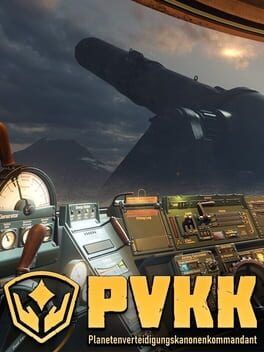
The hook was always the panel itself. PVKK’s desk stretches across the screen like some Cold War control room that never got the memo about ergonomics. Every dial has a purpose, every lever has a weighty animation, and the game invites you to learn this machinery the way you learn a difficult instrument.
What has changed is the scope of everything wrapped around that panel. In statements shared with PCGamesN and PC Gamer, bippinbits summed it up with a line that has already become the shorthand for this delay: for every problem they hit, they found ten new ideas for ways to improve things. A game that started as “Space Invaders, but the cannon is really complicated,” as the developers once joked, is now growing tentacles deep into bunker management, downtime routines and unsettling narrative beats about the regime you serve.
Instead of a loop of pure targeting and firing, PVKK is leaning harder into the full shift of a cannon commander. You maintain and upgrade your station, juggle power and subsystem health, keep your own routines in order and wait for the next order to drop through the pipeline. The war outside may be abstracted to distant radar contacts, but the war inside the room is all about systems discipline and whether you execute those orders without question.
Cassette futurism in an autocratic war machine
PVKK is instantly recognizable in screenshots because it is not just another grey military interface sim. The aesthetic sits at a crossroads between dieselpunk artillery fetishism and cozy cassette futurism. The bunker looks like a 1970s vision of the future, all metal panels, chunky plastic buttons, amber monitors and printed paperwork piling up near your tea mug.
That contrast is what makes the setting hit. You are surrounded by warm light, old propaganda broadcasts and domestic clutter, yet every knob you touch ultimately feeds a weapon big enough to redraw continents. PC Gamer has already pointed out that the official description openly frames this as service to an autocratic regime, but the developers are wary of turning PVKK into a lecture. Instead they seem more interested in putting you in a morally loaded space and letting you sit with it.
Moments between launches are designed to be as much the game as the launches themselves. You sip your rationed tea, browse teleradio programs, read memos, and maybe catch a glimpse of something not quite right in the way your orders are worded. That quiet space is where PVKK starts to distinguish itself from more straightforward artillery or submarine sims. It is not just about the thrill of pulling the trigger, it is about the weeks and months of ritual that make pulling the trigger feel routine.
Visually, PVKK’s interface design does a lot of narrative work on its own. The desk is crowded but legible, each cluster of controls visually communicating function without walls of text. Colored lights and mechanical sounds layer together so that you start to read the bunker by ear as much as by sight. Where many sims lean on modern UI overlays and pop‑ups, PVKK is determined to keep as much information as possible diegetic and physical. That is part of why each new feature demands far more time than a simple menu addition.
Why a small team chooses 2027 instead of “good enough”
The blunt reality is that bippinbits could probably ship a leaner PVKK much sooner. The core fantasy of learning a monstrous cannon, taking carefully plotted shots at incoming threats, and living through that noise is already compelling. But the developers’ comments across recent previews suggest they are treating that fantasy as a foundation rather than a finished product.
Every time they solve a mechanical or UX problem, they seem to find a way to enrich the fantasy. A tweak to how you authenticate firing orders might open the door to forged directives or communications breakdowns. A new maintenance system might naturally call for more elaborate failure states or emergency drills. Once you go down that road, it is difficult for a small, creatively restless team to stop at the first workable version.
There is also the calendar reality. With Grand Theft Auto 6 on the horizon, 2025 and 2026 are shaping up to be particularly loud for any studio trying to launch something nuanced and slow‑burning. In that context, a 2027 window is not just about dev time, it is about giving an offbeat sim space to breathe, away from the week where the entire internet is watching clips from a blockbuster open‑world.
Unlike a live‑service project that can grow after launch, PVKK’s pitch relies on a carefully integrated whole. The feeling of being a cannon commander is a sum of dozens of tiny frictions: how long it takes to warm a subsystem, how persnickety a calibration dial feels, how fast your superiors respond if you hesitate. Shipping early and patching those details later would risk undermining the exact thing that makes the game interesting.
Indie teams increasingly face a choice between getting a playable build out the door as soon as possible or taking the scenic route and letting the design expand as they learn. PVKK falls firmly into the second camp. The risk is that a long timeline can exhaust both players and developers. The reward is that when it finally lands, it can arrive as a fully formed curiosity instead of a promising prototype.
What a longer cycle can do for a niche sim
PVKK’s delay is also a reminder that niche simulations age differently than flashier action games. A tightly scoped, highly tactile sim can afford to spend extra years maturing because its core appeal is not bound to the latest rendering tech or trends. Players who like complex cockpits and strange speculative machinery are often willing to wait if it means the systems they get to inhabit feel richer.
More time lets bippinbits dig deeper into things that would be first on the chopping block in a rushed schedule. Accessibility options are one obvious area. PVKK’s wall of buttons looks intimidating, and the team has already discussed wanting to make it approachable even for players who do not generally live in sim land. That takes thoughtful tutorial design, staged complexity, and difficulty modes that respect the fiction rather than simply adding aim assist.
It also gives room to iterate on the ethical framing without turning the bunker into a soapbox. The longer the team sits with PVKK’s core loop of receiving orders and executing them, the more opportunities they have to create scenarios that poke at the player’s comfort zone while still feeling like organic parts of the war effort. One of PC Gamer’s earlier spotlights described how blindly following instructions in PVKK’s scenarios can lead to surreal consequences, like inadvertently shooting down Santa’s sleigh. That kind of tonal tightrope takes experimentation and playtesting to get right.
Finally, a stretched timeline buys trust. By openly stating that the delay is driven by creative overflow rather than collapse, bippinbits is framing PVKK as a passion project they would rather expand than compromise. That will not erase all impatience from fans who were hoping to sit at the console sooner, but it sets expectations properly. This is not a quick early access treadmill. It is a slow assembly of a machine that has to clank and hum and worry you in exactly the right ways.
When PVKK finally fires in 2027, the hope is that it will feel like stepping into a fully lived‑in bunker on day one. A place where every lever has a story, every order makes you pause and think, and every extra year of development can be heard in the weight of a switch as you ready the cannon for one more impossible shot.