
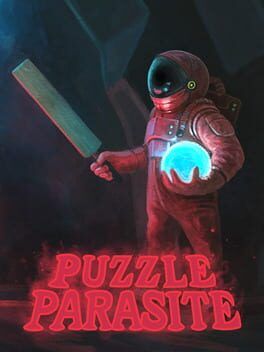

Wrenfall’s sci fi puzzler turns telekinesis and a cricket bat into a sharp physics toybox, backed by smart level design that helps this small indie stand out on Steam.
Overview
Puzzle Parasite is a sci fi puzzle adventure from Wrenfall that tries something very specific. You wield telekinesis and a battered cricket bat, then use both to redirect energy cores, bounce lasers, and power alien machines as you descend through a strange world. It is pitched as a tribute to Portal and The Talos Principle, but with a scrappier physical twist and a focus on low key experimentation.
The result is a game that feels familiar on the surface yet distinctive once the systems click. It does not have the cinematic flair or voice led storytelling of its inspirations, but it compensates with a very tactile physics sandbox and a co op mode that lets the chaos escalate.
Telekinesis And The Joy Of Throwing Things
At the heart of Puzzle Parasite is the telekinesis mechanic. You can grab certain objects at range, suspend them, rotate them, then fling them or freeze them in place. This applies to energy cores, panels, reflective surfaces, and the odd improvised projectile you find lying around.
Wrenfall leans into how this feels. The arc of a thrown core is readable, the weight is consistent, and contact with switches or power nodes triggers chunky feedback. What begins as simple target practice soon becomes something closer to pool or snooker, where you try to bank a core off walls to hit hard to reach sockets. The cricket bat is the other half of the equation, letting you smack cores mid flight to add spin or course correction.
There is a deliberate looseness here. Shots are not pixel perfect. You are encouraged to line things up, take a swing, then adapt. That slight unpredictability keeps puzzles from feeling like pure logic diagrams and makes success feel earned in your hands, not just on a notebook.
Physics Puzzles That Reward Play
The early hours focus on clean one room puzzles that introduce each idea separately. A basic lesson might ask you to power a door by lobbing a single core through a gap while avoiding a laser beam. You learn that the beam will vaporize the core, so the solution is to arc the throw and use the environment as cover.
Soon after, Puzzle Parasite starts to combine these rules. One standout scenario involves a chamber with three energy sockets stacked vertically, a slow rotating platform, and a bank of reflective plates on the far wall. Cores spawn from a single emitter on a moving rail. Your telekinesis range is just short of the top socket, and direct line of sight is broken by a bulkhead.
The solution asks you to juggle timing and angles rather than find a hidden switch. You first freeze a plate at just the right tilt, then bat a core into it, sending the projectile up and around the obstacle. As the platform rotates, you grab the same core mid air, re aim, and sling it into the final socket before it falls. It is a short sequence, but it layers enough steps to make you feel like you are conducting rather than merely solving.
Another memorable puzzle turns the co op mode into a small spectacle. Two players stand in mirrored halves of a chamber with their own emitters and bats, but they share a single power grid that crosses between sides. When one player powers up a node, doors close on the other side, redirecting lasers and moving platforms.
The trick is to use telekinesis to throw cores through small windows in the dividing wall while your partner bats them into sockets you cannot see from your angle. It is effectively a trust exercise dressed up as a physics problem. Communication becomes part of the design, and minor mistakes lead to glorious ricochets and chaos that are fun in their own right.
Pacing, Difficulty, And Rough Edges
Puzzle Parasite wants to be a game you can absorb at your own speed. Checkpoints are generous, rewind is quick, and most chambers reset instantly when you clear them or soft lock yourself. That low friction loop suits the throw, fail, and adjust nature of the telekinesis.
Difficulty scales more through complexity of interactions than raw precision demands. Late game rooms ask you to manage multiple active cores, choreographing chains of cause and effect. You might need to hold one core in telekinetic stasis as a makeshift shield against a rotating laser, bat a second into a moving receiver, then let the first core drop at just the right moment to complete the circuit.
The downside is that the physics sometimes wobble. Every so often a core will catch an edge and pop in a direction that feels off, or a moving platform will nudge an object just enough to break a setup you carefully built. These slips are not frequent, but they can sour a challenging room when they occur.
Visual presentation is clean but modest. Rooms are readable, silhouettes are clear, and interactable elements are obvious, though the art direction does not always push the same "strange alien tech" vibe the design hints at. Sound fares better, with solid feedback on catches, impacts, and power surges that help you play by ear as much as by eye.
Co Op As A Design Stress Test
The dedicated two player mode is more than a bolt on feature. It exposes how robust the telekinesis and physics really are under strain. Puzzles here are built around asymmetry, where only one player might have line of sight to a switch, or where a bat swing on one side can send a core caroming through a portal to the other.
These stages reveal how much of Puzzle Parasite’s identity rests on collaboration with the systems rather than complete mastery of them. You are not solving a single neat trick so much as discovering several workable approaches. One pair might play it safe and slowly pass cores back and forth. Another will try to chain long distance bank shots and clever mid air saves.
This elasticity is important for a small indie on Steam. It gives the game personality in clips and streams. Watching two friends fail repeatedly at a ridiculous physics setup but eventually pull it off is entertaining, and that shareable chaos is something many polished but rigid puzzle games cannot offer.
Design Feature: How Telekinesis Gives Puzzle Parasite Its Identity
Wrenfall cites classics like Portal and The Talos Principle as touchstones, and Puzzle Parasite clearly shares their interest in single room logic spaces and clear, readable rules. The difference lies in where the game locates its difficulty. Valve’s tests in Portal often hinge on understanding a rule, then executing it in a controlled space. Puzzle Parasite puts more emphasis on interaction, friction, and recovery.
Telekinesis in this context is not just a fancy cursor. It is a flexible verb that collapses several actions into one. You move, rotate, aim, and store potential energy in a single gesture. By allowing that gesture to operate within loose, slightly unpredictable physics, Wrenfall creates a design where emergent solutions are both possible and encouraged.
Consider that vertical multi socket room. A traditional puzzle game might hide a switch, demand strict timing through a corridor, or employ scripted sequences. Puzzle Parasite instead asks: what if you treat the room as a kind of improvised sports arena? The solution emerges from your understanding of momentum, rebound angles, and line of sight. The correct answer still exists, but there is wiggle room in how cleanly you perform it.
This approach has two knock on effects that matter for a smaller studio. First, it maximizes design mileage from a limited set of tools. Once telekinesis, bats, cores, and power sockets are in place, Wrenfall can remix them in dozens of combinations without adding new bespoke mechanics. Second, it makes the game very watchable. The path from problem to solution is visible moment to moment, which is ideal for short clips and streams on a crowded Steam storefront.
Smart Physics As A Differentiator On Steam
Steam is flooded with puzzle games, many of them short, clever, and quickly forgotten. The ones that stick tend to have a clear hook. For Portal it was the portal gun and its narrative wrapper. For The Talos Principle it was philosophical writing paired with strict logical grids. For smaller indies, a strong mechanical identity can be just as powerful as a big budget marketing push.
Puzzle Parasite’s telekinesis system fills that role. Everything from the way objects highlight in your grasp to the exaggerated follow through on bat swings communicates that this is a game about manipulating space through touch and force. Nearly every screenshot or trailer clip can show that idea clearly, which is crucial when you have only a few seconds of attention from a potential buyer.
More importantly, the physics puzzles are tuned to support that identity. Levels rarely resort to arbitrary keys or purely symbolic riddles. They place tangible objects in a consistent physical framework and challenge you to exploit that consistency. This makes success feel like you discovered something about the world, not just about the designer’s intentions.
For other indies peeking at Puzzle Parasite from the sidelines, the useful lesson is not to chase telekinesis specifically. It is to find a central verb that can carry both your mechanics and your marketing. Once that verb is nailed, even a relatively small puzzle game can carve out a recognizable niche on Steam through smart systems and memorable scenarios.
Verdict
Puzzle Parasite is not the next Portal, but it is a confident, well scoped physics puzzler with an identity all its own. Its telekinesis and cricket bat pairing is strange in the right ways, its co op tests both your understanding of the systems and your patience with friends, and its campaign offers a steady climb of increasingly layered challenges.
Some uneven physics and modest production values keep it from feeling truly top tier, yet those rough edges are easy to forgive when a long shot banked core finally lands in a socket and the entire room lights up. If you like puzzle games that let you toy with their rules, rather than just decode them, Puzzle Parasite is well worth a look on Steam.