
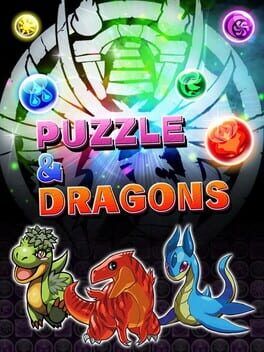

GungHo’s long‑running match‑3 RPG celebrates 16 million downloads in North America with a special in‑game event, proving how Puzzle & Dragons has quietly outlasted newer gacha and puzzle rivals.
Puzzle & Dragons reaching 16 million downloads in North America feels less like a sudden spike and more like a victory lap for a game that has been quietly embedded in mobile gaming for over a decade. Where many of its early 2010s peers have faded from the charts or shut down entirely, GungHo’s puzzle RPG continues to add milestones to a resume that now includes more than 90 million downloads worldwide and a historic run as one of the first mobile titles to cross the 1 billion dollar revenue mark.
A 2012 Relic That Never Really Left
When Puzzle & Dragons arrived on iOS in the United States in November 2012, then on Android the following month, the mobile landscape looked radically different. Candy Crush had only just begun to dominate, the phrase “gacha” was barely mainstream in the West, and designers were still experimenting with how to graft free to play systems onto simple puzzle loops.
Puzzle & Dragons hit on a formula that felt ahead of its time. Instead of locking players to strict match 3 movement, it let you pick up an orb and freely drag it across the board within a time limit, shifting everything in your path. The result was more like a real time planning challenge than a casual time waster. Add in elements, skill rotations, leader skills, and a full monster collection layer on top, and you had a puzzler that flirted with the depth of a full RPG.
That hybrid structure is a big reason why Puzzle & Dragons still feels distinct in 2026. It was designed during an era before hyper segmented subgenres and strict monetization playbooks, and that slightly messy, handcrafted design has given it room to evolve instead of being trapped in a single formula.
The 16 Million NA Celebration Event
GungHo’s latest milestone centers on the North American version alone, which has surpassed 16 million downloads across the US and Canada. To mark the occasion, the developer has launched the 16 Million Downloads Celebration Event, a multi week celebration that layers extra rewards over the standard loop rather than trying to reinvent it.
The headline attraction is a special Super Godfest, always one of the most anticipated banners for regular players. Super Godfests typically feature raised rates on high rarity gods and meta relevant leaders, and tying one directly to a region specific milestone gives North American players a clear reason to log in, roll, and potentially refresh their boxes with modern powerhouses.
Alongside the gacha spotlight, the event adds bonus Login Stamps for simply checking in each day. For returning players who may have drifted away over the years, this creates a soft on ramp back into the game, padding your resources before you dive into current level content. It is an old school structure by today’s standards, but it fits the classic backbone of Puzzle & Dragons without overwhelming lapsed fans with too many overlapping systems.
Several dungeons are also set to run at half Stamina cost during the celebration window. This tweak sounds small, yet it is the type of quality of life boost that matters in a long term grind. Half Stamina dungeons let both new players and veterans farm evolution materials, awakenings, and experience much more aggressively, accelerating team building in a way that is more generous than flashy.
Taken together, the 16 Million Downloads Celebration Event is not about spectacle as much as it is about momentum. Rather than introducing a radically new mode or seasonal mechanic, GungHo is doubling down on what existing fans already value: affordable rolling opportunities, reliable daily rewards, and efficient dungeon runs.
A Global Giant That Plays The Long Game
The North American milestone sits within a far larger global picture. Puzzle & Dragons has racked up more than 90 million downloads worldwide. Japan alone accounts for roughly 63 million of those, with additional millions spread across regions like Hong Kong, Taiwan, and South Korea.
Those numbers tell the story of a game that learned to operate more like a service than a disposable app long before “live ops” became a default phrase in mobile game pitches. Content drops, balance tweaks, limited time dungeons, and monster buffs distribute throughout the year, keeping the meta shifting at a measured pace. Instead of leaning on huge, short term collaborations to spike downloads, Puzzle & Dragons treats collabs as recurring beats that refresh the catalog while reinforcing a sense of continuity.
That global endurance is especially notable considering how heavily the game leans on team composition and monster collecting. Many modern gachas reset themselves more aggressively through power creep and seasonal exclusives, which can make returning after a few months feel like starting over. Puzzle & Dragons certainly has its share of meta shifts and high rarity chase units, but it has generally favored iterative buffs to older cards and long running series that remain viable over time. The message is subtle yet clear: your box remains valuable, even if you are not chasing every new release.
How Puzzle & Dragons Still Feels Different From Modern Gacha
Placed alongside today’s gacha RPGs, Puzzle & Dragons can look almost austere. There are no fully voiced story arcs, no cinematic ultimates that devour your battery, and no social features vying for your attention every time you open the app. The heart of the experience is still a single player dungeon crawl where you match orbs, trigger skills, and brute force your way through tricky mechanics.
This restraint has quietly become its competitive edge. Many contemporary gachas are dense, front loaded experiences that expect you to manage multiple currencies, battle passes, seasonal shops, and raid schedules. Returning to Puzzle & Dragons after dabbling in those titles feels almost like revisiting a handheld RPG. You choose a team, pick a dungeon, and dive in. That compact loop is easier to maintain as a daily habit, especially for long time players who have been around since the early days of the App Store.
The puzzle layer itself also remains a differentiator compared to most match 3 rivals. Modern puzzle battlers often fix your movement into simple swaps, then build complexity through board modifiers, blockers, and power ups. Puzzle & Dragons keeps the board relatively clean but hands you more agency over each move, asking you to route combos, prioritize colors, and squeeze as many chains as possible out of a single timer. It feels closer to a skill expression challenge than a luck heavy puzzle, particularly in higher level dungeons where one misrouted orb can mean a reset.
That design philosophy is mirrored in how the game treats progression. While gacha luck always plays a role, mastery of mechanics, understanding of awakenings, and careful teambuilding still offer meaningful ways to punch above your weight. In an era where some games lean on auto play and idle mechanics, Puzzle & Dragons continues to reward active, engaged play.
Surviving The Match 3 Arms Race
On the match 3 side of the equation, Puzzle & Dragons has outlasted a tidal wave of competitors that often lean heavily on content volume and narrative hooks. Candy Crush and its peers have proven that an endless chain of levels can keep players hooked, but they also tend to flatten individual sessions into short bursts of progress. Puzzle & Dragons approaches longevity differently, grounding the puzzle in a meta game that feels closer to a collectible card game.
Each monster pull, each cleared Descended dungeon, and each new leader opened up new team archetypes rather than just unlocking the next stage. Over time, this has created a sense of ownership and investment in a personal roster that many straight puzzle games cannot match. Your grid of monsters becomes a history of your time with the game: old farmable favorites, limited collab prizes, and the occasional lucky roll that carried you through multiple metas.
Modern match 3 RPGs often borrow this structure yet accelerate it to keep up with contemporary expectations. That acceleration can make early progress feel thrilling, but it also risks burning out players who struggle to keep pace with constant new systems. Puzzle & Dragons, by contrast, has had the luxury of building its complexity slowly over many years, layering awakenings, assists, and mechanics such as damage voids without tossing out its core.
A Quiet Anniversary That Speaks Volumes
The 16 million North American downloads milestone may not come with the fireworks of a brand new sequel or platform shift, but it underscores how unusual Puzzle & Dragons is in the current mobile ecosystem. It is an early 2010s design that has refused to be left behind, adjusting its monetization and meta without abandoning the simple thrill of dragging orbs around a board to set off a huge combo.
For new players, this celebration event offers a gentle excuse to finally see what has kept Puzzle & Dragons alive for so long. For veterans, especially those who may have taken a break, the combination of Super Godfest pulls, generous login bonuses, and cheaper dungeon runs makes it a convenient moment to dust off old teams and see how far the game has come.
In a market that often chases the next big thing, Puzzle & Dragons has carved out a different kind of success story. By quietly iterating on a strong core, respecting its players’ time, and treating milestones like 16 million downloads as reasons to give back rather than reset the board, it has turned what could have been a fleeting fad into a long running fixture of mobile gaming history.