

How Update 41.1’s co‑op PvE Xeno Point mode rewires PUBG’s tension into an alien‑invasion roguelite, why it’s a smart on‑ramp for lapsed players, and where the Stellar Blade crossover fits into the package.
Update 41.1 is one of those strange PUBG: Battlegrounds patches that reads like it belongs to a different game. On paper you get a co‑op PvE roguelite mode about fighting aliens, an alternate Miramar, and a crossover with sci‑fi character EVE from Stellar Blade. In practice, Xeno Point ends up feeling more like a logical extension of what PUBG already does well than some throwaway event.
What Xeno Point actually is
Xeno Point is a limited‑time, four‑player PvE mode set in a warped version of Miramar that has been overrun by Xeno creatures. Instead of dropping out of a plane with 95 other players, you and up to three squadmates spawn into contained runs that play out as a sequence of escalating objectives. Think of it as a multi‑stage raid run where the game controls the pacing.
Across each run you push through marked combat zones, defend positions, escort objectives and hold out against waves of enemies while hoovering up loot and currency. The runs are designed so that you are never far from your next engagement, which is a big change from classic PUBG’s empty‑field tension. It borrows the short‑burst loop of a roguelite run, then filters that through PUBG’s ballistics, recoil patterns and positioning.
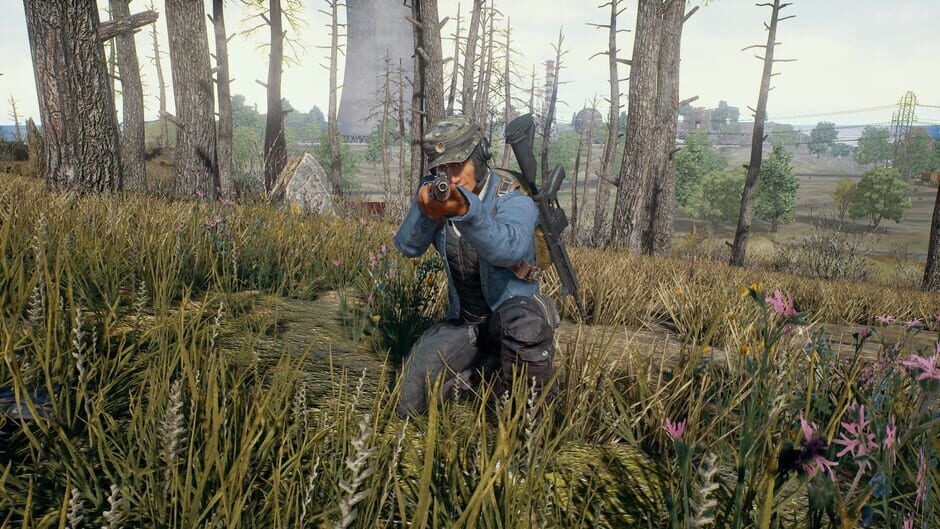
Underneath the aliens and sci‑fi dressing, you are still reading sightlines, counting bullets and working around PUBG’s familiar recoil. Enemies force you to move rather than just peek a single angle, but they also come in enough numbers that full‑auto spray control, reload timing and quick swaps between primary and sidearm matter more than in a typical battle royale rotation.
How the roguelite structure works
Roguelite here does not mean building a weird run‑breaking synergy out of cards or relics. Xeno Point feels closer to a wave‑based defense mode where you gradually unlock and improve tools across multiple attempts.
Each run you gather resources and gear that help you survive the current incursion. Finishing objectives, killing tougher Xeno types and exploring the altered Miramar earn you currency that can be traded for better weapons, attachments and temporary boosts. When a run ends, whether in success or failure, a layer of long‑term progression persists so that subsequent attempts start a little stronger and a little more flexible.
That roguelite backbone does two important things. It keeps individual runs relatively self‑contained and digestible, which is friendly for players who no longer have the time or patience for long queues and 30‑minute matches. It also gives PUBG a reason to throw more aggressive, mobile enemies at you, since getting wiped early is part of the learning curve rather than a hard loss in a ranked ladder.
The alternate Miramar helps sell the structure. Familiar landmarks become anchor points in what is otherwise a more guided experience, so the map reads quickly even if you have not played in a while. The mode leans into verticality and chokepoints that make sense for large groups of PvE enemies as well as co‑op squads, which keeps the old map from feeling like a simple backdrop swap.
The feel of co‑op PvE in a PUBG game
PUBG has always been about tension, but usually that tension comes from not knowing where enemy players are. Xeno Point replaces that with a different kind of stress. You often know where the enemies are coming from, but you are constantly asking whether your position will hold and if your squad has the ammo and healing to survive one more wave.
Because enemies are AI‑driven, the mode can push you into situations that normal PUBG rarely creates. Clustering around an objective forces overlapping sightlines and clearly defined roles. One player might anchor a long angle with a DMR while another roams to clear flankers and a third focuses on revives. The result is that classic PUBG skills like sound cues, recoil control and grenade placement still matter, but they are used in a more cooperative, less punishing environment.
One of the smartest side effects is that Xeno Point encourages aggressive play without the usual dread of an instant lobby back‑to‑menu. When you overextend into a horde and get knocked, it is a lesson and a shared laugh with your squad more than a rage‑inducing misplay. That is an important tonal shift for a game that can be brutally unforgiving in its standard modes.
A smart experiment for lapsed players
For anyone who fell off PUBG years ago, Xeno Point functions as a soft reintroduction. It lets you relearn the feel of the guns, the slightly slower movement, the weighty recoil and healing animations, all without needing to square off against hyper‑efficient veterans every match.
The matchmaking and run structure are friendly to short sessions. Instead of committing to a long battle royale where an early death means watching teammates play for 20 minutes, you can dive into a contained PvE sprint, get your bearings and see most of what the mode offers in one sitting. Successfully defending a point or surviving the final push gives a clear sense of closure that does not depend on being the last living player on the map.
Perhaps more important is what Xeno Point says about PUBG’s willingness to experiment. The core game stays intact, with Erangel’s new destructible terrain and attachment tweaks catering to long‑time PvP fans. Xeno Point lives alongside that, almost like a test lab for ideas that do not fit cleanly into battle royale. If it lands with lapsed and new players, it gives PUBG a blueprint for future seasonal PvE modes that build muscles the main game has not used before.
If you have been away since the early access days or the first year of console versions, this is one of the safest ways to find out whether you still like how PUBG plays. The mode is structured, readable and clearly communicates its stakes, while still feeling rooted in the same gritty shooting that sets the game apart from faster, more arcade‑styled competitors.
Where Stellar Blade fits into Update 41.1
Wrapped around all of this is the Stellar Blade collaboration, which introduces EVE to PUBG through the Contender System and expands the Workshop with new premium character sets and cosmetics. Thematically it lines up cleaner with Xeno Point than it would with a purely grounded patch. You are already fighting extraterrestrial threats in a warped desert, so folding in a stylish sci‑fi protagonist feels less like a marketing bolt‑on and more like a parallel flavor of the same event.
Functionally, the Stellar Blade crossover is about giving players something aspirational to unlock and customize while they grind runs or drop back into standard battle royale matches. EVE’s presence and the associated skins do not change how Xeno Point plays, but they help frame Update 41.1 as a broader sci‑fi season rather than a one‑off curiosities patch.
For long‑term players who care about the economics of cosmetics, tying a recognizable crossover to a new mode may be the clearest signal that PUBG’s developers see PvE experiments as more than throwaway side projects. If collaborations and new modes arrive hand in hand, that is a good sign for anyone who wants the game to keep branching out beyond its battle royale roots.
Does Xeno Point feel like PUBG?
Strip away the aliens and the roguelite language and Xeno Point is still a tactical shooter built on PUBG’s spine. You move deliberately, you commit to your peeks, and bad positioning gets you punished. The biggest shift is psychological. You are not fighting for a chicken dinner, you are fighting for one more completed objective and one more notch in your long‑term progression track.
For some, that will never replace the thrill of a final circle showdown against another squad of humans. But as an experiment, Xeno Point does a lot right. It captures PUBG’s gun feel and lethality, lets you play more aggressively than usual and offers a low‑pressure on‑ramp for returning players, all while carving out space for crossovers like Stellar Blade to slot in naturally.
If this is where PUBG’s side modes are heading, Update 41.1 could end up being remembered less for its novelty and more for the moment the game found a convincing co‑op identity alongside its battle royale core.