
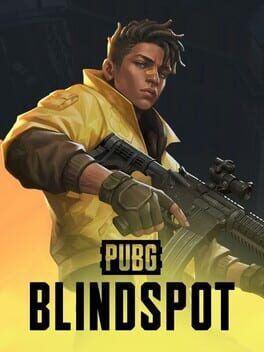
A postmortem-style look at PUBG: Blindspot’s rapid shutdown, why a top-down PUBG spin-off struggled to find an audience, and what it reveals about launching new live-service shooters in 2026.
When PUBG: Blindspot launched into Steam Early Access on February 5, it arrived with a clear pitch. This was PUBG reimagined as a 5v5 top-down tactical shooter, built around shared vision, precise gunplay, and tight squad coordination. It was free to play, carrying the weight of the PUBG name and backed by Krafton’s marketing muscle.
On March 30, Blindspot goes offline for good.
Less than two months separate those two dates. For a live-service project that publicly scoped Early Access as lasting up to a year, this is not a slow failure. It is a hard stop, a rare case where a branded spin-off from one of the biggest names in multiplayer shooters never even reaches its second monthly anniversary.
From Early Access plan to early exit
In its Steam description, PUBG: Blindspot laid out a standard Early Access roadmap: roughly 12 months of iteration, balance changes, and content updates, with community feedback guiding the path to a full release. The feature set at launch was focused but readable. Five-versus-five matches. Distinct agents with complementary abilities. A strong emphasis on information control and positioning viewed from a top-down camera rather than the familiar first or third person perspective of PUBG: Battlegrounds.
On paper, this was the kind of scoped, test-and-learn project Early Access is designed to support. In practice, time ran out almost immediately. ARC Team’s shutdown notice frames the decision in terms of sustainability, saying it could no longer provide the level of experience it set out to deliver. Put less diplomatically, the player base never grew large enough to justify the continued push toward that twelve-month plan.
The player response that the game did receive paints a similar picture. Steam user reviews were broadly positive about the core concept. The gunplay, the readability of the top-down view, even the underlying idea of bringing tactical, information-driven rounds to the PUBG universe all earned praise. The most consistent criticism was not about balance or bugs, but simply about empty servers and long or failed matchmaking.
A tactical shooter that revolves around coordinated squads cannot afford to feel deserted. For Blindspot, that became the defining experience far more quickly than any meta, map, or balance concern.
The burden of the PUBG name in 2026
PUBG is, in theory, one of the safest brands you could attach to a new online shooter. It helped define the modern battle royale explosion and still generates enormous revenue. Yet Blindspot’s trajectory underlines how little that brand insurance matters when you are not just competing for sales, but for daily attention and social momentum.
Blindspot was trying to perform a delicate balancing act. It needed to look and feel enough like PUBG to be legible as part of the same universe, while also justifying its existence as a separate, more tactical, top-down experience. The result was a spin-off that sat in an awkward middle ground. To core PUBG players, the pulled-back camera and smaller, tightly structured rounds could feel distant from the power fantasy of sprawling, last-player-standing firefights. To fans of top-down tactics games, the heavy association with battle royale branding may have made Blindspot look derivative instead of distinct.
In other words, the PUBG name gave Blindspot reach, but it also raised expectations about what the game would be and who it was for. When the audience that did show up turned out to be small and fragmented, it left the game chasing several different groups and truly winning none of them.
Launching a live-service shooter into a crowded field
Blindspot’s closure would be notable in any year, but it feels particularly telling in 2026. The live-service shooter space is not just busy. It is saturated with long-running incumbents, highly polished newcomers, and studios trying to recapture attention through sequels, reboots, or genre pivots.
In that environment, a new shooter cannot simply be good. It has to be unmistakable. Yet top-down tactical action is no longer novel, and the high-level pitch of Blindspot can be summarized quickly enough to invite unflattering comparisons: a bit of extraction shooter atmosphere here, a bit of hero-shooter structure there, all wearing PUBG’s fatigues.
Standing out in that crowd requires either a spectacularly strong hook, a truly unique social loop, or a long runway to slowly cultivate a dedicated niche. Blindspot appears to have had none of those advantages. It entered Early Access quietly, without the kind of long-tail, creator-led campaign that can keep an experimental spin-off in the conversation. Once the first burst of curiosity faded, the concurrent player numbers followed, and empty lobbies became the default rather than the exception.
That feedback loop is brutal. Low concurrency makes every match harder to find, which drives the remaining curious players away more quickly, which further depresses concurrency. For a free-to-play title, you can sometimes brute-force your way through that phase with major events, crossovers, or heavy promotion. For a scoped Early Access project, the runway is shorter and the tolerance for uncertainty far lower.
Early Access as expectation, not safety net
Blindspot also illustrates how Early Access has changed. There was a time when entering Early Access came with a widely understood caveat that the game might never reach a 1.0 release. Today, Early Access is so normalized that players often treat it as a soft launch rather than an experiment.
Krafton and ARC Team described Blindspot’s Early Access period as a chance to refine weapons, agents, and maps based on feedback. For many players, though, the question was simpler: is this worth investing time in today, and will my friends still be playing it in a few months?
When the answer to that second question looks uncertain, a new competitive game has a harder time standing its ground against entrenched options where social circles are already embedded. Blindspot’s rapid shutdown effectively retroactively answers that question as no. For anyone outside the small core that tried to stick with it, that makes the initial hesitation feel justified, which in turn can increase skepticism around future experimental projects from the same universe.
The speed of the closure also undermines Early Access as a perceived buffer. If a project with a famous brand and a clearly stated twelve-month plan can disappear in eight weeks, players are reminded that nothing about Early Access guarantees longevity. For developers, that means selling Early Access as a living, collaborative process is no longer enough. You have to convince players that you will be around long enough to make that collaboration matter.
Audience acquisition under a major publisher
The most striking lesson from PUBG: Blindspot’s brief life is that publisher scale no longer guarantees discovery or retention. Krafton’s support ensured visibility on announcement and launch. It did not ensure that enough players would switch, even temporarily, from their entrenched favorites to try and then stick with a new tactical format.
Audience acquisition for live-service shooters is now a multi-stage funnel that extends far beyond the initial store page spike. Blindspot cleared the first hurdle well enough to gather a base of curious players and largely positive first impressions. It stumbled on everything that comes after. Without a critical mass of regulars to fuel matchmaking, there was no sense of a living ecosystem. Without that sense of life, there is little reason for streamers or content creators to stick around after the launch window. Without them, the next wave of players never really materializes.
The fact that even a PUBG-branded game can disappear this quickly is a sharp reminder for both players and developers. For players, it is another cautionary tale about treating any new live-service game as a long-term home. For studios and publishers, it drives home how merciless the market has become. A recognizable IP and a competent core design will get you noticed, but they will not keep you alive if you cannot build and retain a day-to-day community almost immediately.
A very short-lived experiment
PUBG: Blindspot will likely be remembered less for its mechanics than for its lifespan. It was revealed in 2024 under a different name, rebranded into the PUBG family in 2025, and then lived publicly as a playable Early Access game for just a handful of weeks.
As a case study, it neatly captures the realities of launching a new shooter in 2026. Even with a major publisher, a powerful brand, and a reasonably well-received gameplay foundation, there is virtually no margin for error in audience acquisition. If your game cannot achieve a self-sustaining concurrency curve almost immediately, the clock starts ticking. For Blindspot, that clock reached zero before Early Access ever had the chance to become what it was pitched as: a slow, collaborative climb toward something bigger.