
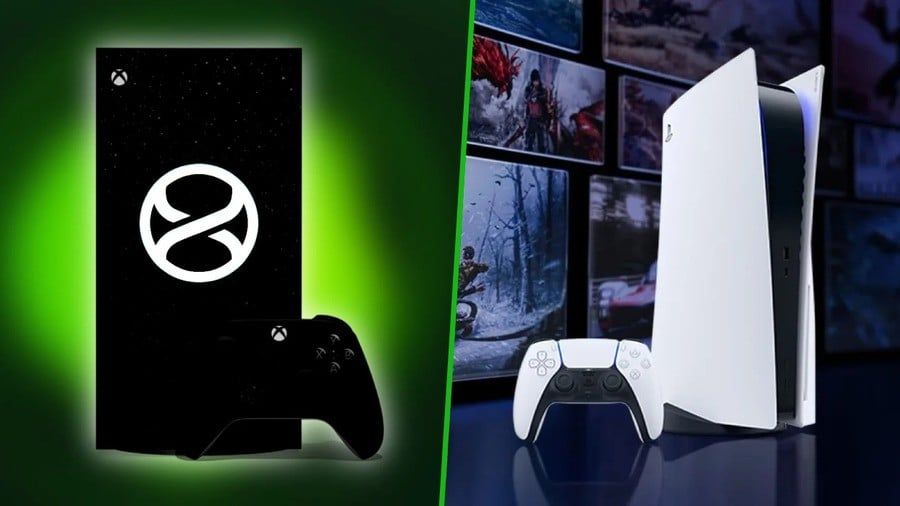

Ampere Analysis warns that a $1,000 PS6 and Xbox Project Helix launch could shrink next-gen console sales, forcing Sony and Microsoft to rethink subsidies, services, form factors, and payment models.
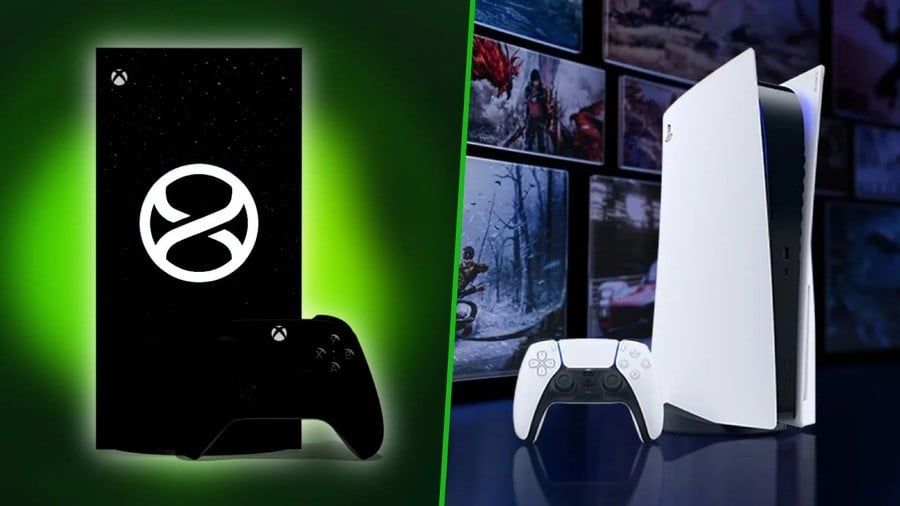
Image: purexbox.com
Ampere’s $1,000 scenario puts the next console cycle under pressure
Ampere Analysis is warning that if Sony and Microsoft launch PlayStation 6 and Xbox Project Helix in 2028 as conventional, incrementally improved consoles at $1,000, combined adoption could fall sharply compared with the current generation. According to Video Games Chronicle’s report on Ampere’s forecast, PS6 and Xbox Helix sales over their first five years could be up to 38% lower than combined PS5 and Xbox Series X|S sales over the same period.
That is the concrete pressure point in the latest PS6 Xbox price forecast: a four figure launch price does not simply raise the entry fee, it changes the size of the audience Sony and Microsoft can realistically reach early in the generation. Kotaku, citing Ampere senior research director Piers Harding-Rolls, reported the same scenario as roughly 39 million fewer consoles sold if the next PlayStation and Xbox arrive at $1,000 rather than $700.
The forecast is not a leaked PS6 price, and it is not an announced Xbox Helix price. Sony has not announced PlayStation 6 pricing, and Microsoft has not announced final pricing for Project Helix in the provided source material. Ampere is modeling a scenario: what happens if next-gen machines follow the familiar high-performance console template, arrive around the analyst-expected 2028 window, and start at $1,000.
The spending hit would reach beyond hardware sales
Ampere’s concern is not limited to boxes under televisions. VGC reports that Ampere estimates the PlayStation and Xbox console games and services market would be $3.4 billion, or 12%, lower by 2031 in a $1,000 hardware scenario than it would be if the consoles launched at $700. Instant Gaming’s report describes the same $3.4 billion shortfall as the effect of slower adoption on games and services spending.
That distinction matters for platform strategy. Console makers can survive selling hardware at thin margins, or at times with subsidies, because the business depends on the software, subscriptions, add-ons, and digital storefront activity that follows. If a 1000 dollar console slows the install base, publishers face a smaller early audience for next-gen versions, platform holders collect less from content spending, and players have fewer reasons to leave PS5 and Xbox Series X|S behind quickly.
Kotaku’s write-up adds another layer from Ampere’s framing: some of the added consumer cost would be absorbed by component price pressure rather than flowing to the game makers and platform ecosystems that rely on active buyers. VGC also points to rising PlayStation, Xbox, and Nintendo hardware prices in recent years, attributing those increases to factors including component shortages and trade wars. In that context, a $1,000 launch price would be less a premium upsell and more a sign that the underlying cost base has become harder to hide.
Why $1,000 risks breaking the console value proposition
The console pitch has always depended on a strategic trade: give players a relatively simple, fixed-price machine, then let developers optimize around a shared hardware target for years. A $700 console already tests that equation for many households. At $1,000, the decision starts competing with rent, phones, PCs, handheld devices, and multiple years of subscription costs.
Ampere’s forecast focuses on “conventionally designed, incrementally improved” next-generation consoles. That wording is important. If PS6 and Xbox Helix mainly present themselves as faster versions of PS5 and Xbox Series X|S, a higher PS6 price or Xbox Helix price becomes harder to justify to mainstream players who already have access to large current-gen libraries. The sharper the price jump, the stronger the incentive to wait for bundles, revisions, used hardware, or cross-gen support.
VGChartz added its own market context by estimating current PS5 sales at 93.57 million and Xbox Series X|S sales at 35.10 million, for a combined 128.67 million units at the time of its article. VGChartz then projected that if the current generation ends between 140 million and 160 million combined units, a 38% drop would imply a next-generation range between 87 million and 99 million units. That extrapolation is VGChartz’s calculation rather than an announced Ampere unit target, but it illustrates the scale of the risk being discussed.
For players, the practical signal is simple: no one should treat $1,000 as confirmed pricing, but the industry is now openly modeling it as a plausible danger zone. If that becomes the baseline, next gen console sales would depend less on raw technical ambition and more on how aggressively Sony and Microsoft soften the upfront hit.
The first escape route is delaying the generation, but time is expensive too
Ampere’s first suggested strategy, as reported by VGC, Kotaku, VGTimes, and Instant Gaming, is to delay the next console generation beyond the end of 2028 and extend the lifecycle of PS5 and Xbox Series X|S while waiting to see whether component costs fall. This is the cleanest solution on paper because it avoids asking players to absorb inflated hardware costs at launch.
The risk is that delay is not free. A longer generation gives Sony and Microsoft more time to sell current hardware, expand digital libraries, and keep subscription ecosystems active, but it also prolongs the period in which players ask what a next-gen console is supposed to solve. Developers may keep targeting current-gen baselines, platform holders may delay a hardware-led marketing reset, and the audience may become even more comfortable treating consoles as long-cycle appliances rather than must-buy launch products.
Kotaku’s analysis was skeptical that simply waiting for prices to improve after 2028 is a safe bet. That skepticism fits Ampere’s own tension: component costs are the reason the $1,000 scenario exists, but a delayed launch only works if those costs decline enough to support a lower sticker price. If they do not, Sony and Microsoft would face the same adoption problem later, with even higher expectations for what the new machines deliver.
Subsidies, subscriptions, and financing could shift the pain away from launch day
Ampere’s second route is to keep the analyst-expected 2028 window while using heavier hardware subsidies, new monetization models, more aggressive digital content strategies, and optimized sales channels to lower the price players see at checkout. In plain strategy terms, Sony and Microsoft would trade short-term hardware margin for a larger active audience and a better chance of recovering value through software and services.
This is where subscriptions and financing become central, even though the provided reports do not confirm a specific PS6 or Xbox Helix payment plan. VGTimes quotes Xbox CEO Asha Sharma saying it is hard to imagine mass audiences being able to afford “thousands of dollars to spend on a console generation,” and that “radically different business models” could come into orbit later this year. VGC similarly reports that Sharma has hinted at new business models intended to make Project Helix affordable for more players, while Instant Gaming says Microsoft is considering alternative payment options.
A lower monthly commitment can make a high-cost device feel reachable, but it also changes the console relationship. If the hardware is subsidized through subscriptions, bundled services, or financing, players will judge the total cost over years rather than the launch price alone. A $1,000 console spread across payments may avoid sticker shock, but it still asks the platform holder to prove that the library, online services, backward compatibility, and digital perks justify the long-term bill.
Sony and Microsoft have different incentives here. The source material does not provide Sony’s plan for PS6 subsidies or services. Microsoft, through the reported Project Helix comments, appears more visibly tied to alternative business models. That does not mean Xbox has solved the problem. It means Microsoft is already talking in the language Ampere says the market may require.
A new form factor may be the real price reset
Ampere’s third recommendation is the most disruptive: innovate around hardware form factor and use cases while placing less emphasis on graphical improvement. VGC compares this to the kind of strategic thinking Nintendo used with Wii, where the pitch centered on a different user experience rather than maximum performance. Kotaku also frames Nintendo’s long-running preference for innovation over raw power as relevant pressure on Sony and Microsoft, especially with a Switch 2 expected around $500 in its report.
For Xbox Helix, several sources suggest Microsoft may already be closer to this path than Sony. Instant Gaming says Helix is expected to be a PC-console hybrid with a different business model. VGTimes reports that Project Helix is expected to differ significantly from current consoles and may support PC games. Those are expectations reported by those outlets, not final specifications from Microsoft in the provided material.
This is also where handhelds enter the strategic conversation carefully. Ampere’s recommendation does not specifically confirm a handheld PS6 or handheld Xbox Helix. It does, however, call for new form factors and use cases, which could include portable or hybrid-style hardware if either company believes that is a better value proposition than a traditional living-room box chasing premium graphics at premium cost. A handheld or hybrid device can change the comparison from “Is this console powerful enough for $1,000?” to “Does this device fit into my daily play habits at a price I can defend?”
That shift would be risky. A less graphically ambitious PS6 or Xbox could disappoint players who expect a clean leap in fidelity. A PC-console hybrid could introduce messaging problems around compatibility, storefronts, performance targets, and who the device is for. But Ampere’s forecast implies that the old playbook may be the more dangerous option if it leads straight to a four figure launch.
For buyers, the smart move is to watch the business model before the specs
The PS6 price and Xbox Helix price remain unannounced in the provided sources, and Ampere’s $1,000 figure should be read as a scenario forecast rather than a confirmed launch plan. The clearest confirmed detail is the warning itself: Ampere believes a $1,000 conventional next-gen launch in 2028 could reduce combined five-year PS6 and Project Helix sales by up to 38% and shrink related games and services spending by $3.4 billion by 2031 compared with a $700 scenario.
The next round of meaningful signals will likely come from how Sony and Microsoft talk about value. If they emphasize raw power without addressing price, the $1,000 concern gets louder. If they discuss payment options, subscription bundles, deeper digital ecosystems, or new device categories, that would align more closely with Ampere’s proposed escape routes. For Xbox, the reported comments from Asha Sharma already point toward experimentation. For PlayStation, the provided sources do not yet show an equivalent public strategy.
Players deciding whether to buy current hardware or wait for next-gen should avoid anchoring on a rumored number. The safer read is that PS5 and Xbox Series X|S may have longer strategic lives if component costs stay high, while any 2028 next-gen launch could depend heavily on subsidies, financing, or a redesigned hardware pitch. The next console generation may still arrive on schedule, but Ampere’s forecast suggests the winning platform will be the one that solves affordability before asking players to pay for ambition.