
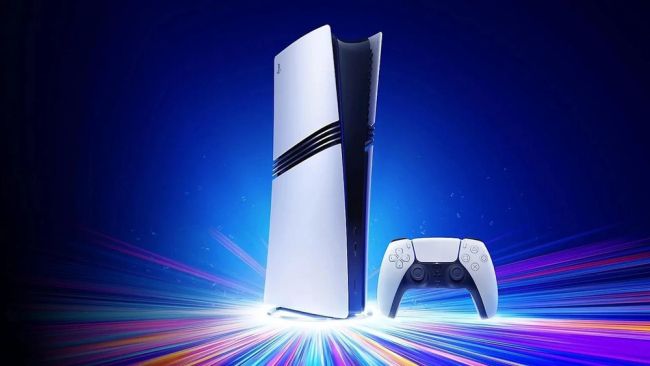

Sony's latest PS5 shipments put PlayStation 5 at 95.3 million lifetime units, but slower year-over-year hardware sales, higher prices, and a widening PS4 gap complicate the road to 100 million.
Image: gamereactor.eu
PS5 passes 95.3 million, but the milestone comes with a drag coefficient
Sony’s latest PlayStation 5 figure is both impressive and strategically awkward: PS5 lifetime shipments reached 95.3 million worldwide as of June 30, 2026, according to Sony financial documents cited across the latest earnings coverage. The company shipped 1.6 million PS5 consoles during the April to June quarter, bringing the system within 4.7 million units of the 100 million mark.
That headline number keeps PlayStation 5 in rare console territory, but the quarter also shows a clear loss of hardware velocity. GamingBolt, Push Square, GameSpot, Simulation Daily, and VGTimes all report the same lifetime total and the same 1.6 million quarterly PS5 shipments. Push Square and GameSpot frame that quarter as a roughly 36 percent year-over-year decline, while GamingBolt reports the quarterly hardware total was down by 900,000 units compared with the same period last year.
The important distinction is that Sony’s financial reporting tracks shipments, meaning consoles moved into the retail channel, even though several outlets use the familiar shorthand of PS5 sales. For readers tracking PS5 sales in the consumer sense, this is still the official hardware momentum signal Sony gives investors, but it is best read as sell-in rather than a direct count of consoles in living rooms.
The PS5 vs PS4 sales comparison has turned against Sony’s newer machine
The cleanest tension in the quarter is the PS5 vs PS4 sales race. GameSpot reports that PS4 had reached 100.2 million units by the same point in its lifecycle, compared with the PS5’s current 95.3 million. That puts PlayStation 5 about 4.9 million units behind Sony’s previous-generation console at a comparable age.
That gap matters because the PS5 has spent much of its life operating under different economic rules than the PS4. GameSpot notes that PS4 benefited from regular discounts and a falling MSRP over time. Push Square similarly points out that console prices historically decline late in a machine’s life to keep adoption moving, while PS5 has moved in the opposite direction. Push Square describes PS5 as the first Sony console to become more expensive over time, and GameSpot ties that pressure to shortages of RAM and other components.
This is the hardware equivalent of a late-game economy problem. Sony is still gaining territory, but it is paying more to hold the map and asking late adopters to come in at worse pricing than earlier PlayStation generations typically offered. A 95.3 million installed base is enormous. Falling behind the PS4 pace at this stage means Sony’s route to the next tier depends less on passive lifecycle momentum and more on whether specific demand spikes can punch through the price barrier.
A 36 percent unit drop looks worse because revenue did not fall as sharply
Push Square reports that PS5 hardware revenue declined year-over-year by about 9.8 percent, far less than the 36 percent unit decline. The outlet interprets that as a likely reflection of PS5’s higher price tag. GameSpot likewise says Sony is feeling the pinch of console price hikes, while Kotaku reports that the base PS5 price went up by $100 earlier in 2026.
That combination tells us a lot about Sony console sales strategy in 2026. Fewer units are moving than a year ago, but the revenue loss is cushioned by higher selling prices. From Sony’s side, that protects profitability and makes sense in a component-constrained hardware market. From the player side, it weakens the traditional late-cycle bargain argument that once helped push PlayStation consoles into broader households.
There is a small quarter-to-quarter bright spot. Push Square and GameSpot both report that PS5 shipments rose from 1.5 million in the prior quarter to 1.6 million in the April to June quarter. That is not a rebound in the broader sense, but it keeps the system from looking stalled. The question is whether 1.6 million is a floor before a holiday push, or a sign that the console’s mature-stage demand is now heavily dependent on software events and retail tactics Sony has not yet detailed.
Sony’s stronger PlayStation business is not being led by hardware volume
The broader PlayStation business looks healthier than the hardware shipment curve. Simulation Daily reports that Sony’s Game & Network Services segment posted 937.1 billion yen in sales for the quarter, described as essentially flat year-over-year. Operating income rose 37 percent to 54.1 billion yen, with the outlet citing refunds of US tariffs and foreign exchange rates as major contributors, partly offset by higher costs including restructuring and investments for the next-generation platform.
Push Square and GameSpot also attribute the 37 percent profit increase mostly to US tariff refunds, while GamingBolt notes that restructuring and next-gen investments raised costs. Sony’s revised outlook is stronger too. Simulation Daily reports that Sony increased its full-year PlayStation forecast by 120 billion yen, or 3 percent, for sales and by 60 billion yen, or 10 percent, for profit. That revision is tied to foreign exchange rates, tariff refunds, expected lower costs, and adjustments to the first-party title roadmap, which Simulation Daily translates as game delays.
The hardware story therefore sits inside a wider business split. Sony can show better profit while PS5 shipments slow because the PlayStation stack now leans on software, services, pricing, currency effects, and cost management. For hardware momentum, that is a warning sign. A platform can be financially strong while the console adoption curve becomes harder to accelerate.
Software and users are holding up, but the signals are uneven
Sony’s reported software numbers are steadier than its hardware numbers. GamingBolt, Push Square, GameSpot, and VGTimes all report 66.1 million PS5 and PS4 software units sold during the quarter, up slightly from 65.9 million a year earlier. GamingBolt and VGTimes report that first-party sales were 6 million units for the quarter, with GamingBolt saying that figure was down year-over-year.
Digital remains dominant. The current quarter’s digital share is reported at 82 percent of full game software sales across the cited coverage. There is some conflict in the surrounding year-over-year framing: GamingBolt and Push Square say 82 percent is down by one percentage point year-over-year, while GameSpot says digital game sales increased from 78 percent to 82 percent. The confirmed figure to carry forward is the current 82 percent share from Sony’s reporting as cited by multiple outlets; the prior-year comparison is muddied in the secondary coverage provided here.
PlayStation Network engagement is still large. Push Square, GameSpot, Simulation Daily, and VGTimes report 125 million monthly active users, up by 2 million or 2 percent year-over-year depending on the outlet’s phrasing. Simulation Daily adds that total playtime during the quarter declined 4 percent year-over-year, even as Sony argued engagement remained solid because of seasonal updates for major titles and new hit games.
That is the platform meta in miniature. The PS5 hardware curve is slowing, but the PlayStation audience remains massive, digital-heavy, and active. Sony’s challenge is converting that active network into hardware demand among holdouts without the usual late-cycle weapon of cheaper consoles.
The path to 100 million runs through supply, GTA 6, and price tolerance
At 95.3 million PS5 shipments, Sony needs another 4.7 million units to cross 100 million. If the system simply repeated the latest quarter’s 1.6 million shipments, it would need roughly three more quarters to pass that line. That is arithmetic, not a forecast, because the next stretch includes the holiday period and at least one major expected demand catalyst.
GameSpot reports that the next few months will be important for Sony because Grand Theft Auto VI is expected to provide a hardware sales bump during the holiday season. Kotaku frames the same issue around supply, reporting that Sony says it has secured the quantity of memory needed to meet its projected PS5 sales volume for fiscal year 2026. Kotaku quotes Sony’s earnings statement saying there is no change to its plan for PS5 hardware profitability in FY26 to remain similar to FY25.
That statement narrows one concern but leaves another open. Sony is signaling that it does not expect a memory shortage to prevent it from meeting its own PS5 plans this fiscal year. It is not, based on the provided sources, promising no further price changes, nor is it publicly detailing how aggressively it will pursue discounts or bundles. Kotaku specifically says it is unclear whether Sony’s memory comments mean there will not be another PS5 price hike in the second half of the year.
For players, the practical read is simple. If you are waiting to buy a PS5 for a major late-2026 release, the cited Sony statement suggests availability should not be the primary worry this fiscal year. Price is the less settled variable. The sources point to a console that has become more expensive over time, with no sourced evidence here of a broad price cut coming.
Next-generation spending is already in the numbers, even if the hardware is not announced
Sony’s quarter also hints at the next strategic turn without announcing the next console. GamingBolt and Simulation Daily both cite increased costs from investments in the next-generation platform, while GamingBolt notes that Sony has not provided more details on rumored PlayStation 6 plans. The confirmed fact is the accounting language around next-generation investment. Anything about a PS6 launch window or bill of materials remains rumor in the provided source material.
That distinction matters for the PS5’s final act. If Sony is already investing in next-generation hardware while PS5 is still 4.7 million shipments shy of 100 million, the company has to balance three competing goals: keep PS5 profitable, keep enough hardware moving to maximize the current audience, and avoid creating expectations that undercut late adopters.
The disc transition adds another layer. GamingBolt references Sony’s announcement regarding physical disc production for new games after January 2028, and VGTimes reports that some PlayStation players have planned a PSBlackout boycott for August 23 to 30 in protest of Sony’s decision to phase out physical discs for future PlayStation releases. The current sales mix, with 82 percent digital share, shows why Sony may feel the economic pull toward digital. The backlash shows the platform risk when a hardware ecosystem changes the ownership habits that helped build it.
Sony is close enough to 100 million that the PS5 will almost certainly remain one of the defining consoles of its era. The sharper question is whether it reaches that mark with renewed momentum or arrives there by grinding through a tougher, pricier endgame than the PS4 faced. Right now, the numbers support both parts of the story: PlayStation 5 is still selling at scale, and its hardware curve is no longer keeping pace with Sony’s last generation.