
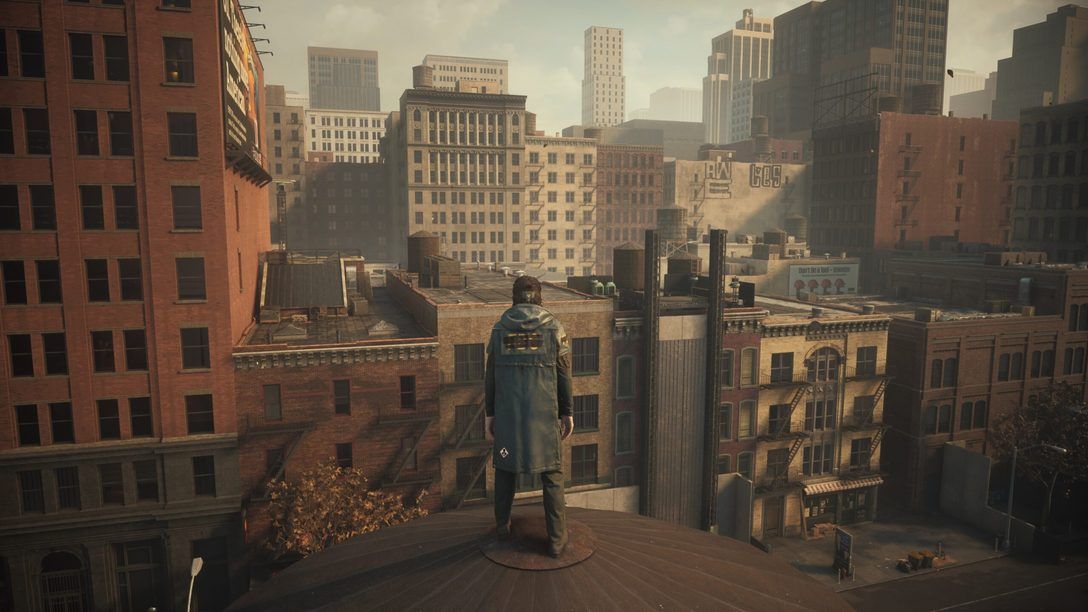
Sony is expanding PS5 QSSR support to Marvel’s Spider-Man 2, Control Resonant, The Finals, ARC Raiders, No Man’s Sky, and Hell Let Loose: Vietnam, giving base PS5 players a sharper upscaling option across fidelity and performance-focused games.
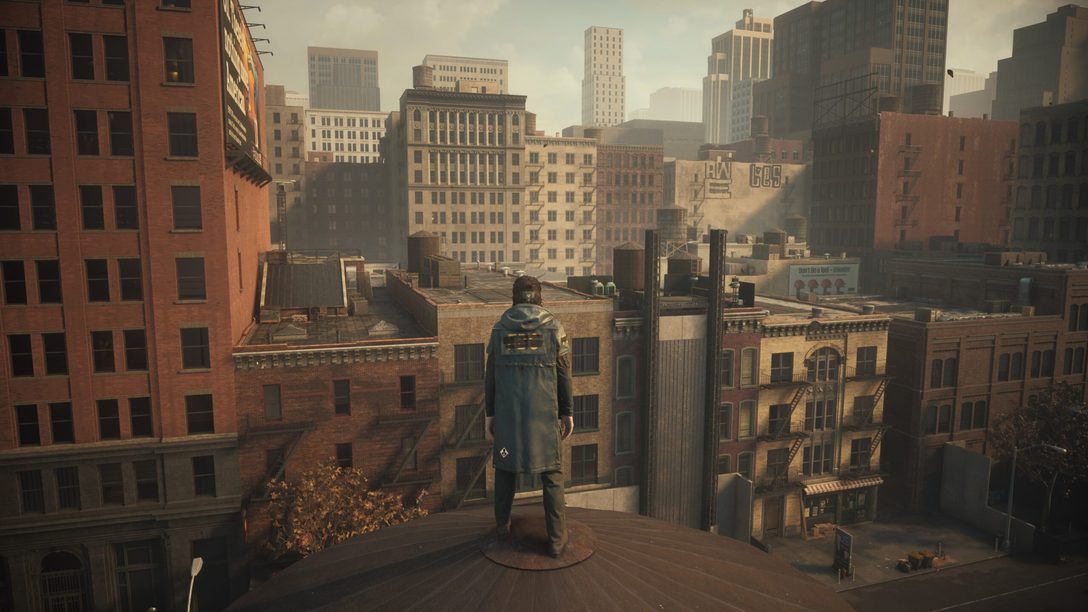
Image: blog.playstation.com
QSSR is no longer a two-game PS5 experiment
Sony Interactive Entertainment says Quick Spectral Super Resolution is expanding across the standard PlayStation 5, with Marvel’s Spider-Man 2 already updated and five more games lined up over the coming weeks. The confirmed batch includes Control Resonant, The Finals, ARC Raiders, No Man’s Sky, and Hell Let Loose: Vietnam, according to Sony’s PlayStation Blog announcement and follow-up reporting from Push Square, Gematsu, PC Guide, GameSpot, and Twisted Voxel.
The immediate hook is simple: Marvel’s Spider-Man 2 has QSSR support live now through a free update, and Insomniac says the feature applies to both Fidelity and Performance modes. That matters because the base PS5 audience is still the biggest PlayStation audience, while Sony’s most advanced public upscaling pitch has recently centered on PS5 Pro and its PSSR feature.
Sony describes QSSR as AI-guided upscaling for the console players already own. Daniel Craig, principal engineer for graphics R&D at Sony Interactive Entertainment, wrote on the PlayStation Blog that QSSR is built on the same foundation as PlayStation Spectral Super Resolution on PS5 Pro and can produce sharper details, cleaner edges, and more stable images than traditional upscalers. Sony also says QSSR shares its interface with PSSR, which makes it a natural fit for games that already support the PS5 Pro upscaler.
That framing is important. This is a PlayStation image quality update aimed at the standard PS5, not a PS5 Pro feature being relabeled. Base PS5 owners are the target.
The confirmed QSSR games and their rollout windows
The current confirmed QSSR list now spans eight titles when Sony’s earlier supported games are included. PC Guide lists Marvel’s Wolverine and Ghost of Yōtei as earlier QSSR-supported titles, with Marvel’s Spider-Man 2 now joining them as already available on PS5. Sony’s new expansion adds Control Resonant, The Finals, ARC Raiders, No Man’s Sky, and Hell Let Loose: Vietnam.
The timing is uneven, and players should treat each game separately. Marvel’s Spider-Man 2 is live now. Remedy Entertainment says Control Resonant is planned for a December update. Hello Games says No Man’s Sky will receive QSSR in the next few weeks. Embark Studios says QSSR is coming soon to both The Finals and ARC Raiders. Twisted Voxel reports that Expression Games has confirmed Hell Let Loose: Vietnam will receive support in a future update, while Sony’s PlayStation Blog headline also names Hell Let Loose: Vietnam as part of this QSSR arrival wave.
Sony has not provided one shared release date for every game in the batch. It has also not announced the next wave beyond these titles, though the PlayStation Blog says developers are interested in trying the technology and that updates are rolling out over the coming weeks.
For players checking patches, the cleanest advice is to look at the individual game update notes before changing display settings or reinstalling. Spider-Man 2 is the safe bet today. Control Resonant has the clearest named month. The Finals, ARC Raiders, No Man’s Sky, and Hell Let Loose: Vietnam need their own patches before players should expect QSSR to appear in-game.
Spider-Man 2 is the first real test for mode choice on base PS5
Insomniac’s implementation is the most useful case study because it is already available. Mike Fitzgerald, head of technology at Insomniac Games, said on the PlayStation Blog that the studio brought QSSR to Marvel’s Spider-Man 2 after seeing strong results integrating it in Marvel’s Wolverine. Fitzgerald said players should see image stability and sharpness benefits in both Fidelity and Performance modes.
That last part is the player-facing story. Fidelity and Performance modes usually ask base console players to pick a lane: better image quality and effects, or higher responsiveness and smoother motion. QSSR does not erase that tradeoff based on anything Sony has said, and none of the supplied sources claim it increases a game’s frame rate target in Spider-Man 2. What it can do, according to Sony and Insomniac, is improve the clarity and stability of the reconstructed image in both available modes.
For a fast traversal game like Marvel’s Spider-Man 2, image stability is not a cosmetic detail. Swinging across dense city geometry stresses thin lines, building edges, reflections, crowds, traffic, signage, and distant detail. Traditional upscaling can shimmer or soften when the camera is moving hard. Sony’s claim for QSSR is that it can deliver cleaner edges and more stable images than traditional upscalers, which is exactly the kind of improvement players can notice in motion rather than in a paused screenshot.
Performance-mode players should pay the most attention. If the QSSR implementation holds up, the mode built for responsiveness should look less soft than before. Fidelity players should also benefit, but the more interesting upgrade is whether the sharper image makes the faster mode feel like less of a visual compromise.
Control Resonant gives QSSR a heavy visual workload
Remedy Entertainment is bringing QSSR to Control Resonant in December, according to the PlayStation Blog and Gematsu. Remedy senior graphics programmer Erik Jansson said QSSR gives the PS5 version a much more stable and detailed image, and said the studio worked closely with Sony to have the update ready for that December window.
Control is a strong fit for this kind of technology because Remedy’s visual identity leans on harsh lighting, brutalist interiors, particle effects, reflective surfaces, and fine environmental detail. The source material does not provide a full technical breakdown for Control Resonant’s modes on PS5, so it would be wrong to promise specific resolution or frame-rate behavior. What Remedy is promising is image stability and fine detail, which lines up with Sony’s wider pitch for QSSR.
The interesting part is that Remedy compares the base PS5 improvement to the kind of leap PSSR brought to PS5 Pro. That is Remedy’s phrasing, not an independent benchmark, and players should wait for the actual December patch before treating it as proven in all scenes. Still, it shows how Sony wants developers to think about QSSR: as a shared upscaling path across the PS5 family rather than a separate one-off setting.
For players who already own Control Resonant on PS5, the practical move is to wait for the December update before replaying or starting fresh if image clarity is a priority. If you are buying specifically because of QSSR, wait for patch notes or post-update coverage. The support is confirmed, but the exact player-facing options and any mode-by-mode differences have not been detailed in the provided sources.
The Finals and ARC Raiders put QSSR into competitive sightlines
Embark Studios is adding QSSR to both The Finals and ARC Raiders. Mikael Linderholm, technical art director at Embark, said the updates can deliver increased sharpness, better environmental clarity, and overall visual improvements to more PlayStation players.
That language hits differently in shooters. In a PvP or extraction-style environment, the image is part of the fight. Cleaner contrast on distant structures, less unstable foliage or debris, and sharper environmental reads can make maps easier to parse at speed. That does not mean QSSR will make anyone win more gunfights, and Embark has not claimed a competitive advantage. It does mean the feature targets the exact pain points that competitive players complain about when performance modes look too soft.
The Finals is built around rapid movement, destruction, and busy interiors. ARC Raiders asks players to read threats across larger spaces while tracking AI and human danger. In both cases, environmental clarity matters because players are scanning while moving, aiming, looting, and reacting. If QSSR improves clarity without forcing players out of performance-focused settings, it could make the standard PS5 version feel cleaner during the moments where visual noise usually hurts the most.
The catch is timing. Sony and Embark say support is coming soon, but the supplied sources do not give exact patch dates for either game. Players should not assume the update is live until Embark’s PS5 patch notes say it is. For ranked-minded The Finals players or ARC Raiders squads trying to keep input feel consistent, the smarter play is to test QSSR after the patch in live matches and training spaces before locking in a preferred mode.
No Man’s Sky and Hell Let Loose: Vietnam show the range Sony wants
No Man’s Sky is the broadest technical pitch in the group. Hello Games founder Sean Murray said on the PlayStation Blog, as quoted by Gematsu, that every star in the game’s sky represents a visitable solar system and that the studio cares about the quality of every pixel. Murray said QSSR allows No Man’s Sky to render its universe in sharper, cleaner, and more beautiful detail while delivering the best possible framerate, with the update expected in the next few weeks.
That is the strongest source-backed mention of framerate in this rollout, but it still should be read carefully. Hello Games is saying QSSR supports its goal of delivering the best possible framerate alongside cleaner image quality. The sources do not provide a new fixed frame-rate target, a benchmark, or a guarantee that every planet and scene will perform differently after the patch.
Hell Let Loose: Vietnam is the least detailed entry in the current batch based on the provided material. Sony names it in the PlayStation Blog headline, Push Square includes it in the expanded QSSR support story, and Twisted Voxel reports that Expression Games has confirmed future support. The sources do not include a developer quote explaining what QSSR will change in that game, nor do they give a date.
Still, its inclusion makes sense for the shape of the rollout. Sony is not limiting QSSR to first-party showcases or single-player cinematic games. The batch reaches open-world traversal, Remedy-style action, multiplayer shooters, procedural exploration, and tactical warfare. That spread suggests Sony is trying to prove QSSR can be a baseline PS5 graphics upscaling option across different engines and play styles, not a single-studio tech demo.
Base PS5 owners should expect sharper choices, not a new console
The useful expectation is sharper image quality on the same base PS5 hardware, with benefits depending on each developer’s implementation. Sony says QSSR can improve detail, edge cleanliness, and image stability compared with traditional upscalers. Developers in this rollout point to sharper visuals, better environmental clarity, and more stable fine detail. Those are meaningful claims, but they are not the same as promising higher frame-rate modes, new ray tracing options, or PS5 Pro-level performance.
The strategic tension is clear. PS5 Pro has PSSR, and PC Guide notes that PSSR support is far ahead of QSSR in raw game count. At the same time, Sony is now pushing a related upscaling path for the standard PS5 six years after launch. Because QSSR shares an interface with PSSR, Sony says games that already support PSSR are natural candidates. That gives developers a cleaner path to bring image-quality improvements down to the larger base PS5 audience.
For players choosing between modes, QSSR could make the old decision less punishing. In single-player games, Fidelity mode may look more stable and refined. In Performance mode, the win is potentially bigger because a sharper reconstructed image can reduce the soft look that often comes with prioritizing responsiveness. In shooters like The Finals, ARC Raiders, and Hell Let Loose: Vietnam, that can matter during target reads and map scanning, even if the sources stop short of claiming competitive performance gains.
If you own Marvel’s Spider-Man 2, update now and compare both modes with your current display settings. If you are waiting on Control Resonant, December is the window to watch. For The Finals, ARC Raiders, No Man’s Sky, and Hell Let Loose: Vietnam, wait for each game’s PS5 patch confirmation before expecting the setting to be available. QSSR is expanding fast, but every supported game still has to land its own implementation.