
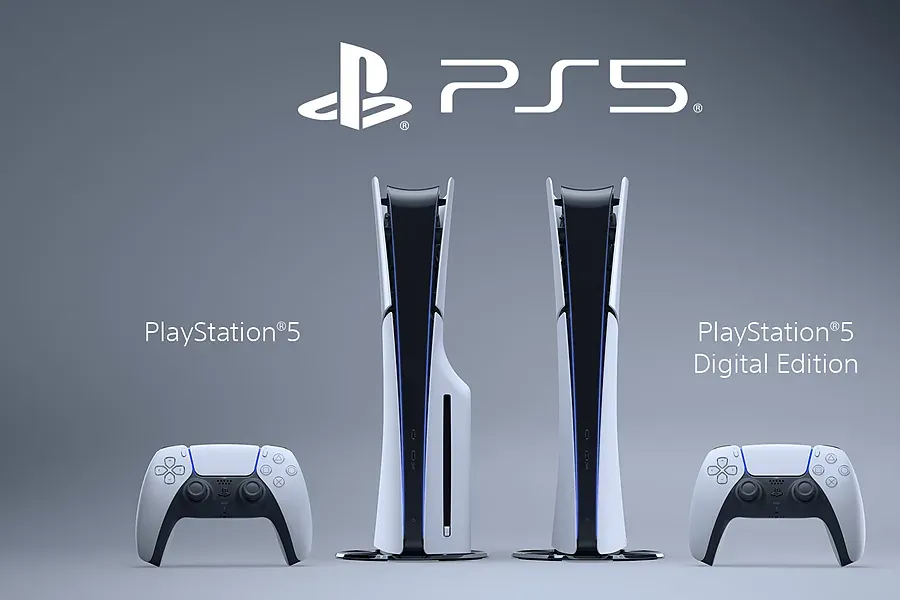

Sony says PlayStation 5 has passed 100 million consoles shipped, but financial results show PS5 hardware sales are slowing as pricing, GTA 6 and PS6 timing reshape the late generation strategy.
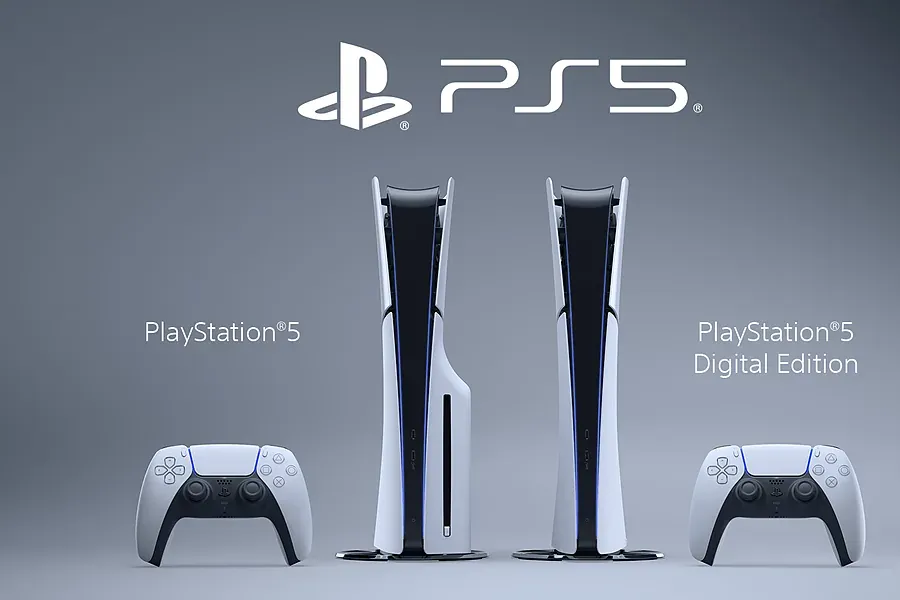
Image: globalbrandsmagazine.com
Sony’s biggest PS5 number arrives with a late-cycle warning
Sony Interactive Entertainment has updated its official business data page to say PlayStation 5 has shipped more than 100 million consoles worldwide as of November 10, 2026. That puts PS5 in one of the smallest clubs in hardware, but it also lands at a moment when Sony’s own financial results show the console’s annual and quarterly shipment pace cooling.
The arithmetic behind the Sony PS5 sales milestone is straightforward. Sony’s most recent quarterly results put cumulative PS5 shipments at 97.9 million as of September 30, 2026. As VGC, Push Square, TechSpot, Tbreak and Wolf’s Gaming Blog all note from Sony’s updated business data, the new “more than 100 million” figure means at least another 2.1 million PlayStation 5 consoles shipped in the following 40 days.
The important qualifier is that Sony reports sell-in, not confirmed sell-through to players. These are PlayStation 5 consoles shipped to retailers and distributors, not necessarily every box already sitting under a TV. Global Brands Magazine also notes that Sony’s data tables count lifetime PlayStation hardware on the same shipment basis, including returned and refurbished products, so the comparisons across PlayStation generations are still useful. For readers searching PS5 100 million sales, the cleaner phrasing is PS5 100 million consoles shipped.
PS5 is near PS4’s pace, but it did not match PS4’s speed
The milestone is impressive because of the company PS5 now keeps. VGC lists the 100 million-plus console tier as a group dominated by Sony and Nintendo hardware, including PlayStation, PS4, PS2, Wii, Game Boy, Nintendo DS and Nintendo Switch. Tbreak points out that PS5 has cleared 100 million but has not yet passed Sony’s older lifetime totals for the original PlayStation, PS4 or PS2 on Sony’s business data page.
The timing is where the story becomes less celebratory. PS5 launched in November 2020, so it took almost six years to reach the mark. VGC reports that PS4 reached 100 million in June 2019, five years and seven months after its November 2013 launch. Global Brands Magazine adds that PS2 reached the same territory in roughly five years and nine months from its March 2000 Japanese launch, citing Sony’s historical reporting.
That comparison comes with context Sony could not avoid. Push Square notes PS5 launched into the COVID-19 pandemic, shortages and rising hardware prices. TechSpot adds that Sony said in January 2023 that PS5 shortages were effectively over, meaning the console spent a meaningful chunk of its early life constrained by supply rather than ordinary demand. In strategy terms, PS5 reached the same checkpoint from a harder starting position, but it is entering the final stretch without the same volume momentum PS4 had at its peak.
The slowdown is visible in Sony’s hardware numbers
Sony’s financial results show PS5 hardware sales are no longer climbing toward a peak. Wolf’s Gaming Blog reports that Sony shipped 2.6 million PS5 units in the July to September quarter of 2026, down from 4 million in the same quarter a year earlier. It also notes the first quarter of 2026 came in at 1.6 million, down from 2.5 million the previous year. Tbreak frames the July to September decline as a 35 percent year-on-year drop.
The annual trend points in the same direction. Tbreak reports that Sony shipped 20.8 million PS5 units in fiscal 2023, then 18.5 million in fiscal 2024 and 16.0 million in fiscal 2025. That is a normal shape for a console entering its sixth year, but it matters because Sony is approaching the late generation from a different pricing position than earlier PlayStation cycles.
The 2.1 million consoles shipped after September 30 do not erase that slowdown. They show that the retail channel is being restocked aggressively heading into the holiday quarter, a period Wolf’s Gaming Blog notes is historically PlayStation’s strongest. In other words, the milestone and the slowdown are both true. Sony has shipped a huge installed base, but the raw hardware curve is now bending down.
Pricing is the pressure point Sony has not solved with age
Older consoles usually become easier to sell late in a generation because manufacturing improves, bundles get sharper and price cuts widen the audience. The PS5 generation has not followed that clean script. Push Square refers to hardware prices “skyrocketing” during the generation, while TechSpot reports that PS5 models became between $100 and $150 more expensive this year and that PS5 Pro reached $899. TechSpot connects those increases to a memory crisis that pushed up costs across devices.
That matters for Sony’s late-generation choices. A lower-cost PS5 could extend the console’s reach and make the next 10 to 20 million units easier. A higher-priced PS5 can protect revenue and margin but narrows the pool of holdouts willing to buy hardware this late. Tbreak reports that Sony has said it no longer needs to push PS5 hardware aggressively as PlayStation focuses on recurring revenue, which fits the broader picture in Sony’s financials.
Global Brands Magazine, citing Sony’s results, reports that network services revenue rose to ¥218.3 billion in the July to September quarter and that Sony lifted its full-year games profit forecast to ¥700 billion. Those figures help explain why Sony can tolerate a slower console unit pace. The business is increasingly monetizing the installed base through services and software after the hardware sale, rather than relying only on more boxes shipped every quarter.
GTA 6 could lift the quarter, but it does not change the sell-in caveat
Several outlets point to Grand Theft Auto 6 as the most obvious near-term demand catalyst. TechSpot reports that GTA 6 is scheduled for November 19 and will launch on consoles without a PC version at release. Tbreak also places the PS5 shipment milestone nine days before GTA 6’s launch. VGC and Push Square both suggest the game, combined with the holiday season, could help PS5 sales rise again.
The immediate 2.1 million-unit jump since September 30 may partly reflect retailers preparing for that moment. Wolf’s Gaming Blog argues that stores are likely stocking up before GTA 6 and the holidays. That is a reasonable reading of a sell-in spike, but it is still an interpretation of channel behavior rather than a confirmed Sony breakdown of demand.
The distinction matters for buyers and investors alike. If those consoles sell through quickly, GTA 6 becomes the late-generation accelerant Sony wants. If retailers are simply filling shelves ahead of the biggest software launch window of the year, Sony’s 100 million total still stands, but it tells us less about final consumer demand until Sony reports the next quarter. The practical read is that PS5 availability should be strong around GTA 6, but the milestone itself is not proof that every newly shipped console has already found a player.
PS6 timing now looks less urgent, and still officially undecided
The PS5 100 million sales conversation naturally turns into a PS6 question, but the confirmed answer remains limited. VGC reports that Sony CEO Hiroki Totoki said during an earlier earnings call this year that Sony had still not decided on a PlayStation 6 release date. TechSpot likewise says Sony has not decided when PS6 will launch.
There are analyst expectations, but they are not announcements. VGC cites MST Financial senior analyst David Gibson as saying Sony expects the PS5 lifecycle to be extended and that PS6 is likely to be delayed longer than many expected. VGC also notes that some analysts expect PS6 to arrive in 2028. TechSpot adds that the memory crisis could push the next console further back, again framing that as a possibility rather than a confirmed plan.
From a platform strategy angle, a longer PS5 cycle makes sense if Sony can keep selling software, subscriptions and digital content into a 100 million-plus base while hardware margins remain protected. The risk is that high console pricing and slowing unit sales reduce the usual late-generation expansion into more price-sensitive households. Sony’s strongest move may be to let PS5 keep working economically while it waits for a PS6 launch window where component costs, pricing and software readiness line up.
Should players buy now or wait?
The sources support a cautious answer rather than a blanket recommendation. If you want to play the current PS5 library or GTA 6 at launch, the timing favors buying when stock and bundles make sense, because GTA 6 is reported for consoles on November 19 and PS6 has no announced release date. Waiting for PS6 means waiting on an unconfirmed schedule.
If you already own a working PS5, the 100 million milestone does not create an upgrade need by itself. TechSpot’s reported pricing, especially the $899 PS5 Pro figure, makes value a sharper question late in the cycle. Without a confirmed PS6 date, the better decision point is software demand, display setup and price tolerance, not the milestone number.
Sony’s position is strong but more complicated than the headline suggests. PlayStation 5 consoles shipped have passed 100 million, putting PS5 among the biggest platforms in gaming history. At the same time, Sony financial results show hardware volume slowing, prices remain unusually high for this stage of a console life, and the next generation is still officially unscheduled. That is the late PS5 generation in one frame: a huge installed base, a softer hardware curve and a company with enough recurring revenue to avoid rushing its next move.